Waking Up at 3am to Check Positions? Break the Loop
Waking up at 3am to check positions is conditioned arousal, not poor hygiene. A 1,009-investor survey and a stimulus control protocol to end the loop.

You know the sequence without being told. You stir, surface halfway, and before any conscious decision your hand knows where the phone is. One glance at the futures, the crypto pair, the inbox. Position fine, a small hit of relief, back under. Position down, adrenaline, and the night is over. If that describes your nights, you have probably already tried the standard advice, blackout curtains, caffeine cutoffs, earlier bedtimes, and noticed that none of it touched the wake itself. Waking up at 3am to check a position is a conditioned loop, built through repetition and unpredictable reward, and it comes apart the same way it was assembled. This piece walks the mechanism, the measurable cost, and a two-week protocol that includes the part most guides skip: what to do in the moment, at 3 a.m., when the phone is calling.
Stay in the loop.
Get the latest posts and exclusive content delivered to your inbox.
Join 19 readers. No spam. Unsubscribe in one click, anytime.
What Nighttime Checking Actually Costs
The behavior is common enough to quantify. In eachnight's investor sleep survey, fielded with 1,009 U.S. investors in September 2026, more than a third admitted to the exact pattern above.
| Survey finding | Figure |
|---|---|
| Have woken at night to check a position or place a trade | 35% |
| Average nights of sleep lost per month after bad market days | 1.4 |
| Crypto-first investors who wake to check | 50% |
| Index-fund investors who wake to check | 28% |
| Check the market from bed as the last act before sleep | 58% |
Run the annual math on that 1.4 figure. It is 16.8 nights of sleep per year, more than two full weeks, surrendered to positions that were going to move overnight whether you watched them or not. The crypto gap is instructive too: a market that never closes doubles the wake rate versus index funds, which tells you the trigger is not portfolio size or seriousness. It is access. The 58% who check from bed at lights-out are not a separate group; they are seeding the same association the 3 a.m. wakers harvest. And 26% of crypto holders say the 24/7 schedule itself worsens their sleep, meaning the market's hours have colonized theirs.
Why Sleep Hygiene Cannot Fix Waking Up at 3am
Hygiene advice optimizes the conditions of sleep: darkness, temperature, caffeine timing, screen curfews. All reasonable, all aimed at the wrong target for this problem.
Start with an uncomfortable fact. Middle of the night waking is normal sleep physiology, not pathology. Polysomnography of healthy adults records multiple brief arousals on any given night, most of them forgotten by morning. Everyone stirs at 3 a.m. The clinical question, and the one worth asking if you wonder whether waking every night is a sign of insomnia, is not the wake. It is the failure to return to sleep, what clinicians classify under sleep maintenance problems when it persists and drags daytime function down with it.
That failure is learned, and learning is indifferent to room temperature. If your bed has spent months doubling as a monitoring station, a cooler bedroom merely makes the monitoring more comfortable. You cannot curtain your way out of an association. To break the loop you have to understand what is maintaining it, which is the next section's job.
The Conditioned Arousal Loop, Step by Step
If you have ever asked yourself why you wake up at 3am to check stocks or crypto with no alarm set, the answer is a four-step conditioning cycle that runs on an intermittent reward schedule.
- Cue. An internal stir, or the clock drifting toward the night's low point. Neutral at first.
- Behavior. Reach and check. At the start this required a decision. After enough repetitions it is automatic.
- Outcome. Most nights the position is fine and you feel relief. Occasionally it has moved, and you feel informed, or sick, either way you feel something.
- Reinforcement. The relief itself pays the behavior, strengthening the link between the cue and the reach.
The schedule is the trap. Because the position sometimes has actually moved, the check pays off unpredictably, and intermittent reinforcement research has shown for decades that unpredictably rewarded behaviors resist extinction far longer than reliably rewarded ones. A check that paid off every single night would actually be easier to kill, because you would learn its worth precisely. The slot machine does not hook people by paying out constantly. It hooks them by paying out occasionally.
Clinicians have a name for the end state: conditioned arousal insomnia in its psychophysiological form, where arousal becomes attached to the bed and sleep context themselves. The ICSD-3 criteria describe exactly this profile of heightened somatic and cognitive arousal tied to the sleep setting. Your brain, quite literally, has learned that bed is where markets get watched, and it helpfully wakes you for your shift.
Sleep Loss Compounds Into Worse Next-Day Decisions
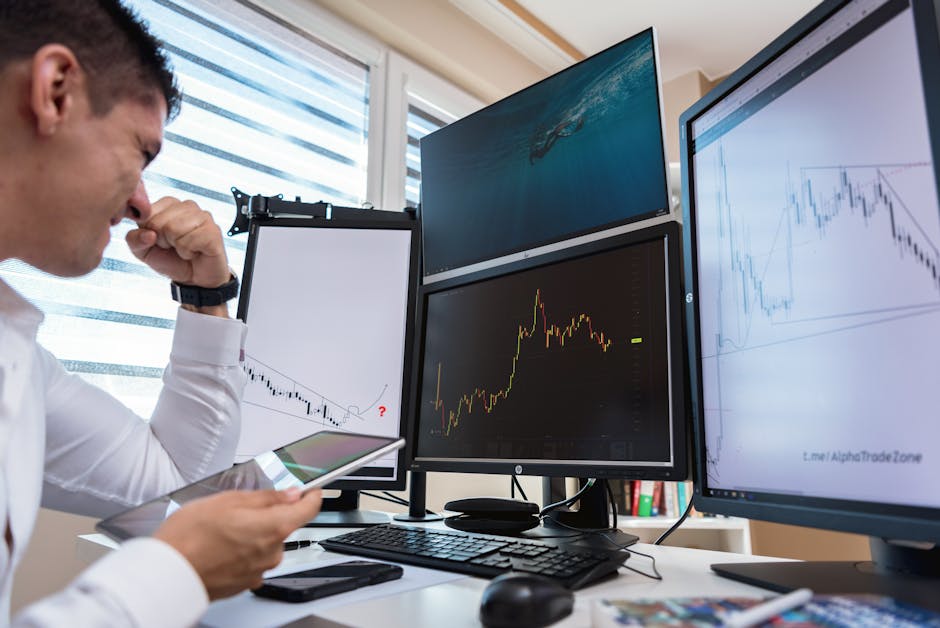
The survey closes the feedback loop on itself. After a poor night, 40% of those investors said they make worse financial decisions, 29% said they are more likely to trade impulsively, and 26% said fatigue pushes them toward bigger risks. Those are self-reports, so treat them as directional. But the experimental literature points the same way: economic choice experiments link acute sleep loss to altered risk-taking in decisions involving money, and sleep fragmentation studies document next-day costs to attention and performance even when total sleep time looks adequate on paper.
Now assemble the full circuit. A bad night degrades the judgment you will use at tomorrow's open. Degraded judgment produces impulsive trades and bigger drawdowns. Bigger drawdowns produce more worry, and more worry strengthens the conditioned wake. The habit finances itself, which is why it can run for years on end. Every 3 a.m. check is billed to the exact asset you woke up anxious about: your decision quality.
The Protocol, Step by Step
Four components, run together for two weeks minimum. This is stimulus control therapy adapted for a checking habit, and it works precisely because it targets associations rather than conditions.
1. A hard check curfew with a close-out ritual
Pick a cutoff, ideally 60 to 90 minutes before bed, after which positions do not exist until morning. Crypto's 24/7 schedule is irrelevant to this rule; the market's hours are its problem, and your off-hours are yours. Then add a five-minute close-out ritual: write down any open questions about your positions and the first action you will take tomorrow, then shut the terminal and put the phone on its charger outside the bedroom. The ritual matters as much as the curfew, because it gives your brain an explicit end-of-day marker to point to at 3 a.m.
2. Scheduled worry time
Schedule 15 minutes, same time daily, ideally early evening, to review positions, read news, and worry on purpose. This is scheduled worry time for insomnia, and it converts suppression into deferral. A randomized trial of scheduled worry reported reductions in nighttime worry and sleep disturbance relative to control conditions. When the 3 a.m. thought arrives, it now has an address: already processed at 6 p.m., or queued for tomorrow's window. You are not telling yourself the worry is silly. You are telling it where to wait.
3. Stimulus control for the bed itself
The stimulus control steps for night waking come from Bootzin's original procedure, and they amount to one principle: strip the bed of every job except sleep until it cues sleep again. Fixed wake time seven days a week. Bed used only for sleep. If you are awake beyond roughly 15 to 20 minutes, get up. No clock-watching from bed, ever. Stimulus control is a recommended component of behavioral insomnia treatment in clinical practice guidance, not a blog-hack. The logic is straightforward: every minute you lie awake in bed, you are teaching the bed to expect wakefulness.
4. Friction design
At 3 a.m. you are not a decision-maker, so do not leave the decision available. Phone charges in another room. Trading apps off the home screen, or off the phone entirely, with a desktop-only rule. Notifications silenced overnight. Every step of friction you add is a negotiation you no longer have to win at 3 a.m., when your negotiating position is weakest. Checking phone at night is a problem of physics as much as willpower; solve it with distance.
What to Do During the 3 A.M. Wake Itself
The wake will still happen during the first stretch of the protocol, because conditioning does not dissolve on request. What you do next determines whether the loop strengthens or starts to die. This is the section most sleep guides omit, the answer to what to do when you wake up at 3am and cannot get back to sleep.
No phone. No clock. One line in the notepad. Twenty minutes, then out of bed, dim light, something dull. Back only when sleepy.
Unpacked:
- Do not check. The check is the reinforcer. An unreinforced wake is a rep toward extinction; a checked wake is a workout for the habit.
- Do not clock-watch. Calculating "four hours until the open" manufactures arousal out of arithmetic. Turn the clock away permanently.
- Capture, then defer. Keep a notepad by the bed. Write the worry and one small morning action. This honors the concern without acting on it at an hour when action is worthless.
- Apply the 20-minute rule. Still awake after roughly 15 to 20 minutes? Get up. Lying in bed awake is the exact behavior stimulus control exists to prevent.
- Go dim and boring. Low light, paper book, nothing market-adjacent, nothing with a feed.
- Return on sleepiness, not on boredom. Wait for heavy eyelids, then get back in.
And the "just this once" check, the one you will be tempted by during a big overnight move, is the most expensive check of all. A single payoff after a stretch of abstinence is precisely the pattern that intermittently rewarded behaviors are built to survive. One relief event can undo a week of extinction work and hand the loop a fresh proof of concept.
When Self-Help Ends and Clinical Help Starts
Two escalation paths exist, and neither is optional if the criteria are met.
Chronic insomnia. Trouble falling or staying asleep at least three nights per week for at least three months, with daytime consequences, is the standard threshold for chronic insomnia disorder per diagnostic criteria summaries. If you clear that bar, the first-line treatment is not another article: it is CBT-I, cognitive behavioral therapy for insomnia, recommended ahead of medication in the ACP chronic insomnia guideline. The good news is that the protocol above is a working subset of CBT-I's stimulus control module, so you arrive with a head start. A clinician adds sleep restriction scheduling and cognitive work you cannot self-administer.
Sleep apnea. Loud snoring, witnessed gasping or choking, waking unrefreshed despite adequate hours in bed, or morning headaches point away from conditioned arousal and toward obstructive sleep apnea screening instead. This matters because apnea arousals can masquerade as anxiety wakes, and no amount of stimulus control will fix a collapsed airway. If those flags are present, ask for a sleep study before investing more weeks in behavioral work.
Two-Week Implementation and Tracking
How to stop waking up at 3am every night is ultimately a question of consistency over weeks, not intensity over days. Expectation-setting first: extinction takes time, and urges often spike before they fade, a pattern behavioral scientists call an extinction burst. The metric that improves first is not wake count. It is time to return to sleep.
Track four columns nightly, estimated in the morning rather than watched on a clock:
| Column | What to log |
|---|---|
| Wakes | Number of awakenings you remember |
| Urge (0 to 10) | Strength of the pull to check |
| Minutes to return | Morning estimate of time back to sleep |
| Checked? | Yes or no, honestly |
Week one is baseline plus protocol start. Week two is comparison: fewer minutes awake per wake is the win, even at identical wake counts. Then plan the relapse now, in daylight, because the trigger is predictable. It is an overnight gap move, an earnings print, a crypto flush, paired with the thought that this one is exceptional. Write the response in advance and put it where the phone used to sleep: "On the next overnight spike, the market opens and I do not."
The market will move overnight with or without your supervision; it has never once needed it. Your sleep, meanwhile, is currently staffed to a 3 a.m. shift it never agreed to. Two weeks of stimulus control, a worry window, and a phone in another room will do more for your returns than another year of better curtains, because the loop was never in the curtains. It was in the reach.
Stay in the loop.
Get the latest posts and exclusive content delivered to your inbox.
Join 19 readers. No spam. Unsubscribe in one click, anytime.
About the author
Elena Park
Sleep and Recovery Specialist
Elena has spent a decade helping people fix their sleep and recover faster, pairing wearable and HRV data with the cold, heat, and breathwork protocols she tests on herself first. She writes recovery routines that hold up under real, busy lives.
Related Posts

Best Sleeping Temperature for Couples Is a Dose, Not a Deal
The best sleeping temperature for couples is a dose, not a compromise. Time warm showers, split the duvets, and verify with wearable skin temperature data.

Why Sleepmaxxing Backfires and the Minimum Dose That Works
Sleepmaxxing backfires when effort turns into arousal. Learn the orthosomnia loop, the sleep-effort paradox, and a minimum-effective-dose sleep fix.

CPAP Alternatives Ranked by Evidence and Phenotype
CPAP alternatives graded by evidence and apnea phenotype: weight loss and tirzepatide, oral appliances, Inspire, positional therapy, and the drug pipeline.