Best Sleeping Temperature for Couples Is a Dose, Not a Deal
The best sleeping temperature for couples is a dose, not a compromise. Time warm showers, split the duvets, and verify with wearable skin temperature data.

The standoff never announces itself as physiology. One of you sleeps with the window cracked in January; the other owns three weights of fleece socks. The best sleeping temperature for couples gets treated as a negotiation, so you split the difference on the thermostat and both of you lose a little sleep every night. The premise is wrong. Sleep onset rides a small, reliable drop in core body temperature that each of you can trigger on demand by warming the right skin at the right time, which makes temperature a dose with a timing component, not a single number to argue over.
Stay in the loop.
Get the latest posts and exclusive content delivered to your inbox.
Join 11 readers. No spam. Unsubscribe in one click, anytime.
So this article doses it for two bodies: set the shared room toward the hotter sleeper, build the colder sleeper a personal microclimate instead of a concession, and read your tracker's skin temperature trend to confirm it worked.
The Best Sleeping Temperature for Couples Is Not an Average
The familiar advice, a bedroom of roughly 60 to 67 F, comes from Sleep Foundation bedroom guidance, and it is sound as far as it goes. It describes the ideal bedroom temperature for sleep as experienced by one average adult in one controlled bed. It was never designed to arbitrate between two differently regulated nervous systems, and a thermostat compromise inherits that flaw. A split-the-difference setting tends to leave the hot sleeper flushed and the cold sleeper chilled, which is the worst outcome available: two mildly miserable people instead of one comfortable one.
The mismatch is structural. Resting metabolic rate, body composition, limb circulation, circadian timing, and hormone cycles all differ between partners, and each one shifts the temperature a given body finds neutral. You cannot average those differences into one setpoint any more than you can average two prescriptions into one pill. What you can do is stop trying, give the shared air to the partner with the narrower tolerance, and handle the other partner locally.
The Mechanism: Sleep Onset Rides a Falling Core Temperature
Everything in this protocol exists because of one physiological event. Beginning roughly one to two hours before your habitual bedtime, core body temperature falls by around 1 C, and that decline is tightly coupled to sleep onset, as a review of circadian thermoregulation lays out. Anything that delays the drop delays sleep. Anything that accelerates it pulls sleep forward.
The body dumps that heat through its extremities. Blood vessels in the hands and feet can open wide and turn distal skin into a radiator, a process called distal vasodilation, and specialized shunts in fingers and toes make this especially efficient. This is the paradox at the heart of the protocol: warming the skin of your feet speeds the cooling of your core. Cold feet mean constricted vessels and a core that stays warm, so onset drags. Warm feet mean open radiators and a faster drop, which researchers sometimes call the warm feet paradox.
Once that clicks, the counterintuitive levers become obvious. A warm shower before bed does not heat you into sleep; it opens the radiators. A cool room does not fight your warm feet; it protects the gradient that makes the radiators useful. Cool core, warm periphery, cold room. That is the target state, and every dose below exists to produce it.
Dose One: The Timed Warm Shower or Bath

The best-studied lever is warm water immersion an hour or two before bed. A 2019 meta-analysis in Sleep Medicine Reviews pooled the available trials and found that a warm shower or bath of roughly 40 to 42.5 C (104 to 108.5 F), lasting at least 10 minutes and taken 1 to 2 hours before bedtime, shortened sleep onset latency by an average of about 10 minutes and improved self-rated sleep quality. Ten minutes is not dramatic, but it is a free effect from something you already do, available on demand, every night.
Dose card: water at 104 to 108.5 F, 10 to 20 minutes, finish 1 to 2 hours before lights out. Wondering how long before bed you should take a warm shower? Count backward ninety minutes from lights out as the default.
Timing is where people ruin it. End the bath ninety minutes before bed and the initial heat load has dissipated while the vasodilation persists, so your core falls on schedule, only faster. Shower ten minutes before bed and you climb in with a core still elevated, delaying the very drop you meant to trigger. If you are a strict morning-shower person, a warm foot bath works through the same distal pathway with a smaller effect, a fair trade for smaller effort.
For couples this dose is personal. Each partner takes it independently, and neither needs the room to change to benefit, which makes it the cleanest first test.
Dose Two: Warm Feet, Cool Core
The cheaper nightly lever attacks the same pathway, and it matters most for the cold sleeper who is about to inherit a cooler room. Pre-warm the extremities instead of pre-warming the bedroom:
- Loose, breathable socks (merino or thin cotton), because tight bands constrict the very vessels you are trying to open
- Hands outside the duvet or resting on top of it, since palms dump heat efficiently
- A warm water bottle at the foot of the bed for 20 to 30 minutes before you get in, then removed so it does not heat you all night
Watch for the overdose signature. The goal is warm feet under a cool torso; if you wake at 2 a.m. with sweaty feet or a flushed face, you added too much heat and need a lighter sock or no bottle. This lever is a pre-sleep primer rather than an all-night fixture, because it exploits the onset drop specifically and contributes nothing useful after you are asleep.
Dose Three: Set the Room Toward the Hotter Sleeper
The rule that ends the negotiation is asymmetric. Overheating fragments sleep and suppresses deep sleep more reliably than mild coolness does, so it deserves priority. A slightly cold sleeper fixes the problem in ninety seconds with socks or a layer; an overheated sleeper in a shared bed has no escape and spends the night surfacing from broken sleep. The shared air goes to whoever tolerates heat worse.
A concrete starting procedure:
- Find the coolest setting the hotter sleeper can sleep through without waking sweaty or kicking covers
- Set the room there, within or near the usual 60 to 67 F band, and give the colder sleeper bedding plus warm feet
- If the hotter sleeper still overheats, fix duvet weight before dropping degrees; insulation is usually the real culprit
- If the colder sleeper still shivers after a week, add a layer, not a degree
In practice, the best sleeping temperature for couples is the coolest setting the hotter sleeper tolerates, no warmer. That band from the articles is a sane place to start searching for it, but it is the beginning of the protocol rather than the whole answer to what temperature the bedroom should be if one partner sleeps hot.
Asymmetric Bedding: Separate Duvets, Dual Zones, Side Selection
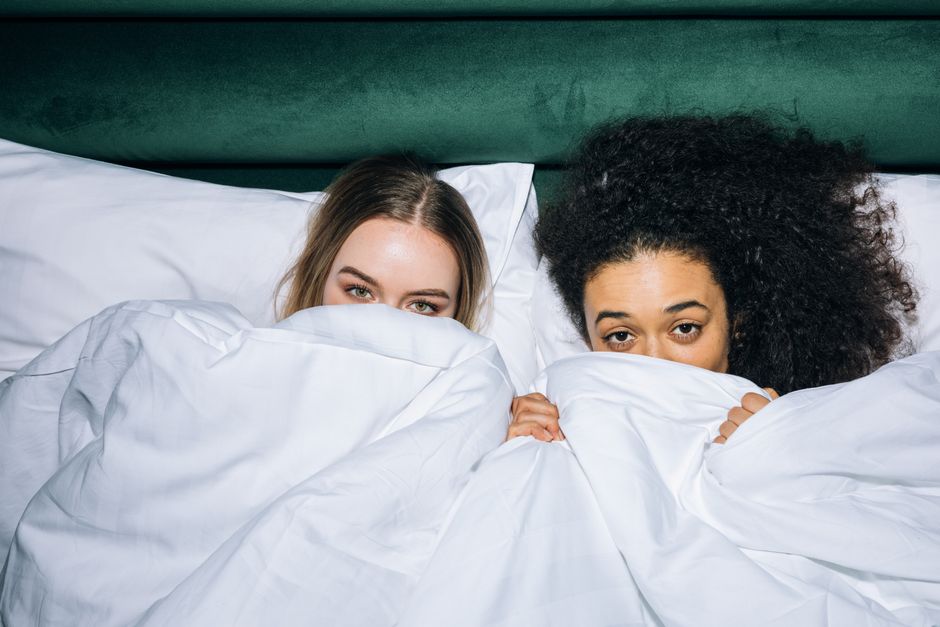
Once the air is set cold, the cold sleeper needs their own climate. Three configurations decouple the two microclimates, in ascending order of cost.
Two Duvets, One Bed
The Scandinavian sleep method replaces the shared duvet with two singles, each partner choosing their own weight, and it is an established norm across Scandinavia and much of northern Europe rather than a hack. The mechanism is what matters here: a hot sleeper under a light duvet beside a cold sleeper under a heavy one share a bed without sharing a microclimate. Do separate duvets help couples sleep? Architecturally, yes, because nobody's insulation depends on anybody else's, and it is the cheapest fix in this article. Duvet theft ends as a side effect.
Dual Zone Systems
A dual zone mattress topper or active climate system heats or cools each half of the bed independently, and a dual zone cooling comparison walks through the options built for two-person setups. This is the upgrade path when bedding alone cannot close the gap, typically when one partner needs active cooling rather than just less insulation.
Side Selection
Beds are not thermally uniform. The cold sleeper should claim the side away from the window, the AC vent path, and any exterior wall, leaving the airflow side to the hot sleeper. If a pet or child sleeps in the bed, treat them as a heat source when you pick sides.
The takeaway: the best bedding for a hot sleeper and a cold sleeper is simply two different beddings on one mattress.
Verification: Read Skin Temperature Against Your Own Baseline
You already own the measurement instrument. Both major trackers report overnight skin temperature, and the critical detail is that neither number means anything in absolute terms. Oura reports a deviation from your personal rolling baseline, as the Oura temperature deviation explainer documents, and WHOOP takes the same baseline-relative approach in its WHOOP skin temperature guide. A reading of +0.2 C is not "warm"; it is warmer than you usually are, and that distinction is the entire method.
Single nights are noise. Alcohol, illness, menstrual cycle phase, a late meal, and a hot room all move skin temperature, so one night confirms nothing. Judge conditions in blocks:
- Change exactly one variable (shower timing, socks, setpoint, or duvet)
- Hold it for one to two weeks
- Compare that block against your previous stable period
- Read two signals separately: onset latency and awakenings measure whether the dose worked, while skin temperature deviation works as your overshoot alarm
The interpretation trips people up. A well-timed shower ends 1 to 2 hours before bed, so the acute heat spike is over before sleep and a correctly dosed night often shows a deviation near zero. Persistent positive deviations across a whole condition mean the room or bedding is overheating you, and that is your cue to drop a degree or lighten the duvet before blaming the protocol. This is why skin temperature sleep tracking earns its place in a couples protocol: it tells each partner separately whether their own dose is right.
Troubleshooting: Hot Flashes, Staggered Schedules, and Heat Loads
Menopause and Hot Flashes
Nighttime vasomotor symptoms collide with the protocol's core assumption, a gradual pre-sleep drop, because a hot flash is a sudden uncontrolled dump. The bias toward a cool room gets stronger, not weaker; wicking sleepwear beats heavy layers; and a half-duvet arrangement you can kick free in seconds helps more than any setpoint change. Research on hot flashes and the nighttime environment points the same direction, with heat exposure at night worsening the disruption.
Staggered Bedtimes
When one partner arrives an hour later, the room has already been set for the sleeper in it. The late arriver should not touch the thermostat. They run their own distal warming routine, timed to their own bedtime, and get in with minimal disturbance. Their warm shower is a personal lever that needs no shared resource.
Late Heat Loads
Intense evening exercise elevates core temperature for hours and can leave you climbing into bed with the drop delayed, so shift the water dose later on training nights. Alcohol does something sneakier: peripheral vasodilation that raises skin temperature while blunting deep sleep, which also pollutes your tracker readout for that night. If you are mid-verification, treat a drinking night or a hard 9 p.m. session as missing data rather than evidence.
The Couples Temperature Protocol Card
| Lever | Dose | Timing | Primarily for | Signal it worked |
|---|---|---|---|---|
| Warm bath or shower | 104 to 108.5 F, 10+ min | Finish 1 to 2 h before bed | Either partner | Shorter onset latency |
| Feet warming | Loose socks; bottle 20 to 30 min, then out | Before getting in | Cold sleeper | Faster onset, no sweaty wake-ups |
| Room setpoint | Coolest setting the hot sleeper tolerates | Set once, adjust weekly | Hot sleeper | Overnight deviation near zero |
| Separate duvets | Light duvet plus heavy duvet | Static | Both | Fewer mid-night awakenings |
| Dual zone topper | Independent halves | Nightly | Gaps bedding cannot close | Each partner's deviation trends separately |
| Bed side | Cold sleeper away from window and vents | Once | Cold sleeper | Fewer cold wake-ups |
Run it as written for two weeks before tuning anything, one variable at a time, judged against your own baseline rather than the population's. The number on the thermostat stops being the score in an argument and becomes what it should have been all along: one input to a system you can actually control.
Stay in the loop.
Get the latest posts and exclusive content delivered to your inbox.
Join 11 readers. No spam. Unsubscribe in one click, anytime.
About the author
Elena Park
Sleep and Recovery Specialist
Elena has spent a decade helping people fix their sleep and recover faster, pairing wearable and HRV data with the cold, heat, and breathwork protocols she tests on herself first. She writes recovery routines that hold up under real, busy lives.
Related Posts

Why Sleepmaxxing Backfires and the Minimum Dose That Works
Sleepmaxxing backfires when effort turns into arousal. Learn the orthosomnia loop, the sleep-effort paradox, and a minimum-effective-dose sleep fix.

CPAP Alternatives Ranked by Evidence and Phenotype
CPAP alternatives graded by evidence and apnea phenotype: weight loss and tirzepatide, oral appliances, Inspire, positional therapy, and the drug pipeline.
Sleep Tracker Accuracy on Trial in the Oura Lawsuit
Sleep tracker accuracy is on trial as Oura faces a lawsuit. See what validation studies show, which metrics to trust, and when to get tested.