How to Recover From a Bad Night's Sleep and Protect Tonight
How to recover from a bad night's sleep with timed morning light, an earlier caffeine cutoff, a 20-minute nap cap, and a bedtime that protects tonight.
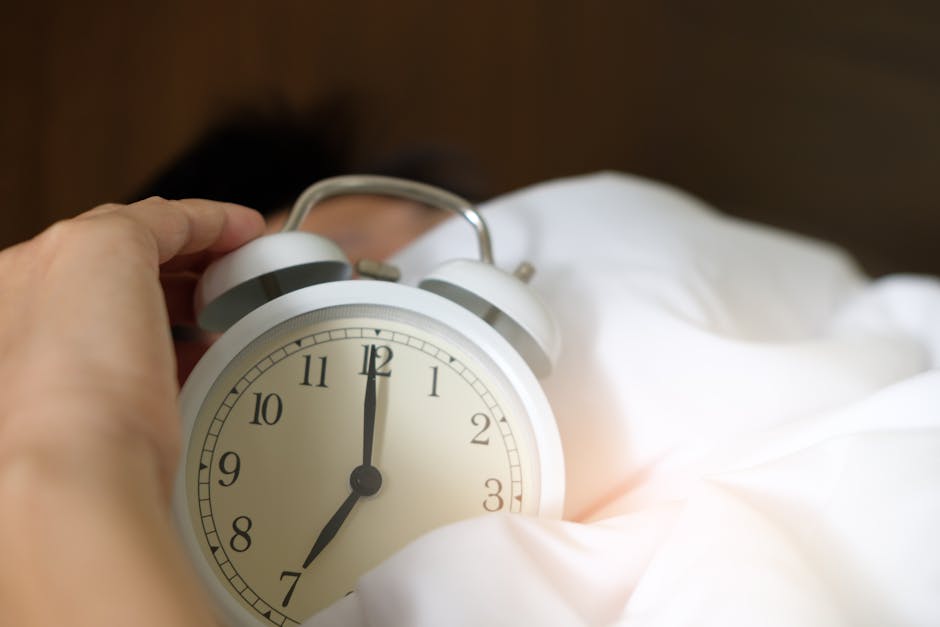
A recent r/Biohackers post captured a familiar morning: sleep score 56, recovery score 51, every metric red, the day already written off. Instead of surrendering, the poster took a 20-minute walk during golden hour, came back feeling unmistakably better, and watched the recovery score tick up to 58. Small numbers, real direction. And unlike most of what ranks for this problem, there is an actual mechanism behind it.
Stay in the loop.
Get the latest posts and exclusive content delivered to your inbox.
Join 15 readers. No spam. Unsubscribe in one click, anytime.
The standard answer to how to recover from a bad night's sleep is still hydration plus a lecture about screens. The missing half of the practice is that the wrecked day is a dosing problem, not a willpower problem. Residual adenosine and a mistimed circadian alerting signal are what make you feel like this, and both respond to inputs that come with a clock attached: light, caffeine, naps, and bedtime. Dose them right and the day is salvageable. Dose them wrong and you borrow tonight's sleep to pay for this morning's comfort, which is how one bad night becomes two.
This article walks the rescue day from wake-up to lights-out, with doses and cutoff times, the break-even point where each common fix stops paying, and the bedtime math that ends the cycle.
What One Bad Night Actually Does to You
Two systems decide how you feel today. The first is homeostatic sleep pressure: adenosine accumulates in the brain while you are awake and clears while you sleep. The second is the circadian alerting signal, a roughly 24-hour wake-promotion wave timed mostly by light. Researchers call the pairing the two-process model, and a bad night breaks both halves at once.
Adenosine clears only partially across a short night, so you start the day carrying a sleep-pressure debt. Meanwhile the circadian alerting wave still fires on schedule, which is why a wrecked morning often bends into a strangely functional late afternoon before collapsing again at night. Recovering from sleep deprivation is largely a matter of managing the gap between those two curves, not of grit.
The acute sleep deprivation effects are well mapped, too. A classic sleep deprivation meta-analysis found mood takes the most reliable hit, with reaction time, sustained attention, and executive function close behind. One night is not chronic deprivation, and cognition usually normalizes after a solid recovery night or two. What needs active management is the 16 hours in between, and generic advice manages almost none of it, because hydration and screen lectures carry no timing information.
How to Recover From a Bad Night's Sleep, Hour by Hour
The whole answer to what to do the day after no sleep fits in one table. The worked example assumes a habitual bedtime of 10:30pm and a normal wake time of 6:30am. Slide the clock to fit your own, and keep the spacing.
| Time | Dose | What it buys |
|---|---|---|
| 6:30 to 7:30am | 10 to 15 min outside, no sunglasses | Cheapest alertness input of the day; anchors the clock |
| ~7:00am | First coffee, usual size or slightly less | Covers adenosine at its worst |
| ~10:00am | Second dose if needed, then shrinking | Front-loads caffeine before the cutoff |
| 12:30 to 2:30pm | Final caffeine, 8 to 10 hours before bed | Protects tonight's sleep depth |
| 1:00 to 2:00pm | Nap 10 to 20 minutes, ceiling near 30 | Clears the afternoon dip without inertia |
| Golden hour | 15 to 20 minute sunset walk | Acute mood and alertness lift, minimal melatonin delay |
| 9:30pm onward | Dim lights, screens parked | Lets sleep pressure finish the job |
| 10:00 to 10:30pm | Normal bedtime, or 30 to 60 min early | Avoids the wake maintenance zone |
| 6:30 to 7:30am tomorrow | Wake within an hour of normal | Ends the cycle instead of restarting it |
The one-rule summary: every dose either clears or masks adenosine, times the circadian clock, or borrows from tonight. A fix doing none of those three is decoration.
Morning Dose: Light First, Caffeine Second
The best time for morning light after a bad night
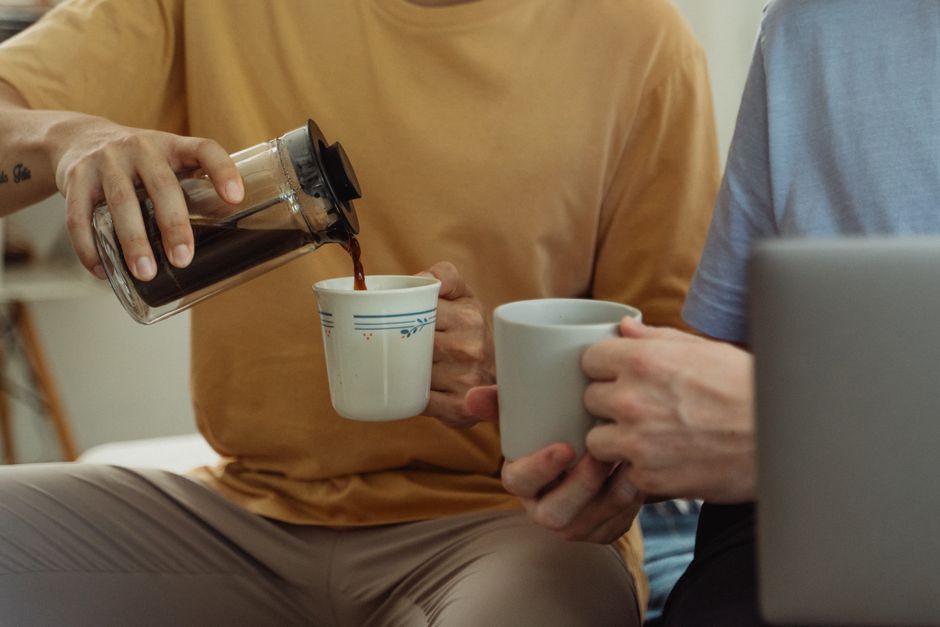
Get outside within the first hour of waking, before or alongside your first coffee, for 10 to 15 minutes. Timing beats gear: early light lands when the circadian clock is most responsive to a timing cue, and a consistent morning anchor is what keeps the clock stable night after night.
The reason to go outside rather than stand at a window is raw illuminance. Measured lux levels put a bright indoor room around 500 lux and a typical evening living room below 200, while an overcast morning outside sits around 1,000 lux. Even gray daylight is several times brighter than a typical indoor scene, and full daylight by ten times or more. Sunglasses off, prescription glasses fine, face the open sky. Fifteen minutes of that is the cheapest reliable alertness dose available, and it costs tonight nothing.
When to stop caffeine after poor sleep
Caffeine blocks adenosine receptors rather than clearing adenosine, so on a rescue day the crash is deferred, not deleted. That single fact rewrites the dosing rules, because caffeine timing and sleep quality are coupled: what you take this afternoon is still partially on board tonight.
Keep total intake flat or lower than a normal day, front-load it into the first half, and pull the last dose earlier, to roughly 8 to 10 hours before bedtime. Caffeine's average half-life sits near 5 hours with wide individual variation, and the evening cost is not hypothetical. In one caffeine timing trial, a 400mg dose taken six hours before bed still shortened measured sleep. On a 10:30pm bedtime, that puts the cutoff between 12:30 and 2:30pm.
The temptation after a bad night runs the opposite way: more coffee, later, all afternoon. It works until roughly 3pm, then you are wired and wrecked at the same time, and the debt moves to tonight with interest.
Midday Dose: The 20-Minute Nap Ceiling
How long should a nap be after a bad night?
Nap duration is what sets sleep inertia risk. About 10 to 20 minutes, taken before mid-afternoon, with a hard ceiling near 30: below that line you stay in lighter sleep stages, wake cleanly, and spend very little of the sleep pressure you need tonight. Push past it and you enter slow-wave sleep, and waking from slow wave produces the groggy, worse-than-before state that can linger for half an hour.
Aviation ran the experiment for us. NASA's cockpit rest study gave long-haul pilots a planned rest opportunity in flight; the average nap lasted about 26 minutes, and NASA reported roughly a third better performance and about half again higher alertness afterward versus no-rest controls. Short, planned, early: that is the dose.
Two naps make the trade-off concrete:
- Nap A, 1:00pm, 20 minutes. Lands inside the natural post-lunch dip, stays in light sleep, minimal inertia, only a small dent in tonight's pressure. Largely free.
- Nap B, 4:00pm, 60 minutes. Plows into slow-wave sleep, costs 20 to 30 groggy minutes on waking, drains real sleep pressure hours before bed, and pushes bedtime later. A loan against tonight at a bad rate.
When the long nap is still right: if you must drive far or work into the night, take the deeper nap, treat it as fatigue management rather than recovery, and defend that evening's bedtime more strictly, not less.
The Sunset Walk Dose
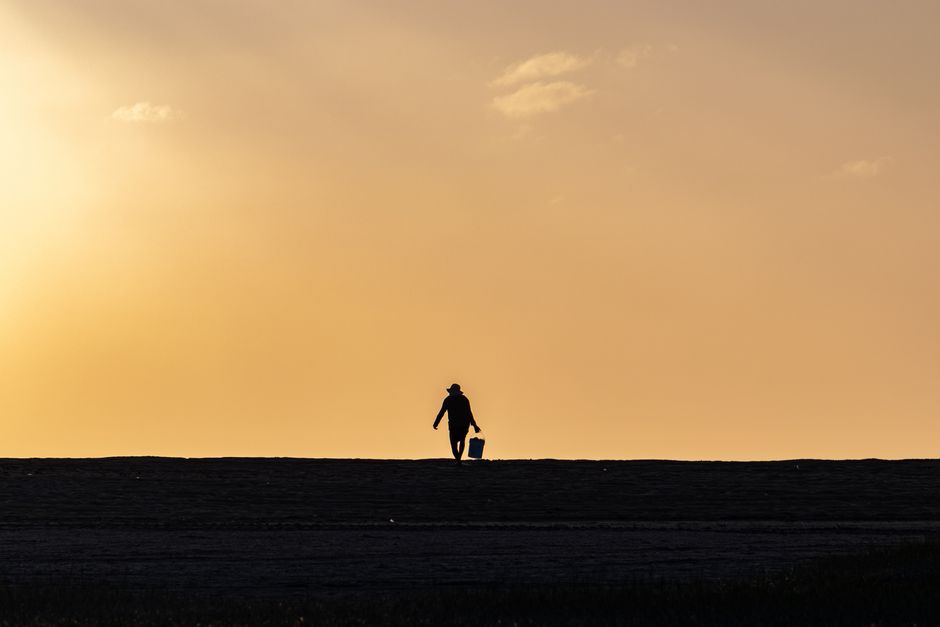
This is the dose almost nobody schedules, and it is the mechanism behind that Reddit turnaround.
Does sunset light delay melatonin?
Some, but typically very little, and the reason is dose timing. Light's circadian impact scales with intensity, spectrum, and duration, and circadian light timing is above all about proximity to melatonin onset. Melatonin suppression dose-response work shows sensitivity rising steeply with brightness and duration, which cuts both ways: dim, short exposures do little, and that is exactly what a sunset is by the time you are walking in it.
Put rough numbers on it:
| Light scene | Approximate illuminance at eye level |
|---|---|
| Midday summer sun | 50,000 to 100,000 lux |
| Overcast afternoon | 1,000 to 10,000 lux |
| Golden hour | A few hundred lux, up to low thousands |
| Bright office | Around 500 lux |
| Evening living room | 100 to 200 lux |
| Phone held at your face in the dark | Roughly 10 to 50 lux |
Two things fall out of that table. First, golden-hour outdoor light commonly out-illuminates your evening living room, so it retains enough intensity for the acute effects of light exposure on alertness and mood, which acute alerting studies register as faster reaction times and better mood ratings. Second, the exposure ends when the sun does. It arrives before melatonin onset, delivers its lift, and is gone.
Contrast the default evening: hours of blue-rich screen light, held a hand-span from your eyes, running past dusk into the window when the circadian system is most sensitive to delay. The sunset walk and the doomscroll are both evening light. The difference is dose: intensity, duration, and timing relative to melatonin onset. On all three factors, they point in opposite directions. That is how 20 minutes of the right light can lift a wrecked day's mood while barely touching tonight's melatonin, and it is plausibly much of what moved that poster's recovery score from 51 to 58. Activity and expectation did some of the work. The light did the rest, cheaply.
Run it as a dose: 15 to 20 minutes in the hour before sunset, no phone, eyes on the open sky rather than the ground. If the walk would push dinner and wind-down uncomfortably late, skip it. A dose that wrecks the schedule stops being a dose.
Should You Train on a Wrecked Recovery Score?
Usually you should move, lightly. Short, easy aerobic work (20 to 30 minutes at a conversational pace), mobility work, or a walk all tend to raise alertness and mood acutely after sleep loss, and the sunset walk can double as today's movement dose.
What loses on a suppressed score is the hard session. High-intensity training adds significant strain at the moment the resources that convert strain into adaptation are exactly what a short night depleted, so you typically collect the fatigue and blunted returns. If progress is the goal, the wrecked day is a bad day to chase it.
A simple decision rule:
- Gentle movement sounds good. Dose it easy and short, ideally outside.
- Only intensity sounds satisfying. That is usually sleep-deprived judgment talking. Park it for a normal-recovery day.
- Everything sounds awful. Full rest is a legitimate dose, not a failure.
Treat the tracker numbers as direction, not gospel. A recovery score moving from 51 to 58 is a nudge, not a diagnosis. The trend across days matters more than any single morning's digit.
Evening Dose: Why Two Hours Early Backfires
After a bad night the instinct is to cash in early: bed at 8:30pm instead of 10:30. It usually backfires, and the reason has a name. In the one to two hours before your habitual bedtime, circadian alerting reaches one of its highest points of the day, a window called the wake maintenance zone, which is why an early bedtime often buys ceiling-staring instead of sleep. Climbing in two hours early drops you into the middle of it, where you lie awake computing your remaining hours and try harder. That trying carries a cost: sleep effort research links striving for sleep with slower onset and more fragmented nights, a mechanism long implicated in insomnia.
So should you go to bed early after no sleep? A little, or not at all. The worked example, for a 10:30pm habitual bedtime:
- 8:30pm bed. Wake maintenance zone plus sleep effort, fragmented first hours, frustration. Usually a second bad night.
- 10:00pm bed (30 minutes early), dim hour before it. Extra sleep pressure still partially banked, clock undisplaced. The safer dose.
- 10:30pm normal bed with a strong wind-down. Equally defensible, especially if you skipped the nap.
Then set the alarm for the normal time, within about an hour at most. Holding tomorrow's wake time is what anchors the clock. Sleeping in two hours drifts it, and the drift seeds the next short night.
Five Mistakes That Turn One Bad Night Into Two
Each of these starts as a fix and runs past its break-even point. The math is already on the table:
- All-day coffee. Caffeine's roughly 5-hour half-life means a 4pm cup still has a quarter to a half of its dose on board at a 10:30pm bedtime, and the caffeine timing trial above showed six-hours-before-bed caffeine still shortening sleep. At noon, the same cup is mostly cleared by bed. Past early afternoon, coffee buys tonight's problem.
- The long late nap. The 20-minute, 1pm version wakes you clean and dents tonight's pressure slightly. The 60-minute, 4pm version buys 20 to 30 groggy minutes, drains sleep pressure hours before bed, and pushes bedtime later. The break-even sits near 30 minutes and mid-afternoon.
- Dark-room screens all evening. A light dose is intensity times duration times timing. A phone at 10 to 50 lux, a hand-span from your eyes, for hours past dusk, points every factor the wrong way; a few hundred lux of sunset for 20 minutes before melatonin onset barely delays anything.
- Alcohol as a sedative. The one mistake that disguises itself as a fix. It tends to speed sedation, then fragment the night's second half and suppress REM. You sleep worse while feeling helped.
- Sleeping in. A wake time more than about an hour late drifts the clock and hands tonight a weaker sleep-pressure start. The fixed wake time is the least popular and most effective rule on this list.
When One Bad Night Becomes a Pattern
A dosed day is for the occasional wreck. When bad nights arrive three or more times a week and persist for months, the clinical picture of chronic insomnia, the problem is no longer a rescue-day failure, and no amount of sunset walking fixes it. It needs treatment, and the recommended first-line option is cognitive behavioral therapy for insomnia. The American College of Physicians recommends CBT-I first, before medication, for chronic insomnia in adults. Notably, several core CBT-I tools already live in this protocol: a fixed wake time, a constrained sleep window, and naps that stay short.
Knowing how to recover from a bad night's sleep is half the practice. The other half is protecting tonight, so the protocol stays an occasional tool rather than a daily one. The Reddit poster's ring nudged them into 20 minutes of the right light at the right time. You now have the entire clock.
Stay in the loop.
Get the latest posts and exclusive content delivered to your inbox.
Join 15 readers. No spam. Unsubscribe in one click, anytime.
About the author
Marcus Bao
Strength and Conditioning Coach
Marcus has programmed training for everyone from desk-bound beginners to masters athletes, treating every workout as an experiment with a measurable result. He writes ready-to-run strength, hypertrophy, and Zone 2 programs built around progression you can track.
Related Posts
Cortisol Rhythm as an Early Brain-Aging Signal
Your cortisol rhythm may signal brain aging years ahead. Here is what a healthy slope looks like, which saliva tests measure it, and how to repair it.
Home Cold Plunge Buying Guide Built on Chiller Math
A home cold plunge buying framework: match chiller size to tub volume, master water care, estimate running cost, and plunge safely without a brand roundup.

Home Sauna Running Cost per Session vs the Gym Lounge
Home sauna running cost, cold plunge electricity, and water care priced per session, with break-even math showing when a home setup beats the gym lounge.