Cortisol Rhythm as an Early Brain-Aging Signal
Your cortisol rhythm may signal brain aging years ahead. Here is what a healthy slope looks like, which saliva tests measure it, and how to repair it.
A study following older adults for roughly 11 years just tied faster cognitive decline to the shape of the daily cortisol curve: how steeply it falls from morning to night, and how reliably it repeats that fall day after day. That shape, your cortisol rhythm, is the stress-hormone signal worth monitoring if dementia runs in your family. And unlike your age or your ApoE genotype, the rhythm is partly yours to reshape.
Stay in the loop.
Get the latest posts and exclusive content delivered to your inbox.
Join 11 readers. No spam. Unsubscribe in one click, anytime.
This article converts the finding into what the headlines and the adrenal-fatigue ads both skip: reference numbers for a healthy curve, a decision framework for which saliva or urine panels actually measure rhythm rather than a snapshot, and a timed protocol with a dose attached to every lever.
What the 11-Year Cortisol Study Actually Found
In the JAMA Network Open analysis, researchers sampled salivary cortisol across the day in a cohort of older adults, then tracked cognition over roughly 11 years. Two patterns tracked with faster decline. The first was a flattened diurnal cortisol slope, meaning cortisol stayed elevated into the evening instead of falling toward its nighttime low. The second was persistently higher cortisol overall. Irregularity carried its own signal: profiles that failed to repeat a consistent shape from one day to the next looked worse than steady ones.
The same analysis reported that Black participants showed lower average cortisol and smaller morning-to-evening change than white participants. That detail matters for self-trackers, because it is a reminder that a "normal" rhythm needs population context rather than a single universal reference line.
Calibrate your expectations now. This is observational evidence. People with flatter slopes may differ in sleep quality, chronic stress exposure, inflammation, or metabolic health, any of which could be the true driver of cognitive decline. Nothing in this design proves that steepening your curve protects your brain. What it does justify is the pragmatic play this article runs: measure the rhythm accurately, compare it to healthy patterns, and move the levers that are known to shift it.
Why Your Cortisol Rhythm Beats a Single Reading
"Cortisol rhythm" bundles three separable dimensions, and confusing them is the single most common error in at-home testing.
Slope, awakening response, and stability
- Diurnal cortisol slope. The fall from your morning peak to your evening nadir. A flattened diurnal cortisol slope means your tissues are still bathing in cortisol at 10 pm, exactly when the brain's clearance and memory-consolidation machinery expects quiet.
- Cortisol awakening response (CAR). The separate 30-to-45-minute burst that lifts free cortisol 50 percent or more above your waking value. It has its own CAR consensus guidance on measurement, and it is a distinct signal from slope. We covered it in depth in our piece on cannabis and morning cortisol, where THC blunts exactly this response.
- Day-to-day variability. Whether the curve repeats. Emerging research links inconsistent daily cortisol profiles to worse health trajectories in aging cohorts, suggesting the variability carries information beyond your average level.
Why one draw cannot see any of it
A morning blood draw measures total cortisol, mostly the fraction bound to carrier proteins, at one instant. It cannot distinguish someone whose curve spikes and crashes from someone whose cortisol merely sits flat and high. One saliva swab fixes the free-fraction problem but not the geometry problem: a waking value of 9 versus 7 looks similar whether cortisol then rises steeply and collapses by evening, healthy, or barely drifts all day, the risky pattern. Estrogen-containing medications add another wrinkle by raising the binding protein that inflates serum totals.
Estimating a slope, and especially day-to-day stability, requires multi-point sampling across at least two days. One swab is a photograph. The rhythm is the movie.
What a Healthy Cortisol Curve Looks Like in Numbers
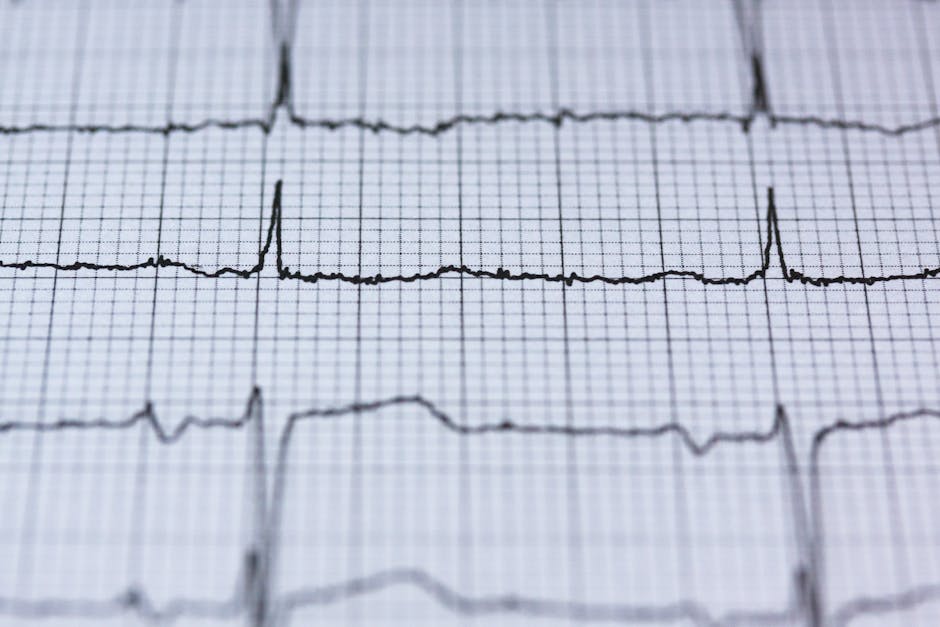
A healthy curve has four landmarks you can check against your own results. Free cortisol typically peaks within the first hour after waking, often rising 50 percent or more above the waking value as the awakening response, then declines through the afternoon and can fall 80 percent or more below the morning peak by late evening.
Here is a worked comparison. The values are illustrative, in nmol/L, to show the shapes; always read your results against your own kit's units and reference intervals.
| Sample time | Steep profile | Flat profile |
|---|---|---|
| Waking | 12 | 9 |
| +30 min | 20 | 10 |
| Noon | 8 | 8 |
| 4 pm | 5 | 7 |
| 10 pm | 2 | 6 |
| Peak-to-evening drop | ~90% | ~40% |
Three eyeball checks:
- CAR size. Did the +30 minute sample rise at least ~50% above waking? In the flat column it barely moved.
- Evening nadir. Is the bedtime value a small fraction of the morning peak? A 10 pm value above roughly half your peak is the flattened signature.
- Repeatability. Does day two look like day one? A steep curve that appears one day in three is still an instability signal.
Choosing a Test That Measures Slope, Not a Snapshot
On the saliva versus urine question, saliva wins for slope and urine wins for total load. Here is the full comparison for how to test your cortisol rhythm at home without buying the wrong panel.
Four panel types compared
| Panel | What it measures | Rhythm information | Best use |
|---|---|---|---|
| Morning serum cortisol | Total cortisol at one instant | None | Doctor-ordered screening |
| 4-to-5-point saliva kit | Free cortisol at fixed times across the day | Estimates the slope | The rhythm workhorse |
| CAR protocol (0, 30, 45, 60 min) | The awakening response | Amplitude only | Add-on when CAR is the question |
| Dried urine panel | Total daily output and metabolites | Curve shape only loosely | Quantifying overall cortisol load |
Dried urine panels mainly reflect total daily cortisol output plus downstream metabolites, so a "high" result can mean high production, high clearance, or both, without telling you whether your evening level is elevated. Dense 0-to-60-minute sampling is the only format that captures the awakening response. Multi-point saliva kits estimate the slope, with real limitations, as research on four-point saliva panels makes clear: single-day profiles miss day-to-day variability entirely.
Sampling discipline that keeps results honest
Run the kit on two, ideally three, consecutive ordinary days, and keep a log like this one:
Day 2. Woke 06:40 alarm. Swab 06:45. Coffee 07:50 (after the +30 swab).
Zone-2 run 12:15. 4 pm swab 16:05. Dinner 19:00. 10 pm swab 22:00.
No alcohol. Lights out 22:40. Notes: slight stuffy nose.
Confounds that corrupt results: acute illness, night shifts or jet lag, no food or acidic drinks within 15 to 30 minutes of a swab, no brushing or flossing right before sampling (blood inflates the value), corticosteroid medications including high-dose inhalers and creams, licorice, high-dose biotin (it skews immunoassays), and THC, which suppresses the morning response. Oral estrogens distort serum totals far more than saliva, one more reason saliva is the right medium here.
The Cortisol Rhythm Repair Protocol
Age and ApoE status are fixed. The levers below are not. Each has been shown in controlled work to shift cortisol timing or amplitude, and the protocol keys every dose to your wake time so the whole day anchors to a single clock.
The protocol table
| Lever | Dose and timing | Why it works | Evidence grade |
|---|---|---|---|
| Morning light | 10-30 min outdoors or 10,000 lux within the first hour after waking | Anchors the clock and sharpens the morning peak; a morning bright-light trial supports effects on the awakening response | Strong for anchoring, moderate for amplitude |
| Caffeine cutoff | Last dose 8 to 10 hours before bed; none within an hour of waking swabs | Does caffeine raise cortisol levels? Yes, acutely, and a caffeine tolerance trial suggests habituation is only partial | Strong acute effect |
| Cyclic sighing | 5 min daily, long exhales, fixed time slot | The cyclic sighing trial improved mood and lowered physiological arousal over weeks of daily practice | Moderate; needs consistency |
| Training placement | Hard sessions between mid-morning and mid-afternoon; nothing intense within 3 hours of bed | Intense exercise is a large acute cortisol spike; give it daylight hours | Strong for the spike, placement logic is pragmatic |
| Sleep regularity | Same wake time within 30 minutes, seven days a week | Consistent sleep-wake timing linked to lower incident dementia in a sleep regularity and dementia cohort | Strong observational |
| Ashwagandha | 300-600 mg standardized root extract daily, 6-8 week blocks | An ashwagandha meta-analysis found reduced morning cortisol versus placebo across small randomized trials, with effect sizes varying between studies | Moderate, replicated |
Targeting the evening nadir
If your problem is specifically how to lower evening cortisol, stack the three levers that reach the nadir: light in the morning, the caffeine cutoff, and moving hard training out of the evening. On breathwork, be patient. Randomized comparisons show benefits building over weeks of daily five-minute practice, not after a single session, and measurable diurnal shifts generally require that consistency rather than heroic one-off efforts.
Retest Cadence and Reading Your Numbers
Retest with the same kit and same lab, on the same weekdays, 8 to 12 weeks after changing something. Different assays cannot be compared cleanly.
Interpret against noise. Salivary immunoassays carry analytical imprecision, and your own cortisol wiggles day to day, so treat any single-point change under roughly 20 to 25 percent as unresolved. Trust consistent directional movement across multiple time points and both test days. An illustrative 12-week retest:
| Sample time | Baseline | Week 12 | Read |
|---|---|---|---|
| Waking | 9 | 10 | Within noise |
| +30 min | 10 | 15 | Awakening response restored |
| 4 pm | 7 | 6 | Within noise |
| 10 pm | 6 | 3 | Nadir dropping, ~50% fall |
| Peak-to-evening drop | ~40% | ~80% | Slope genuinely steepened |
Expectation-setting matters: caffeine and light changes can move readings within one to two weeks, while rhythm repair from breathwork and sleep regularity is measured in weeks to months. Some people are simply slow responders, and one flat retest after four weeks of effort is not a verdict.
When a Flat Slope Is a Doctor Problem
Self-experimentation has a hard boundary, and these patterns sit on the far side of it.
See a physician before any protocol if you have: rapid weight gain concentrated in the face, neck, and midsection; wide purple stretch marks; new difficulty rising from a chair or climbing stairs from muscle weakness; easy bruising; or unexplained high blood pressure with high glucose. That cluster warrants evaluation for Cushing syndrome, and late-night salivary cortisol is a standard screening step in the Endocrine Society Cushing guidelines.
The mirror image also belongs to a doctor: persistent fatigue, unintended weight loss, dizziness on standing, or unusual skin darkening can point toward adrenal insufficiency, which is dangerous to self-manage. Glucocorticoids, megestrol, licorice, and high-dose biotin can all distort results enough to mislead you.
One last misread, a composite case seen repeatedly in self-tracking communities: a "terrifying" 10 pm cortisol value that turned out to be a swab taken 90 minutes after a hard evening spin class. Acute exercise spikes look identical to a pathological nadir failure unless your log shows the training. The log is not optional; it is half the test.
The 11-year finding is a correlation, but the action plan stands on its own mechanics. You now know what a healthy curve looks like in numbers, which panel measures it, five timed levers that move it, and a retest cadence that separates real change from assay noise. Measure the rhythm, not the moment, and let the cortisol and brain aging literature catch up to you.
Stay in the loop.
Get the latest posts and exclusive content delivered to your inbox.
Join 11 readers. No spam. Unsubscribe in one click, anytime.
About the author
Marcus Bao
Strength and Conditioning Coach
Marcus has programmed training for everyone from desk-bound beginners to masters athletes, treating every workout as an experiment with a measurable result. He writes ready-to-run strength, hypertrophy, and Zone 2 programs built around progression you can track.
Related Posts
Home Cold Plunge Buying Guide Built on Chiller Math
A home cold plunge buying framework: match chiller size to tub volume, master water care, estimate running cost, and plunge safely without a brand roundup.

Home Sauna Running Cost per Session vs the Gym Lounge
Home sauna running cost, cold plunge electricity, and water care priced per session, with break-even math showing when a home setup beats the gym lounge.

Contrast Therapy Protocol for Sauna and Cold Plunge Rounds
A dosed contrast therapy protocol for the bathhouse, with sauna and plunge temperatures, round counts, heat-to-cold ratios, and timing around training.