Creatine Without Training Is Cheap Lean-Mass Insurance
Creatine without training does build lean mass, and part of it is water. Here is what the new study found, plus dosing for injuries, layoffs, and aging.

Your training will get interrupted. A torn tendon, an elective surgery, three weeks of flu, a month of hotels without gyms, or the quiet decision at 67 that barbells were never for you. The newest creatine data landed squarely on that problem, and the internet immediately split into two lazy camps. Camp one says the gym is now optional. Camp two says any gain is just water, so the finding is fake.
Stay in the loop.
Get the latest posts and exclusive content delivered to your inbox.
Join 19 readers. No spam. Unsubscribe in one click, anytime.
The defensible position is the third one, and it is more useful than either. Creatine is cheap lean-mass insurance for the specific windows when loading stops or never starts. A meaningful share of any no-training gain really is intracellular water, that part of the dismissal is accurate, but the water is partly the mechanism doing the work, not padding on the scan. What follows audits what the trials measured, splits tissue from water on paper, ranks the five windows where the evidence licenses the protocol, and gives the exact dose plus a tracking method that will not lie to you.
What Creatine Without Training Actually Built
The trial behind the headlines came out of Texas A&M and ran 12 weeks in 64 adults aged 45 to 65 with an average BMI around 30. Participants chose whether to join a supervised diet and exercise program, then were randomized, blinded, to creatine monohydrate or placebo within each track. The dose was high, 5 g twice daily, double typical maintenance. Protein intake averaged under 1 g per kg of body weight, so this was not a high-protein study doing hidden work.
The headline result held anyway. Both creatine groups gained lean mass on DXA scans, including the people who did not train at all, and creatine without working out edged out the non-exercising placebo group on bench press strength. Where creatine was combined with training, it roughly doubled the strength response.
| 12-week arm, approx. values as reported | DXA lean mass | Leg press max | Bench press max | Body-fat % |
|---|---|---|---|---|
| Creatine + diet + exercise | increased | up about 34% | up about 23% | down about 3.2% |
| Placebo + diet + exercise | little change | up about 18% | up about 12% | down about 1.9% |
| Creatine, no exercise | increased | not clearly reported | small gain vs placebo | not reported |
| Placebo, no exercise | little change | not clearly reported | little change | not reported |
One trial is one trial: small, with self-selected exercise participation, a dose above maintenance, and a scan method we will interrogate in a moment. The stronger signal comes from a pooled randomized trial analysis of creatine without resistance exercise, which puts the measured lean-mass gain versus placebo on the order of a kilogram, clearly smaller than the effect creatine produces alongside training.
So does creatine work without exercise? On a body-composition scan, yes, modestly and repeatably. Under a bar, not meaningfully: strength without loading barely moves, and the trial's no-exercise bench bump was small. Three questions decide whether any of this matters for you, namely how much of that kilogram is contractile tissue, whether the water fraction does anything useful, and who should act on it. The next two sections close the first two.
How Much of the Gain Is Just Water
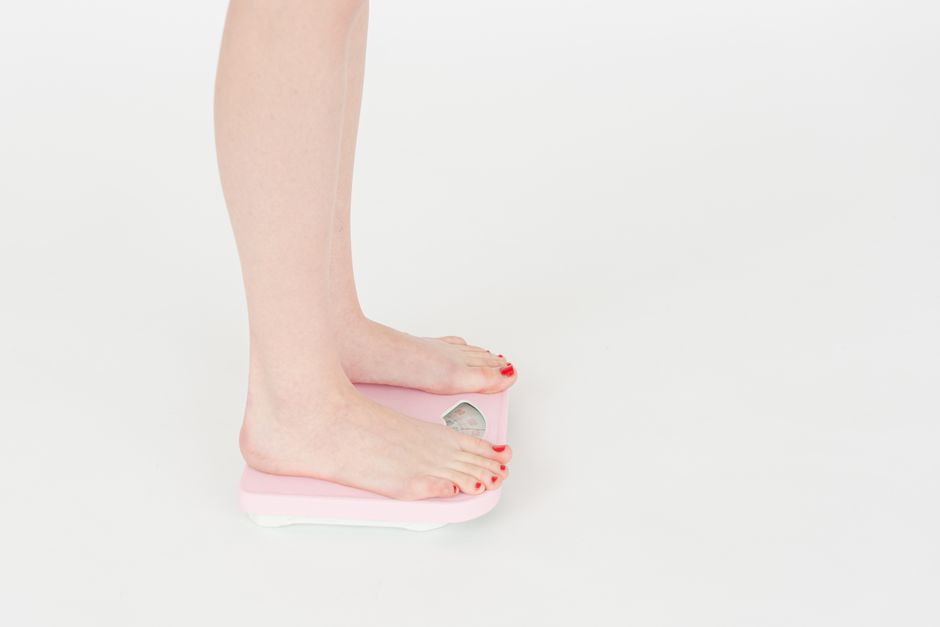
Is a creatine lean mass gain just water? Partly, yes, and the uncomfortable part is that no common body-composition method can tell you which part.
Creatine is osmotically active. It is transported into muscle cells and water follows it inward. That is the mechanism behind most of the fast weight change people see when they start the supplement, and it is why the scale moves before anything else does.
Measurement then gets slippery. DXA reports lean soft tissue, which lumps intracellular water together with contractile protein. Bioimpedance is worse by design, since it estimates lean mass from how the body conducts current, which is mostly a water measurement. Work on how DXA counts water makes the same point in technical form: hydration shifts register as lean-mass shifts.
Run the plausibility check. A kilogram of new contractile protein in a few weeks, without mechanical stimulus, would be an extraordinary rate of muscle accretion. A kilogram that is mostly water plus a small amount of protein change is ordinary. Treat any short-term scan gain from creatine as an upper bound on muscle, not a measurement of muscle.
One distinction keeps this from being purely bad news. Creatine water retention is mostly intracellular, inside the muscle cell, not the subcutaneous puffiness that follows high sodium intake. The water lands exactly where you would want it if water were doing something useful. Which, it turns out, it may be.
Cell Hydration as an Anti-Atrophy Mechanism
The "just water" dismissal assumes water is inert ballast that pads the scan. Muscle cells do not treat it that way. Cells sense their own volume, and a well-hydrated state is associated with reduced protein breakdown and more favorable anabolic signaling. Cell shrinkage tilts the other way.
That matters most precisely when you are not training. Disuse atrophy is catabolism outpacing synthesis: breakdown continues while the building stimulus disappears. Greater muscle-cell hydration is associated with blunted disuse atrophy in immobilization research, and the larger phosphocreatine pool buffers energy during the small stresses of rehab movements. During a layoff, the water fraction is plausibly the therapeutic fraction.
What water cannot do is generate force. Contractile protein and neural drive do that, which is why strength without loading stays close to flat. If you came here asking does creatine build muscle without lifting, the honest answer is that it builds the scan number quickly, possibly some tissue slowly, and almost no strength. That is why the correct frame is insurance rather than substitution, and why creatine while detraining is a bet on losing less, not a plan for gaining free.
Five Windows Where Creatine Earns Its Keep

One rule frames all five windows: creatine while detraining is damage control. It can slow losses and modestly raise measured lean mass, but no supplement substitutes for mechanical loading, and returning to load is the primary lever the moment each window closes. With that ceiling set honestly, the windows below are where the evidence actually applies.
Limb in a Cast or Sling
Casted-limb studies are the cleanest test of creatine during injury recovery, because one limb immobilizes while the other serves as its own control. In the small number of randomized trials of this design, creatine plus minimal rehabilitation preserved more muscle and restored strength faster than rehabilitation alone. The evidence base is small and the effects are modest, but the direction is consistent. License: yes. Dose from the day the cast goes on and keep going through rehab.
The Post-Surgery Rehab Window
Post-surgery muscle loss is fast when you are nonweightbearing for weeks. At least one post-surgical rehabilitation trial reported better recovery of muscle and function when creatine was added to standard rehab, and the rehab literature leans the same way. The gate here is not the evidence, it is clearance: ask the surgical team first, particularly with kidney concerns, new medications, or restricted fluid intake. License: yes, after clearance, starting once you are eating normally.
Illness or a Hospital Stay
This is the weakest evidence of the five, so say so plainly. Direct trials of creatine during illness recovery are scarce. The case is mechanistic: days of bed rest strip muscle quickly, rebuilding takes far longer than losing, and the anti-catabolic hydration argument applies most in exactly this state. Reasonable to run once you are eating and drinking normally; not reasonable to start mid-acute-illness with dehydration, fever, or kidney stress in the picture. License: probably, once stable, with clinician input for anything serious.
Extended Travel Without a Gym
Two to four weeks without loading costs you some strength, less than you fear, and it comes back fast. Creatine's job here is continuity: keep cells full, blunt whatever losses you can, and skip the stop-and-restart cycle that tempts a loading phase later. Powder travels fine in any small container. License: yes, trivially. Expect the scale bump if you were off it.
The Older Adult Who Will Not Lift
This is the window the new trial was really about. Creatine for older adults who do not exercise, seniors included, has its own trial base: several randomized trials in older adults report small but measurable lean-mass and functional gains from creatine alone, and standard doses appear safe. The gains grow when any resistance work rides along, even bands or sit-to-stands, but refusing a gym is not disqualifying. For a parent losing muscle year by year, this is sarcopenia insurance: modest, cheap, and strictly better than nothing. License: yes, with realistic expectations.
The Dosing Playbook for Non-Training Phases
The protocol for creatine without training is deliberately boring, which is the point.
3 to 5 g of creatine monohydrate, once daily, any time of day, for the entire non-training window. No loading phase.
- Dose. 3 to 5 g per day. Older adults and smaller bodies do fine at the low end, and a low-dose meta-analysis in older adults supports effects at around 3 g daily. The creatine dose during an injury layoff is identical to the dose for travel or age; there is no special periodization.
- No loading. Loading, roughly 20 g daily for a week, saturates muscle faster but stacks on water weight faster and raises the odds of GI trouble. There is no rush in a layoff. Maintenance dosing reaches similar saturation over about three to four weeks.
- Timing. Flexible. With a meal is fine. Consistency matters far more than clock position.
- Duration. The whole window, including rehab, not just the rest phase. Stopping the day the cast comes off wastes the half of the window where you are actually rebuilding.
- Form. Plain creatine monohydrate powder, ideally third-party tested. Skip gummies, premixed liquids, and proprietary blends charging five times more for the same molecule.
- Cost. Bulk monohydrate runs pennies a day; a kilogram tub covers most of a year at this dose.
- Safety baseline. The ISSN position stand supports monohydrate's safety at these intakes in healthy people. Drink water normally. The new trial used 10 g daily without reported serious issues; you do not need to copy it.
Tracking Results Without Fooling Yourself
The scale will lie to you first. A typical creatine start adds roughly one to two kilograms in the first couple of weeks, and loading-phase water data is where that expectation comes from. It is intracellular water. Do not cut calories over it, and do not celebrate it either.
Scans lie more quietly. A DXA or bioimpedance scan during the window will overstate true muscle gain, because the water lands in the lean-mass bucket. If you want a scan number that means something, take it after you have been back training for a month, once water has leveled off.
| What you observe | What it actually means |
|---|---|
| Scale up 1 to 2 kg in weeks one and two | Expected water, not fat, not muscle |
| DXA lean mass up during the layoff | Partly the same water artifact |
| Grip strength holding steady | Real functional signal |
| Rehab milestones arriving early | The outcome you actually bought |
Outside the lab, track what does not mislead: morning weight as a trend, expecting one step up then a plateau; a cheap grip dynamometer as an objective functional marker; rehab milestones like range-of-motion degrees or the crutch-to-cane transition; monthly tape measurements of the injured limb; and your first two weeks of training logs on return. Success during a layoff is a smaller deficit than you would otherwise run, and a faster first month back.
Who Should Skip It
- Diagnosed kidney disease. If kidney function is meaningfully impaired, this is a conversation with a physician before anything else. For healthy adults the picture is reassuring: a kidney safety review of systematic evidence reports no adverse effects on kidney function at standard creatine doses.
- Immediately around surgery, without clearance. The evidence supports the rehab window, not self-starting while still on diuretics, fluid restrictions, or heavy pain medication.
- GI intolerance. Cramping and loose stools lead some people to quit. Splitting the dose or taking it with food often fixes it; if not, drop it without guilt.
- Pregnancy and breastfeeding. Not enough data to justify an opinion. Clinician call.
- Expectation mismatch. If the goal is strength or visible muscle with zero loading, nothing in this literature delivers that, and no dose will fix it.
The verdict, compactly: creatine without training is a real, modest effect, part water by mechanism, and partly useful because of that water. Run it as insurance through the windows when load disappears, whether cast, scalpel, fever, airport, or age. Three to five grams daily, no loading, pennies. Track grip and milestones, expect the scale to step up, and treat any scan taken mid-window as flattering. When the window closes, the bar is still the lever, and no supplement changes that.
Stay in the loop.
Get the latest posts and exclusive content delivered to your inbox.
Join 19 readers. No spam. Unsubscribe in one click, anytime.
About the author
Dr. Mara Whitfield
Longevity Protocols Lead
Mara translates aging research into protocols people can actually follow. With a background in preventive medicine and years tracking the longevity literature, she writes the healthspan routines, supplement stacks, and testing cadences she runs herself.
Related Posts
Creatine for Menopause, Dosed Like a Protocol
Creatine for menopause works best as a dosed protocol. What the evidence supports for muscle, brain fog, and mood, plus dosing, timing, and tracking.
Chest and Back Superset Workout Audit for Lifters Over 60
Can a 30-minute chest and back superset workout keep muscle over 60? We audit Dolph Lundgren's routine as a weekly dose of volume, effort, and pairing.

Autoregulation Training Only Works Once You Calibrate RIR
Autoregulation training works only once you fix your RIR error. Learn a filmed-set calibration drill, load adjustments, and when fixed percentages win.