Training With Joint Pain After 40, a Lifter's Playbook
Training with joint pain after 40 means better exercise swaps, not rest. Get the per-joint substitution matrix, RIR intensity floors, and red flags.
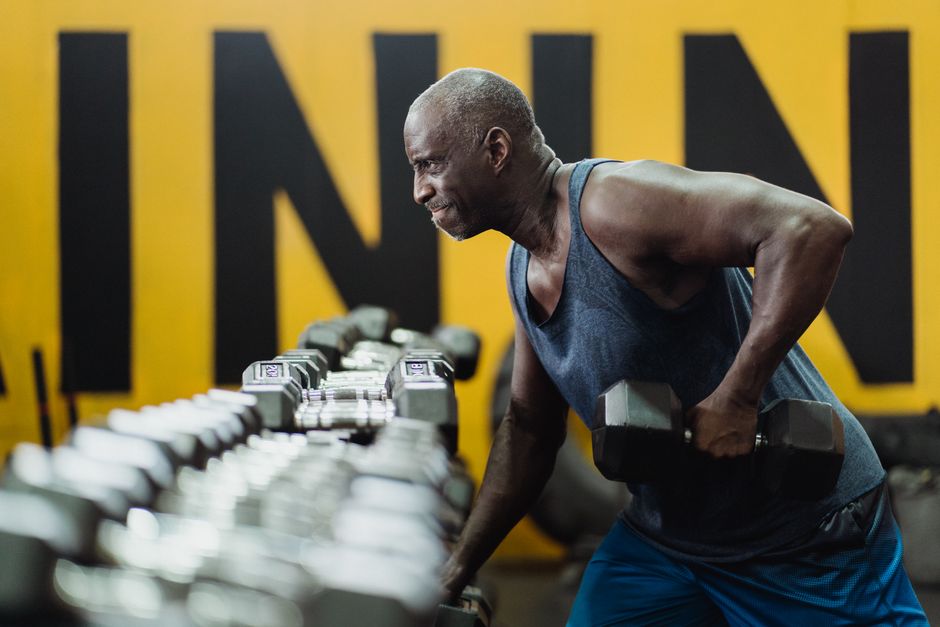
Your shoulder started whispering during Monday's top set of bench press, and by Friday it was loud enough to hear between sets of everything else. The default advice, just rest it, is the one instruction a lifter over 40 cannot afford to follow blindly. Full rest starts a detraining clock, and the muscle you lose in a few idle weeks takes far longer to buy back. Training with joint pain after 40 is a programming decision, and the right call is almost always to change the exercise while keeping the effort, not to shelve the muscle and hope.
Stay in the loop.
Get the latest posts and exclusive content delivered to your inbox.
Join 48 readers. No spam. Unsubscribe in one click, anytime.
Physical therapist Jeff Cavaliere gave Peter Attia a frame worth memorizing in Attia's episode with Cavaliere: an injury is "not a mandate to completely rest" but rather "a mandate to choose safer, more appropriately loaded and progressed exercises." Most lifters invert this. They rest the joint, lose the muscle, and come back to a barbell they now have to re-earn.
This is the playbook version of that idea: a 60-second triage test, four rules that make any exercise swap hypertrophy-competent, five worked substitutions for the joints lifters actually flare, an intensity floor in reps in reserve, loading rules for tendons, the red flags that genuinely mean stop, and a two-week ladder back to the lift you gave up.
Why Training With Joint Pain Is a Programming Decision
Run the numbers on the default. Detraining research generally shows measurable losses in strength and muscle within roughly two to three weeks of stopping resistance work, and rebuilding those qualities takes longer than the layoff itself. At 45 that trade is worse than it was at 25, because age is already pulling the other direction. The gradual loss of muscle mass and strength that accompanies aging is codified in the consensus definitions of sarcopenia, and it does not pause politely while you rest a shoulder.
Attia's longevity argument raises the stakes further. The case he builds for resistance training over 40 is about healthspan: muscle and strength as the reserves that decide how you live later, not just how you look now. Global recommendations have moved the same way, with WHO's activity guidelines telling all adults, older adults included, to do muscle-strengthening work at least two days per week.
Defaulting to rest at the first flare quietly does the opposite of what the evidence says to do more of. The joint needs a decision and the muscle needs a stimulus. One well-chosen substitute serves both.
Triage the Pain Before You Swap Anything
Training with joint pain well starts with sorting whether today's pain is even loadable. Sixty seconds, three checks.
- Quality. A dull, diffuse ache that eases as you warm up is usually trainable. Sharp, catching, or stabbing pain at a specific point in the arc is not, at least through that range today.
- Set behavior. Pain that holds steady at the same low level from first rep to last can be loaded. Pain that climbs rep to rep will end the set, and then the joint.
- The 24-hour response. Acceptable pain settles back to baseline by the next morning. Waking up worse means yesterday's load exceeded the tissue's tolerance, regardless of how the session felt at the time.
Pass all three and you can train today, swapping only the lifts that provoke symptoms. Fail either of the first two and the swap is mandatory. A small set of symptoms, covered near the end, means the next decision belongs to a clinician rather than a barbell. Tendinous pain, dull and localized to a tendon that warms up with use, usually sits in the trainable category, which is why tendon flares get their own loading rules below.
Four Rules That Make a Substitute Exercise Work
A swap only counts if it stays a real training stimulus. Cavaliere's injury rehab principles boil down to re-selecting exercises rather than deleting them, and four rules keep the re-selection honest.
- Keep the movement pattern. You have six: squat, hinge, horizontal press, vertical press, horizontal pull, vertical pull. Substitute within the pattern instead of dropping it. Legs that cannot squat still need a squat-shaped stimulus somewhere.
- Keep the target muscle the limiting factor. The substitute must let the intended muscle fail first. If your grip or some other joint gives out before your chest does, you performed a joint-friendly exercise for the wrong muscle.
- Remove or shorten the painful range. This is pain-free range training in practice: pins, boxes, blocks, and partials that keep the load inside the arc you own. The mid-range is where a muscle carries the most tension anyway, so a shortened lift can still be a loaded lift.
- Keep the load honest. Baby weights convert a substitution into an accidental deload. Rule four pairs with the intensity floor you will meet shortly, and it is the rule most lifters break out of misplaced caution.
The landmine press shows all four at once: pressing pattern preserved, delt and pec still loaded, arc shifted away from the painful position, and heavy enough to take within a few reps of failure.
Five Exercise Swaps for the Four Joints That Flare

These five cover the flares lifters over 40 actually report, including the back-plus-legs combination where squatting hurts but the legs themselves are fine.
| Flare | Swap in | Loading notes |
|---|---|---|
| Shoulder pinch on bench or overhead press | Landmine press | Standing or half-kneeling; 2 to 3 hard sets of 8 to 12 |
| Tennis elbow on presses and pulls | Neutral-grip dumbbell bench press | Neutral wrist unloads irritated wrist extensors; switch curls to hammer curls |
| Knee pain at the bottom of a squat | Box squat just above the painful depth | Box height is the range regulator; load stays high because mid-range work dominates |
| Lower back flare on deadlifts | Trap-bar deadlift from elevated handles | Raised handles cut the deepest, most stressful portion of the pull |
| Lower back flare on squats | Belt squat | Legs loaded hard with the spine removed from the equation; leg press if no belt squat exists |
Three of these deserve a word on why they work.
The landmine press keeps the pressing pattern and the delt-to-pec-to-triceps chain loaded while letting the shoulder blade rotate upward through a friendlier arc than a straight bar demands. If you went searching for a shoulder-friendly bench press substitute, this is the one that keeps the most weight on the bar.
The box squat removes the turnaround at depth, the exact moment knee stress peaks, without deleting the squat. Set the box just above the painful range and you have a knee-friendly squat alternative you can genuinely load, which is why it is a staple in older lifters' programs.
Elevated-handle trap-bar pulls shorten the bottom range where many deadlift-related back complaints originate, making this the lower-back-friendly deadlift alternative that preserves the hinge pattern, the glute and hamstring load, and most of the working weight.
How Close to Failure When Training Around Pain
The intensity floor is simple to state: most working sets of a substitute lift end within 0 to 3 reps in reserve. That is roughly the proximity to failure you would use on any hypertrophy block, and it does not become negotiable just because the exercise changed.
The reason is that effort, not exercise selection, is the primary driver of hypertrophy as long as the target muscle stays loaded. Studies comparing light and heavy loads in trained lifters have repeatedly produced similar growth across a wide loading range, with only the very lightest loading, somewhere below roughly a third of a one-rep max, tending to fall short when sets end close to failure. Translation for a lifter with an angry joint: the substitute does not need your old numbers on the bar. It needs you to finish sets close to failure.
Age adds a second reason to respect the floor. Older muscle shows anabolic resistance, a smaller response to the same training and protein intake, a phenomenon detailed in this review of anabolic resistance. Low-effort sets a 25-year-old might grow on quietly do very little for a 45-year-old. When training around injury, cruise-control work does not just maintain less. It stimulates less.
Tendon Pain Responds to Progressive Loading
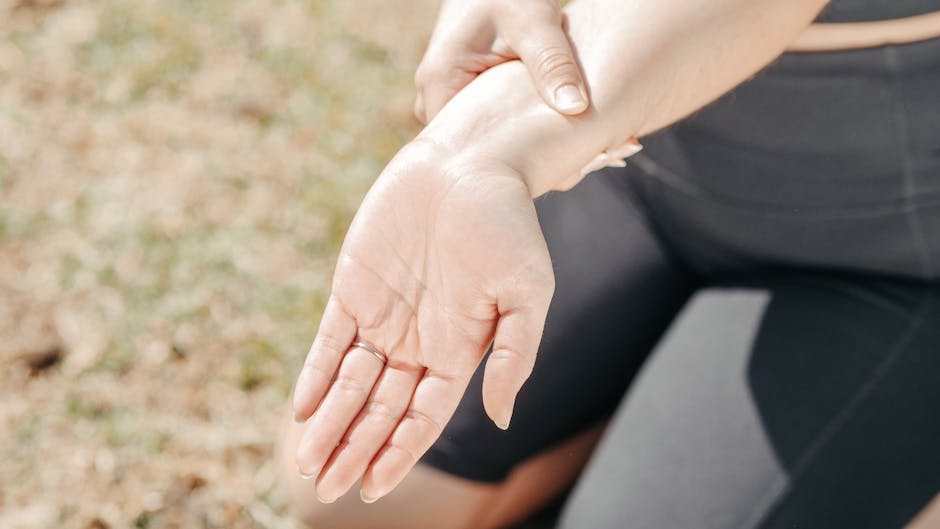
Tendon pain from lifting usually announces itself as a dull ache right on the tendon that warms up with use. If triage pointed there, and tennis elbow, patellar pain, and an angry rotator cuff tendon are the classic trio for lifters, then rest is the trap. Tendons adapt to load. Pure rest commonly deconditions tendon capacity, and the pain simply returns when loading resumes, which is why progressive loading has been first-line management in sports medicine for well over a decade. The influential model treats tendinopathy as a continuum of load-response states and prescribes managed load rather than unload, as Cook and Purdam's tendinopathy continuum laid out.
Isometrics earn their place early. Holds such as a 30 to 45 second heavy split squat or a loaded wrist extension have produced short-term pain relief in studies of in-season athletes, enough to calm a tendon before a session. Treat them as a starting tool, not a cure. The analgesia is temporary, and tendon capacity only rebuilds under progressively heavier loading, typically heavy slow resistance work over weeks to months. That is what training around tendinopathy actually looks like.
The monitoring rules most rehab settings use:
Keep pain at or below 3 out of 10 during training.
It should settle back to baseline within 24 hours.
Week to week, the same load should hurt less.
Break the first two and the load is too high. Obey all three while adding weight, and the tendon is remodeling, not deteriorating.
Red Flag Joint Pain and When to Stop Lifting
The substitution protocol has a genuine stop condition, and this is it. Get evaluated before training through any of the following:
- Night pain that wakes you regardless of position or movement.
- Neurological symptoms: numbness, tingling, pain radiating down a limb, or new weakness.
- Mechanical signs: joint swelling, locking, or giving way.
- Acute trauma: pain that began with a specific pop, tear, or fall.
- No improvement after two full weeks of smart, modified loading.
For low back pain in particular, clinicians work from established red flag screening lists, and the logic carries over to peripheral joints. None of these symptoms mean your training life is over. They mean the next decision belongs to someone who can image and palpate the joint, not to a substitution matrix.
Reintroducing the Lift You Swapped Out
Once the substitute is pain-free at full effort and the flare has stayed quiet for several sessions, climb back down the ladder you came up. Two weeks, three rungs.
- Week 1: the original lift twice, at 40 to 50 percent of your old working weight, 3 sets of 8 to 10 at 4 to 5 RIR. It should feel conspicuously easy. That is the point.
- Week 2: 60 to 75 percent, 3 to 4 sets at 2 to 3 RIR, and one set at 1 to 2 RIR if the joint stays silent.
- Throughout: keep the substitute as a second movement until the original lift carries your old loads again.
The re-flare rule mirrors the tendon rules: pain above 3 out of 10 during a session, or any symptom still present the next morning, drops you back one rung for a week. Progress in the lift you can recover from, not the one you can attempt.
The quiet payoff is that there is almost nothing to rebuild. Because the swap kept effort high and the muscle loaded, the detraining clock barely started, and you are reintroducing weight to a muscle that never left. That is the whole argument for treating training with joint pain after 40 as a programming decision: the joint gets its modification, the muscle keeps its stimulus, and nothing about your training goes dark while the tissue heals.
Stay in the loop.
Get the latest posts and exclusive content delivered to your inbox.
Join 48 readers. No spam. Unsubscribe in one click, anytime.
About the author
Elena Park
Sleep and Recovery Specialist
Elena has spent a decade helping people fix their sleep and recover faster, pairing wearable and HRV data with the cold, heat, and breathwork protocols she tests on herself first. She writes recovery routines that hold up under real, busy lives.
Related Posts

Progressive Overload Without Adding Weight
Progressive overload is a programmable dose, not just added weight. Learn seven progression vectors, decision rules, and a stall audit for stalled lifts.
Can Exercise Reverse Muscle Aging? What Training Cannot Fix
Can exercise reverse muscle aging? Training normalizes over half the molecular signature of aging muscle, but inflammaging and stem cell loss persist.

Exercise Snacking for Lifters, Audited and Dosed
Exercise snacking can't replace a loaded gym session for lifters, but dosed right it preserves strength on desk days. The verdict plus a dosing protocol.