Exercise Snacking for Lifters, Audited and Dosed
Exercise snacking can't replace a loaded gym session for lifters, but dosed right it preserves strength on desk days. The verdict plus a dosing protocol.

Every productivity feed has run the pitch by now: skip the gym, knock out twenty squats every time you refill your coffee, and assemble a full workout from fragments. If you already squat 1.5 times bodyweight for working sets, that pitch deserves an audit rather than a shrug. Exercise snacking cannot replace a loaded, progressive gym session for strength or hypertrophy, and the research behind it never tested that outcome in anyone resembling you. What the evidence does support is narrower and far more useful: dosed correctly, short movement bursts hold strength through desk days, travel, and short layoffs at a small fraction of the volume and recovery cost, and they blunt the post-meal glucose spikes that full sessions never touch.
Stay in the loop.
Get the latest posts and exclusive content delivered to your inbox.
Join 46 readers. No spam. Unsubscribe in one click, anytime.
What follows audits the study designs (who enrolled, what load, which endpoints), explains why splitting work across the day helps metabolism but caps growth, pulls in the minimum-effective-dose and detraining literature, and ends with a dosing protocol you can schedule against real training instead of around it.
What Exercise Snacking Is, and Who Got Tested
An exercise snack is a short, isolated bout of activity, usually one to a few minutes, performed a handful of times across the day: a flight of stairs, a set of bodyweight squats, a brisk walk to the far printer. Micro workouts belong to the same family once the bouts stretch past five minutes. What matters most is where the concept came from. Exercise snacking entered the scientific literature through metabolic research, and a systematic review of snack trials shows the evidence base is built on sedentary and metabolically at-risk adults doing unloaded or bodyweight movements.
That population choice quietly decides what the headlines mean. Enroll people who average a few thousand steps a day, and almost any dosed movement improves their numbers. Report that exercise snacks "improve fitness," and the finding says nothing about a lifter carrying four years of progressive overload, because no trial in this literature enrolled one. Before asking whether exercise snacking builds muscle, first check whether muscle was ever an endpoint.
What the Snack Research Measured, and What It Skipped
Walk into any cited trial and read the outcomes column. The original exercise-snack trial put insulin-resistant adults through brief vigorous bouts before meals and compared them with a single continuous session, with postprandial glucose as the endpoint that mattered. The fractionated pattern blunted glucose excursions at least as well as the continuous bout in that small sample. The mortality evidence arrives from a different direction entirely: a large device-based cohort tracked self-described non-exercisers with wrist accelerometers and found that roughly three to four brief vigorous bouts a day were associated with substantially lower all-cause and cardiovascular mortality over about seven years of follow-up. For a healthy lifter, that mortality signal is the strongest general-health argument for snacks, and it stands entirely independent of anything happening under a barbell.
Scan the endpoints across this literature and a pattern repeats: postprandial glucose, blood pressure, cardiorespiratory fitness. Missing from the list are one-rep-max tests, muscle cross-sectional area, and any head-to-head trial of fractionated bodyweight squats against a loaded, progressive session in trained lifters. No such direct trial appears in the work the systematic reviews surface, so when an influencer claims desk squats match a gym session, the claim is extrapolation from beginner and clinical populations. Beginners blur the picture, because novices grow from almost any stimulus for a few months, which fuels exactly this hype, and that early response says nothing about an adapted lifter's ceiling. Fractionized exercise research answers metabolic questions. It has not answered yours.
Why Fractionation Helps Glucose but Caps Strength
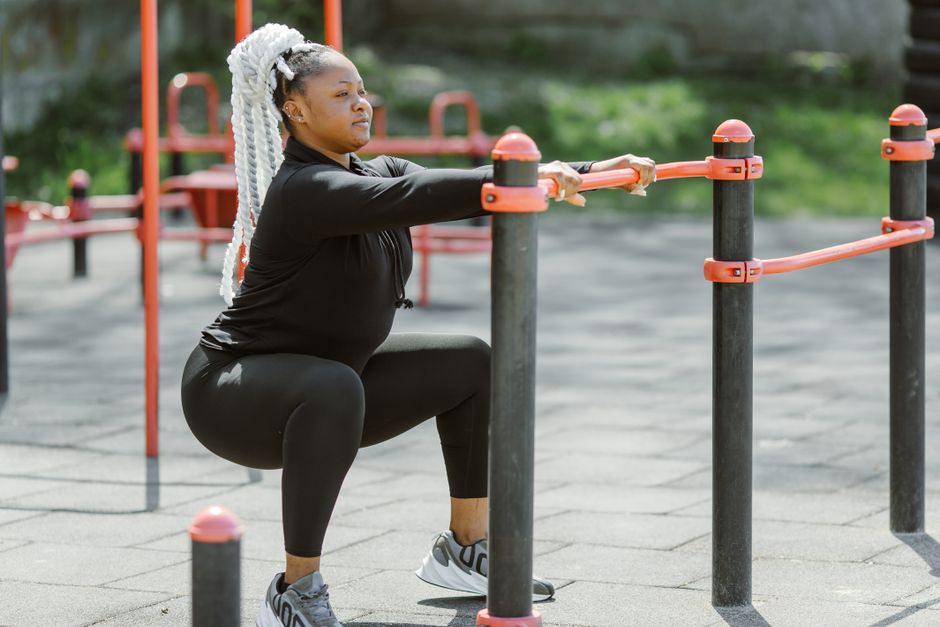
The mechanism split explains why one tool can shine in one column and stall in the other.
Glucose control is a timing problem, and fractionation is a timing solution. Contracting muscle recruits GLUT4 transporters to the cell membrane independently of insulin, so every fresh bout opens a glucose-clearing window on its own. Spread short bouts across the day and each large meal is met by a contraction window, which is precisely the architecture a desk-bound metabolism lacks. A meta-analysis of walking breaks found that even a few minutes of easy walking after a meal reliably blunts postprandial glucose compared with sitting through the digest. For glucose, distribution is the feature.
Hypertrophy is a tension problem, and fractionation strips tension out. Reviews of the mechanisms converge on mechanical tension as the primary driver of growth, with metabolic stress and damage in supporting roles, per a classic review of hypertrophy mechanisms. Growth also demands proximity to failure, because the final reps of a hard set carry most of the stimulus. Run the numbers for a trained lifter: a casual set of 15 bodyweight squats, for someone who front-squats heavy weights for reps, may sit dozens of repetitions from failure while loading the muscle with a small fraction of the tension it already tolerates. Two hundred bodyweight squats spread throughout the day can add up to zero effective sets.
Training status tightens the cap. Untrained muscles respond to nearly any dose, which is why fractionated bodyweight protocols produce measurable gains in beginners. A trained lifter's response to a fixed, sub-threshold dose is blunted; the same snack that grows a novice's legs barely registers as a signal in yours. Bodyweight work also lacks a clean progression lever, since reps climb into endurance territory rather than toward overload. That is the honest answer on exercise snacks versus a full workout for strength: for the trained, a snack is a warm-up with metabolic side benefits.
The Minimum Effective Dose for Keeping Strength

Here the story flips in your favor: how much training it takes to maintain strength turns out to be embarrassingly little.
Detraining timelines are forgiving. Strength fades far more slowly than lifters fear. Breaks of two to three weeks typically cost little measured force, neural adaptations persist, trained muscle is slow to atrophy, and some apparent loss is glycogen and pump rather than contractile protein. The minimum-dose literature is friendlier still. One frequently cited months-long trial held strength on roughly one-ninth of prior training volume, meaning lifters who cut to a small fraction of their usual sets kept their strength across the study window. If you normally do nine hard sets of squats a week, a single hard weekly set can plausibly hold the line for weeks, not days.
That math is what makes exercise snacks a legitimate strength maintenance tool for someone who already trains. A maintenance dose wants exactly what a snack can deliver: infrequent, high-effort, low-skill exposures that cost almost nothing in recovery. The qualifier is "hard." Twenty casual bodyweight squats are activity. Five slow rear-foot split squats, loaded, stopped two reps shy of failure, are a maintenance stimulus. Snacks earn their slot only when the effort is real.
How to Dose Exercise Snacks as a Lifter
Three decisions define the protocol: how hard, how much, and when.
Intensity levers before rep counts
If a bodyweight set runs past fifteen comfortable reps, escalate the lever instead of the count.
| Lever | Lower body | Upper body |
|---|---|---|
| Tempo | 3-second descent, 1-second pause in the hole | 3-second lowering on push-ups |
| Unilateral | Rear-foot split squats, step-ups to a chair | Archer push-ups, single-arm door rows |
| External load | Loaded backpack or vest, 20 to 40 lb | Backpack push-ups, feet-elevated push-ups |
| Environment | Stairs two at a time, wall-sit holds | Table inverted rows, dips off a chair |
Sets and reps by purpose
- Maintenance floor: one to three hard sets per movement pattern, three to five days a week, each set ending two to three reps shy of failure.
- Glucose control: one to two minutes of moderate-to-vigorous movement right after a meal, ideally each meal on desk days. Walking counts. Stairs and squats count.
Frequency itself is not the active ingredient. Meta-analytic work on resistance training frequency generally finds that once weekly volume is equated, extra sessions add little hypertrophy on their own. That cuts both ways: spreading sets across the day is not magic, and it does not need to be. What frequency buys is per-set quality, because each snack arrives fresh, plus schedule fit, which is exactly what a maintenance floor wants.
Timing against your real training
The guardrail most snack guides omit: hard lower-body snacks do not sit next to a lower-body session. Place them on off days, or at least six hours from training, and never the evening before heavy squats. Same-day concurrent training research shows that the ordering and spacing of bouts measurably alter interference and residual fatigue. A hard leg snack the night before your squat day mostly buys pre-fatigue without matching payoff, so encode the rule in your calendar rather than trusting how fresh you feel.
When a Snack Substitutes a Session, and When It Is Junk Volume
Desk days, travel weeks, and deloads are where workout snacks genuinely earn their keep. Three uses are legitimate. Two failure modes quietly eat the value.
| Situation | Verdict |
|---|---|
| A gym session you can attend | Never substitute. Snacks are add-ons, not replacements. |
| Desk day between sessions | Legitimate. Run the maintenance floor plus post-meal minutes. |
| Travel week with a hotel room | Legitimate. Daily near-failure sets hold strength until you are home. |
| Deload week | Legitimate. Snacks can be the reduced-volume work. |
| Night before heavy lower day | Junk. Fatigue cost, minimal added stimulus. |
| Chasing a 300-rep daily total | Junk. Effective sets near failure are the currency; raw rep counts are not. |
| Big carb meal while desk-bound | Highest-return use. Two minutes of stairs or brisk walking after eating. |
The two failure modes deserve names. Substitution guilt is skipping a session you could have trained and calling desk squats equivalent; they are not, and the endpoint audit above is why. Fatigue stacking is grafting snack volume onto an already heavy day, which adds glycogen drain and soreness without a growth signal. Junk volume for a trained lifter is exactly this: work too far from failure to preserve strength and too light to build it.
Sample Weeks for Desk Days, Travel, and Deloads
Assume a four-session week: lower body Monday and Thursday, upper body Tuesday and Saturday. The conservative rule baked into every table below is that no hard leg snacks land on the day before a lower session.
Desk-bound week
| Day | Session | Snacks |
|---|---|---|
| Mon | Lower | Post-meal walks only |
| Tue | Upper | Two hard split-squat sets, 48 hours clear of Thursday, plus walks |
| Wed | Off | Upper-body snacks and walks, legs quiet before Thursday |
| Thu | Lower | Post-meal walks only |
| Fri | Off | Full stack: two hard split-squat sets, two loaded push-up sets |
| Sat | Upper | Optional upper snacks, post-meal walks |
| Sun | Off | Walks and mobility, legs quiet before Monday |
Travel week, no gym
Maintaining strength while traveling is the realistic goal, and one daily hotel stack covers it. Rear-foot split squats with a loaded backpack for three sets, stopping two reps shy of failure. Push-ups escalated through the levers above for three sets. Two sets of inverted rows under a sturdy table. Finish breakfast and dinner with two minutes of stairs. Expect to hold, not build, and expect the numbers to return quickly once you are back under a bar.
Deload week
A deload wants intensity preserved and volume cut, which is a snack-shaped week. Keep one hard top set per lift if a gym is available, cut accessory work entirely, and let two hard upper-body snack days plus post-meal walks carry the rest. You recover while keeping the skill of effort.
The policy in one line: loads build, snacks hold, and every big meal owes two minutes of movement. The next time an exercise snacking headline lands, read the endpoints before the promise. If the study measured glucose, blood pressure, or fitness in sedentary adults, it tells you about metabolism, which is worth caring about, and nothing about your one-rep max. Your squat still answers to load.
Stay in the loop.
Get the latest posts and exclusive content delivered to your inbox.
Join 46 readers. No spam. Unsubscribe in one click, anytime.
About the author
Elena Park
Sleep and Recovery Specialist
Elena has spent a decade helping people fix their sleep and recover faster, pairing wearable and HRV data with the cold, heat, and breathwork protocols she tests on herself first. She writes recovery routines that hold up under real, busy lives.
Related Posts

How Fast Do You Lose Muscle? The Real Detraining Timeline
How fast do you lose muscle and strength? The detraining timeline by outcome, plus the minimum weekly dose shown to preserve both through layoffs.

Mobility Training Needs End-Range Load, Not More Flow
Treat mobility training like strength training: test your active-versus-passive ROM gap, then run a progressive end-range loading protocol that sticks.
Strength Standards by Age and Bodyweight for the Big Three
Compare your deadlift, squat, and bench against strength standards by age and bodyweight, then follow the programming plan your percentile band calls for.