Your Sleep Setup Cost per Night, Every Layer Ranked
Your sleep setup cost per night, ranked layer by layer: the mattress runs 22 cents, the Oura Ring 51 cents. See where the next dollar buys the most sleep.

Priced per night, the biggest thing you sleep on costs less than any electronic in your bedroom. Run the sleep setup cost per night math, dividing what you paid for each layer by the nights of useful life it delivers, and the hierarchy inverts. The average mattress costs about 22 cents a night in a survey of 1,012 U.S. owners. The Oura Ring watching that mattress costs about 51 cents a night once its membership is included. An active cooling rig can outcost every other layer in the room combined.
Stay in the loop.
Get the latest posts and exclusive content delivered to your inbox.
Join 46 readers. No spam. Unsubscribe in one click, anytime.
Two purchase rules fall out of that ledger. The highest-return dollar goes to replacement timing and light control, not to new electronics. And measurement gear has to justify itself by a different standard than intervention gear, because a tracker watches your sleep while a mattress, a pillow, and a set of blackout curtains change it. Everything below builds that ledger layer by layer, with arithmetic you can rebuild from your own receipts.
How to Price Sleep Gear per Night
The whole method is one division:
cost per night = price paid ÷ (years of useful life × 365)
Three details decide whether the number is honest. Useful life means the years the item still does its job, not the warranty. A pillow can be defect-free and still be a dead pillow at 18 months. Use realistic prices. What you actually paid, sale discount included, is the number that belongs in the math. Count recurring fees. A device with a subscription has two prices, and the per-night figure is meaningless without both.
One distinction matters before the numbers start. Some layers intervene, meaning they physically change the sleep environment: the surface, the temperature, the light. One layer only measures. Cost per night prices both fairly, but it cannot score them the same way, because an intervention buys a change while a measurement buys information. Keep that split in mind; it decides the final ranking.
The Mattress Runs About 22 Cents a Night
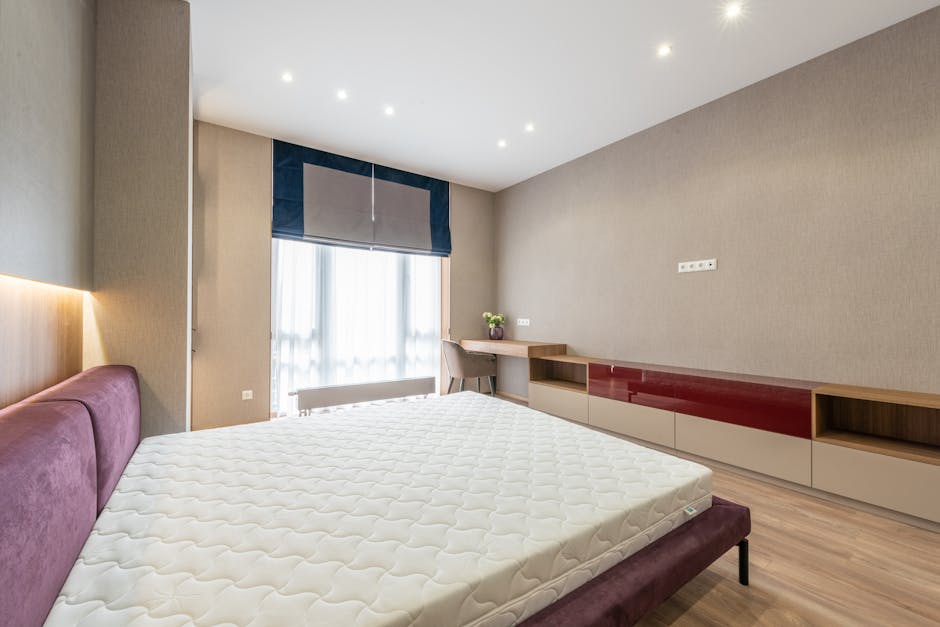
How much does a mattress cost per night over 9 years?
In EachNight's survey of 1,012 owners, the average respondent's mattress cost $648, and the expected lifespan came in around nine years. The survey computed each owner's own price-over-nights ratio and averaged the results, landing at roughly 22 cents per night. Multiply 22 cents across 3,285 nights and you get about $720, close to but not identical with the $648 average price, which is what averaging ratios instead of prices does. For ranking purposes, 22 cents is the number.
That makes the mattress cost per night cheaper than both electronics on the ledger, the 51-cent ring and the $1.70 cooling rig, despite being the biggest purchase most bedrooms ever see. Sixty percent of owners in the survey slept on a bed costing under 25 cents a night. The same respondents said they would pay $44 a month for one extra hour of quality sleep, about $1.47 a night, nearly seven times what the bed itself costs them. People who balk at a 22-cent surface routinely pay far more for a device that only observes it.
Paying more did not guarantee better rest in the survey's own data, either. The under-$300 tier matched the $1,000-to-$1,999 bracket for satisfaction, with 61% in each group calling their sleep good or very good. Price buys materials and longevity, not automatically better nights.
Pillow and Bedding Costs Sit in the Middle
Bedding textiles are consumables mispriced as durables: the ledger divides price by every night the item exists, not every night it works, so a textile's per-night cost is a curve, not a constant. The sharper metric is cost per good night, price over the nights it still worked.
The pillow you are replacing too late
Common pillow replacement guidance puts useful life at one to two years. Price two pillows: a $50 one runs about 14 cents a night replaced at one year, 9 at eighteen months, 7 at two; an $80 one, 22, 15, and 11. The flat figure falls as you hold on; cost per good night only worsens, because once the fill goes lumpy each extra night draws its share of the price while delivering none of the sleep. A pillow replaced on schedule can rival the mattress itself on the ledger, and the fold test is the trigger: fold it in half; if it stays folded, the curve has already turned against you.
Sheets, the same curve plus a second job
A decent sheet set runs $60 to $90 and, per guidance on how long sheets last, holds up two to three years, roughly 6 to 12 cents a night. The same curve applies: pilled fabric keeps costing you after it stops breathing, and breathing is the second job, since sheets double as cooling rung 2 and breathability is the cheapest temperature control there is.
Together the two textile lines run about 13 to 25 cents a night, and where you land depends on how promptly you replace each one. The perverse part: that 13-cent floor is a pillow held two full years over bargain sheets, cheapest on paper, least useful in practice.
Blackout Curtains for Sleep at a Couple of Cents
One to three cents a night is the price of the only line under five cents on the ledger with a hormone behind it. A $40 to $60 blackout curtain set, or $20 to $30 of window film, held for five or more years amortizes to roughly 2 percent of the $1.47 those same survey owners put on an extra hour of quality sleep. Yet blackout was only the fourth most common purchase in the EachNight survey, bought by 31% of owners, behind gear that in several cases runs 5 to 50 times more per night.
The mechanism is precise enough to price. Evening light suppresses melatonin, the hormone that cues sleep onset, and research on light and melatonin keeps confirming how sensitive the response is to dose and timing, and closed eyelids are weak defense. That sensitivity is the edge case hiding in plain sight: a streetlight bleeding through blinds still doses you, so a room that feels dim enough often is not.
The intervention-versus-measurement split is starkest here. Two cents changes the input your brain reads all night; the 51-cent ring only reports the output. If the problem is a partner on a mismatched schedule, curtains cannot fix the lamp, and a sleep mask beats a tracker there as well. Light control is the one upgrade where the frugal move and the physiological move are the same purchase.
Cooling Gear Is the Biggest Line Item
Feeling too hot was the number one mattress complaint in the survey, reported by 34% of owners. Cooling is therefore where the money goes, and the category spans two orders of magnitude, which makes the standalone question ("are cooling mattress pads worth it?") useless without a ladder.
Rung 1, moving air, about 3 cents. A $40 fan over four years is roughly 3 cents a night, and fans were both the most common sleep purchase in the survey (39% of owners) and the product owners most often said noticeably improved their sleep (36%). The cheapest rung is also the best-rated one.
Rung 2, passive, 6 to 25 cents. Linen sheets already on the ledger sit at 6 to 12 cents, a wool topper lands near 14 ($150 over three years), and passive pads cap the rung: $110 to $275 held about three years is 10 to 25 cents a night. Passive gear captures much of the benefit because it removes heat your own body generates; it just cannot go below room temperature.
Rung 3, active water systems, $1.50 to $3 a night. Water-cooled mattress covers from Eight Sleep, Sleepme's Dock Pro line, and similar brands list at roughly $2,000 to $2,900 for a queen, and Eight Sleep adds a recurring membership fee. Work the example with explicit assumptions: $2,200 of hardware plus $180 a year for five years is $3,100 across 1,825 nights, about $1.70 a night. That single line exceeds the mattress, pillow, sheets, and blackout curtains combined (about 45 cents) by nearly a factor of four.
Are cooling mattress pads worth it?
On the ledger, only when heat is the binding constraint. For night sweats, menopause, or a partner hot enough to wake you, an active system attacks a specific problem and can justify the price. For general "I sleep warm" discomfort, rungs 1 and 2 deliver most of the relief for a fraction of the price.
The Oura Ring at 51 Cents a Night

Now the layer most self-quantifiers already own. A full Oura Ring cost breakdown starts the hardware at $349, and Oura membership pricing runs roughly $70 a year. The Oura Ring total cost over three years with membership is therefore about $560: $349 plus $210. Divide by 1,095 nights and you get about 51 cents a night, an Oura Ring cost per year of roughly $187.
That is more than double the mattress on the same ledger, and the survey's effectiveness data is blunt about what buyers got: only 50% of sleep tracker owners said the device improved their sleep, the lowest rate of any popular product in the survey. A tracker changes nothing in the bedroom by design. It measures.
A tracker can still be a good purchase, just a different kind. Measurement earns 51 cents a night exactly when you act on the data, and the highest-value use is running n=1 experiments on the interventions above: two weeks with blackout curtains versus two weeks without, scored by the ring. Used that way, the tracker tells you whether every other line on the ledger is working. Used as a scoreboard, it is a pricey way to watch yourself sleep badly.
The Full Ledger, Ranked for the Next Dollar
The whole sleep setup cost per night stack on one page, using the worked numbers above. The physical bed, fan through mattress, still totals under 50 cents a night, less than the tracker watching it. The final column divides each line by the $1.47 the survey's owners put on one extra hour of nightly sleep, which turns cents into value share; only the cooling rig clears 100 percent, outspending an hour of sleep outright:
| Layer | Example price | Useful life | Cost per night | Share of the $1.47 sleep hour |
|---|---|---|---|---|
| Box fan | $40 | 4 years | ~3¢ | ~2% |
| Blackout curtains | $50 | 5+ years | ~3¢ | ~2% |
| Pillow | $50 | 1.5 years | ~9¢ | ~6% |
| Sheets | $80 | 2 years | ~11¢ | ~7% |
| Mattress | $648 (survey average) | ~9 years | ~22¢ | ~15% |
| Oura Ring + membership | $560 over 3 years | 3 years | ~51¢ | ~35% |
| Active cooling system | ~$3,100 all-in | 5 years | ~$1.70 | ~116% |
Ranking sleep environment upgrades by where the next dollar buys the most marginal sleep:
- Replace a worn-out mattress. Nothing else on the ledger actively costs you sleep; a dead mattress does. Among survey owners who admitted their bed needed replacing, 54% woke regularly sore or stiff.
- Blackout the window. A direct melatonin mechanism, the cheapest lever with a physiological case behind it.
- Replace the pillow. If it fails the fold test, you are paying mattress money for neck misalignment.
- Add moving air or passive cooling if heat is your complaint. The survey's own effectiveness data favors the fan.
- Replace sheets on schedule, which doubles as cooling rung 2.
- The tracker, but only with an action plan attached.
- Active cooling, last, unless heat is chronic and passive options have already failed.
One caveat keeps the ranking honest: cost per night is a price of admission, not a quality score. A 3-cent item that does nothing for you is 3 cents wasted, and a $1.70 system that ends two hours of nightly waking is cheap by the owners' own $1.47-an-hour math. Every line must pair its price with how much it can plausibly move your sleep, and the ranking above assumes each item addresses a problem you actually have.
Replacement Timing Beats Any New Purchase
How often to replace a mattress
Typical mattress replacement guidance lands at six to ten years, with the survey's owners expecting about nine. The amortization trap is what happens after that: stretch a $700 mattress from nine years to twelve and the per-night cost falls from 21 cents to 16, "saving" about five cents a night, roughly $20 a year, while you sleep on a surface whose support has already failed. The survey quantified both ends of the damage. Owners of mattresses ten or more years old were nearly five times as likely as first-year owners to say the bed needed replacing (52% versus 11%), and the share rating their sleep good or very good fell from 71% in year one to 48% at six to nine years.
The money behavior is the striking part. Nearly a third of owners (29%) admitted the bed was past due. Cost kept 68% of them from replacing it, and 86% of that group patched instead, spending an average of $151 on toppers, pillows, and similar fixes. That is a quarter of a replacement mattress spent on gear that cannot fix sagging support underneath. Deferring the big purchase looks like thrift and costs more than any gadget on this ledger.
The cheapest sleep upgrades per dollar are calendar entries. When to replace pillow, sheets, and mattress, roughly: pillow every one to two years on wear signs, sheets every two to three, mattress at six to ten years or when sagging and morning soreness appear, a topper at about three, a fan when it turns loud. Enter the dates once and the ledger maintains itself.
Run Your Own Sleep Setup Cost per Night Audit
Five steps, one evening:
- Inventory every layer you own, mattress through tracker, with what you actually paid. Receipts if you have them, honest estimates if not.
- Assign realistic useful life to each, based on wear signs and age rather than warranty length.
- Divide price by nights (years × 365) for every line, recurring fees included.
- Tag each line intervention or measurement, and note which specific problem it addresses.
- Rank by "fixes a problem I actually have" first, cost per night second, buy the top of the list, and calendar the replacements your dates imply.
The number that survives the audit is the only one worth arguing about at checkout. A 22-cent mattress, a 9-cent pillow, a 3-cent curtain, and a fan outwork a 51-cent scoreboard and a $1.70 chill on every line that matters.
Stay in the loop.
Get the latest posts and exclusive content delivered to your inbox.
Join 46 readers. No spam. Unsubscribe in one click, anytime.
About the author
Marcus Bao
Strength and Conditioning Coach
Marcus has programmed training for everyone from desk-bound beginners to masters athletes, treating every workout as an experiment with a measurable result. He writes ready-to-run strength, hypertrophy, and Zone 2 programs built around progression you can track.
Related Posts
Oura Ring Cost Over Three Years Is $560, Not $349
Our 3 year Oura Ring cost audit stacks hardware, membership, and battery wear into one true total, then names who should skip it for a cheaper tracker.
Sleep Tracker Accuracy on Trial in the Oura Lawsuit
Sleep tracker accuracy is on trial as Oura faces a lawsuit. See what validation studies show, which metrics to trust, and when to get tested.
Best Sleep Position by Symptom, With a Retraining Plan
Find your best sleep position for reflux, snoring, or shoulder pain, plus the mechanisms, graded claims, and a retraining plan that finally sticks.