Mobility Training Needs End-Range Load, Not More Flow
Treat mobility training like strength training: test your active-versus-passive ROM gap, then run a progressive end-range loading protocol that sticks.

You kept the streak alive. Ten minutes of flow every morning, months deep, and the measurements refuse to move: same knee-to-wall distance, same straight-leg raise height, same squat depth as twelve weeks ago. The session still feels productive because your hips genuinely feel oiled afterward, but the looseness is gone by lunch. If this is you, the problem is dosing, not consistency. Mobility training obeys the same progressive-overload logic as the rest of your program, and a generic 10-minute flow is the equivalent of curling five-pound dumbbells while wondering why your arms stopped growing. What follows is the diagnostic and the prescription: three field tests that split your range of motion into what you own versus what you merely can reach, and an end-range loading protocol with doses you can program alongside your lifts.
Stay in the loop.
Get the latest posts and exclusive content delivered to your inbox.
Join 45 readers. No spam. Unsubscribe in one click, anytime.
Why Your 10-Minute Mobility Flow Stopped Working
The plateau pattern is remarkably consistent across lifters. Consistency is high, perceived effort is moderate, and measured range of motion sits flat for months. The flow still produces a sensation of looseness, which your brain files as progress, but that sensation is a poor proxy for the outcome you are actually measuring.
The mechanism is mundane. Brief, low-intensity positions mainly buy a transient increase in stretch tolerance, a greater willingness to let the muscle lengthen. That willingness fades within minutes to hours, which is why the session feels great and the tape measure never moves. You are re-earning the same tolerance every morning instead of accumulating anything.
None of this makes flows useless. As a warm-up, or as maintenance for range you already own, a 10-minute circuit is fine. What it is not is a stimulus for new, measurable range of motion. For that, you need to figure out which variable you are underdosing.
Range of Motion Obeys a Dose-Response Curve
Three variables drive ROM adaptation. Audit any routine, including mine or yours, against them:
- Intensity at end range. How close to your current limit you work, and whether that limit is loaded. Actively pulling into your deepest angle is a different stimulus from hovering a few degrees short.
- Time under load. Total seconds per week spent working at that limit. Connective tissue adapts slowly and appears to need sustained, repeated loading rather than momentary passes.
- Frequency. Sessions per week that actually deliver the first two.
Now audit the generic flow. Ten minutes spread across six to eight positions leaves each position roughly 60 to 90 seconds total, usually split into shallow passes, at an intensity well below end range, with no external load. It scores low on all three variables. That is a maintenance dose at best.
For reference, the American College of Sports Medicine's general flexibility guidance calls for at least two to three days per week with 10 to 30 second holds. That is a defensible floor for general health, but it is not a dosing prescription for measurable gains in trained people, and it says nothing about intensity at end range, the variable that matters most here. Treating it as a training prescription is like treating "walk 30 minutes a day" as a hypertrophy program.
| Variable | Generic 10-minute flow | End-range loading |
|---|---|---|
| Intensity at end range | Low, unloaded | Moderate to high, loaded at the deepest angle |
| Time under load per position | 30 to 90 seconds, shallow | 30 to 60 seconds, at the limit |
| Progression | None, same flow forever | Angle or load added on a trigger |
| What it buys | Transient stretch tolerance | Range you can voluntarily load |
Stretch Tolerance Versus Real Tissue Adaptation
Two mechanisms compete to explain why stretching increases range of motion. One is sensory: the nervous system tolerates more length and lets you go deeper without the tissue changing much. The other is structural: muscle and connective tissue actually remodel, with eccentric training in particular showing longer fascicle lengths in multiple studies, given weeks to months of repeated loading at or near end range.
The honest read of the evidence favors the sensory explanation for short-term gains, which is exactly why stretching gains do not last. A widely cited 2010 review by Weppler and Magnusson concluded that improved tolerance to stretch, rather than increased physical extensibility of the tissue, explains most immediate improvements from stretching. Later work has refined rather than overturned that view: single sessions buy tolerance, while lasting change appears to require repeated loading over weeks to months.
The practical translation is simple. If your routine's entire effect evaporates within hours, it was working on tolerance. Durable range of motion training is built the same way durable strength is, by progressively loading the tissue at the angle you are trying to claim.
The Active-Minus-Passive ROM Gap, Defined
Split every joint measurement into two numbers:
- Passive ROM is the range an outside force takes you to: a strap, a partner, gravity.
- Active ROM is the range you reach unassisted, using your own muscle.
- The gap is passive minus active. It is the range you can be pushed into but cannot voluntarily use.
The gap matters because real tasks do not come with straps. A chair stand demands dorsiflexion strength at the bottom angle. Brisk walking demands hip extension you can actually produce, not just tolerate. The active-versus-passive range of motion gap is the variable that transfers to those functional tests, because it measures range you can control under load. Total passive flexibility is close to a circus number; strength at the angle is what shows up in sit-to-stand and gait-speed benchmarks as you age. That is also the real flexibility versus mobility distinction: mobility is passive range you can load, and mobility training for the sit-to-stand test is really strength training at specific angles.
Three Self-Tests for Ankle, Hip Flexor, and Hamstring
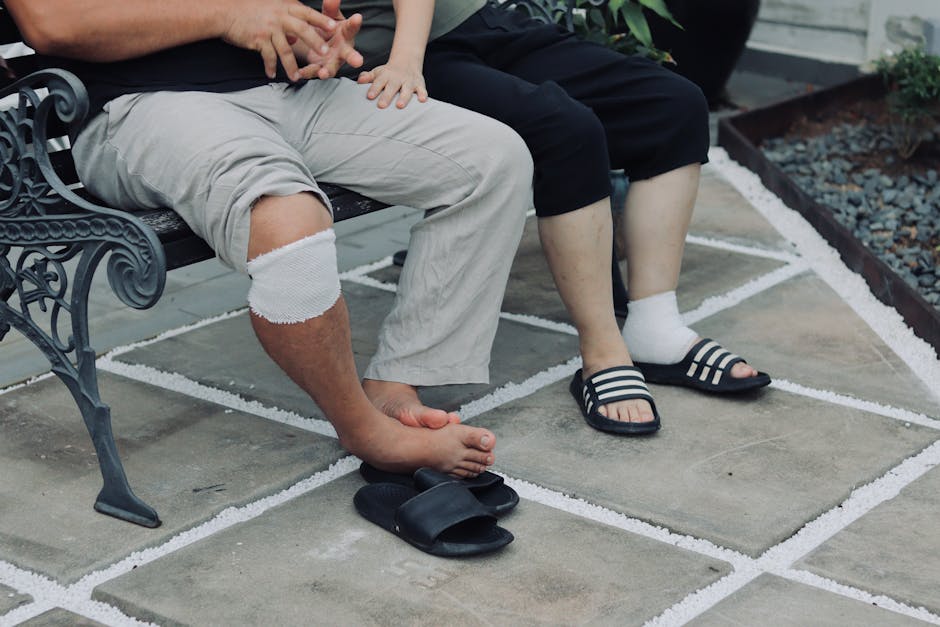
Run each test twice per joint, once active and once passive, and log the numbers. A phone with a goniometer app, a tape measure, and a strap cover everything. The question is never "how flexible am I" but "how to test active versus passive range of motion and compute the gap."
Knee-to-Wall Ankle Mobility Test
Kneel in a lunge with the tested foot flat, toes a measured distance from a wall, and drive the knee toward the wall without the heel lifting. Slide back until the knee just fails to touch, and record the toe-to-wall distance in centimeters.
- Passive: drive the knee forward with body weight and a hand press on the knee.
- Active: same setup, but pull the shin into dorsiflexion with your own muscle and no knee drive.
Around 10 centimeters passive is a commonly used functional floor, though norms vary with foot length and setup. On the gap, a few centimeters or more between the two versions usually reads as a control deficit worth training.
Modified Thomas Test for the Hip Flexor
Sit on the edge of a table, hug one knee to your chest, roll back, and let the free leg hang. The passive test measures how far the hanging thigh drops below horizontal; goniometric measurement of hip flexor length in the modified Thomas test shows good reliability, so your angle numbers are worth tracking.
- Passive: let the thigh relax fully and photograph or measure its angle from horizontal.
- Active: hold the hug position and actively press the hanging thigh down toward the table with your own hip extensors.
A thigh that rests at or near the table is the common target; a thigh that stays above horizontal flags short hip flexors. A large passive-versus-active difference means you own even less of that already limited range.
Active Straight-Leg Raise Hamstring Test
Lie supine, legs straight, and raise one leg with the knee locked, using no assistance. That height is your active number, roughly 50 to 80 degrees of hip flexion for many adults, with the vertical position a reasonable long-term target. The Functional Movement writeup on assessing the leg raise covers setup and scoring detail worth reading before your first attempt.
- Passive: loop a strap around the foot and pull to the same limit, or have a partner lift the leg.
- Gap math: passive 85 degrees, active 60 degrees means a 25-degree gap. You can borrow a quarter of your hamstring range but cannot use it, which is exactly the range that shows up in a hinge or a long stride.
Match the Mobility Training Dose to Your Gap
The three numbers, active, passive, and gap, put you in one of three branches:
- Small gap, low passive ceiling. Active and passive are both low and nearly equal. You control everything you have and simply need more range. This calls for heavier end-range strength work: loaded stretching and long-duration holds at the passive limit, with eccentric emphasis to drive tissue length.
- Large gap. Passive is high, active lags well behind. The angle already exists; you just cannot claim it. Run longer loaded holds (45 to 60 seconds) in the zone between your active and passive limits to own the range first, then strengthen at the new active limit.
- Symmetric and high. Active nearly equals passive and both are good. Maintain with a minimal dose and redirect effort to strength, skill, or a different joint. Chasing more passive range here has poor return.
Most lifters with stalled ROM land in branch one or two, and the fix is the same protocol with different emphasis.
The Progressive End-Range Loading Protocol

This is the starting dose, and it mirrors standard strength progression logic: work at the current limit, add angle or load when the limit feels controlled.
The dose: 30 to 60 second holds at moderate intensity (an effort you can breathe through, roughly a 7 out of 10), two to four sessions per week per joint pattern. Progress when the current end range feels controlled, meaning the hold is steady, there is no trembling, and you feel you could add load. Then add a small increment of angle or load, never both at once. This is an end-range loading protocol for flexibility that compounds the way your main lifts do.
The tools, in order of leverage:
- Isometric holds at end range. Push or pull into the barrier, or hold a load at it. This places strength work exactly where passive stretching wins new angle, which is why isometrics and end-range work are the highest-leverage tools in the mobility protocol toolbox.
- Loaded stretching. Hold the deep position with external load: a dumbbell in a deficit split-stance calf stretch, a plate on the knee in half-kneeling dorsiflexion, a weighted forward fold.
- Eccentric and lengthened-position work. Slow lowering into the stretch (3 to 5 second eccentric RDLs, reverse Nordics) trains the tissue in its lengthened state, the same logic covered in our pieces on isometrics and lengthened partials.
A worked 4-week hip flexor block, assuming a large-gap profile:
| Week | Emphasis | Dose per side |
|---|---|---|
| 1 | Establish the limit | Half-kneeling end-range iso, 3 holds of 30 s, bodyweight or light band |
| 2 | Own more time | 3 holds of 45 s, same or slightly more load |
| 3 | Claim the gap | 3 holds of 60 s between active and passive limits |
| 4 | Consolidate | 3 holds of 45 s at higher load, then cold re-test |
Slotted into a training week:
| Day | Lifting | Mobility dose |
|---|---|---|
| Mon | Lower | Ankle end-range isos, after lifts |
| Tue | Upper | Hip flexor block |
| Thu | Lower | Hamstring loaded holds |
| Fri | Upper | Ankle and hip flexor |
| Weekend | Off or easy | Nothing, or a light maintenance flow |
Ten to fifteen focused minutes after lifting is enough, and it leaves your main sessions untouched.
Failure Modes and Re-Testing Honestly
Four ways this goes wrong, all common:
- Passive-only gains. Passive numbers rise, active stays put. You bought angle you cannot use. Fix: shift time toward loaded holds at the active limit.
- Tolerance masking. Judging progress by post-session looseness. That feeling is stretch tolerance and fades within hours; as a metric, it is noise.
- Chasing pain. Creeping intensity until joint pinching replaces muscle effort. The target is a moderate 7-out-of-10 muscular sensation, sharp joint pain is a stop signal, not a milestone.
- Re-testing while warm. A warm tissue measurably inflates every number. Re-test cold, same setup, same time of day, every 4 to 6 weeks.
Judge the protocol only on cold-state re-tests. Success is small, repeatable increments, a few degrees or a centimeter or two per block, not dramatic single-session changes.
That cadence sounds slow until you compound it. A few degrees per six-week block, repeated across a year, is range you can see in your squat depth and feel in your hips at the bottom of a chair stand.
So pick one joint this month. Run the three tests, compute your gap, and choose your branch. Dose it 30 to 60 seconds at a time, two to four sessions a week, and let the cold re-test at week six, not the post-session glow, tell you whether it worked. Treat range of motion like a lift, because that is what it is.
Stay in the loop.
Get the latest posts and exclusive content delivered to your inbox.
Join 45 readers. No spam. Unsubscribe in one click, anytime.
About the author
Dr. Mara Whitfield
Longevity Protocols Lead
Mara translates aging research into protocols people can actually follow. With a background in preventive medicine and years tracking the longevity literature, she writes the healthspan routines, supplement stacks, and testing cadences she runs herself.
Related Posts
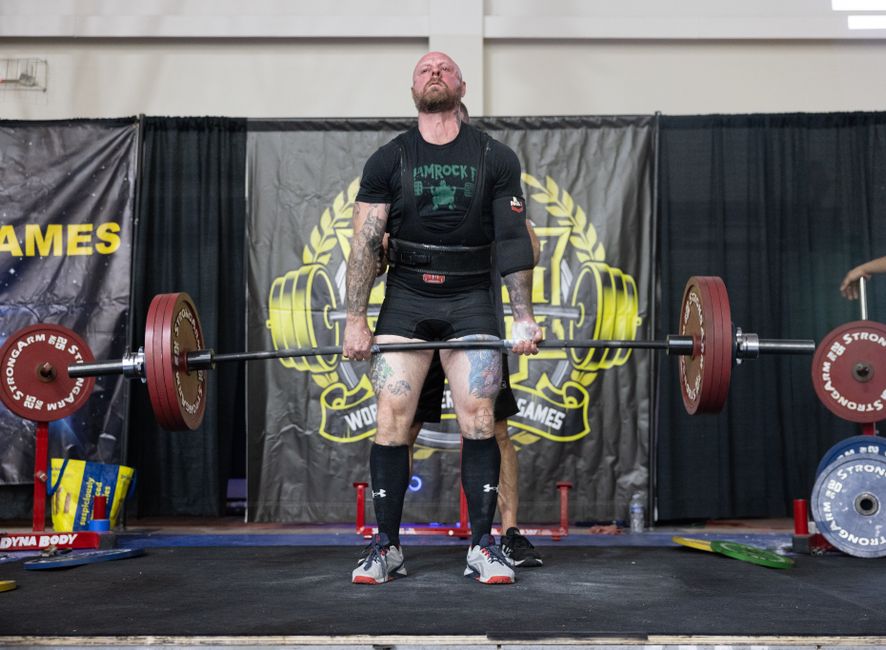
Strength Standards by Age and Bodyweight for the Big Three
Compare your deadlift, squat, and bench against strength standards by age and bodyweight, then follow the programming plan your percentile band calls for.
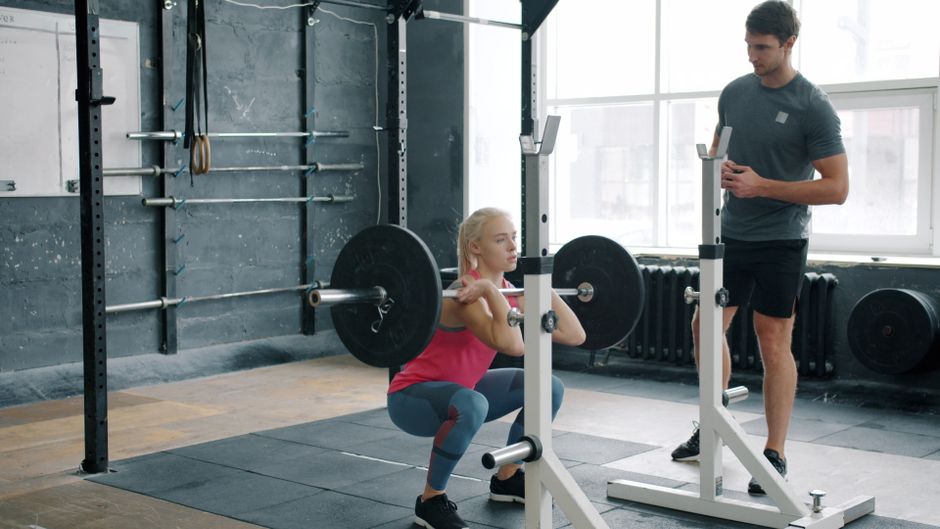
Lengthened Partials vs Full ROM, 5 Lifts Re-Dosed
Range of motion is a dose you program. Learn when full ROM wins, when lengthened partials build more muscle, and how to audit your reps on camera.

Sarcopenia Prevention After 50 Is Partly Timing
Sarcopenia prevention needs a third lever beyond lifting and protein. Time light, meals, and training to your muscle clock to defend strength after 50.