Creatine for Menopause, Dosed Like a Protocol
Creatine for menopause works best as a dosed protocol. What the evidence supports for muscle, brain fog, and mood, plus dosing, timing, and tracking.

Creatine for menopause usually gets written up as a benefits listicle: stronger muscles, maybe better mood, possibly a sharper brain. The sharper framing is that menopause may be the life stage where creatine pays its highest return, because estrogen decline stresses the three systems creatine acts on, muscle, bone, and brain energy metabolism, all at once, and all three depend on the same cellular battery that creatine recharges. Once you see that, the question shifts from whether to how: how much by goal, whether to load, when to take it relative to training and hormone therapy, and how to measure progress when the scale is quietly carrying a kilogram or two of extra water.
Stay in the loop.
Get the latest posts and exclusive content delivered to your inbox.
Join 37 readers. No spam. Unsubscribe in one click, anytime.
What follows is the protocol version of that answer, with the evidence ranked by strength: the muscle case is strong, the bone case is promising, and the brain fog case is still under construction.
What Estrogen Decline Does to Muscle, Bone, and Brain
Estrogen does far more than regulate reproduction, and its withdrawal is a whole-system event rather than a reproductive one.
In muscle, falling estrogen dulls the anabolic response. The same training session and the same protein meal produce less new muscle protein than they did at 40, a phenomenon researchers call anabolic resistance. Physical therapists now document the musculoskeletal changes at menopause across muscle, joints, and connective tissue together, because they arrive together. For anyone lifting through this window, creatine and muscle loss in women stops being a niche supplement question and becomes the main event.
Bone remodels in response to loading, and the steepest decline in bone mineral density clusters in the years around the final menstrual period. Muscle is the loading mechanism for bone, so whatever preserves strength and training capacity indirectly protects the skeleton.
In the brain, estrogen influences blood flow and energy metabolism. Reviews of estrogen and brain energy describe its role in cerebral glucose use and neuronal protection, which is one reason the fog, the lost words, and the slower recall of perimenopause track with the hormonal transition rather than with imagination.
Three systems, one transition, and a shared dependency on fast energy buffering. That is the setup.
How Creatine Works in Muscle and Brain
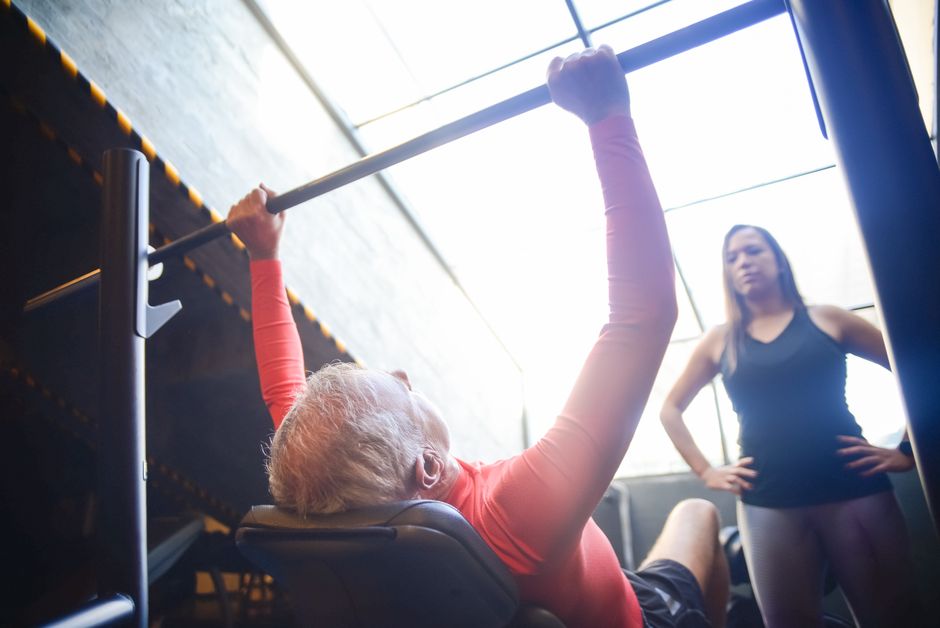
Every cell spends ATP as fuel, and regenerating it quickly is the job of phosphocreatine, which holds a spare phosphate it can hand to ADP to rebuild ATP in seconds. Muscle burns through that buffer during a hard set. Neurons lean on it continuously, since the brain is roughly 2 percent of body weight while consuming around 20 percent of daily energy. Research on creatine and brain bioenergetics treats brain phosphocreatine as a kind of surge protector for demand spikes. This shared mechanism is why creatine behaves like a whole-body intervention rather than a gym supplement.
Two details matter specifically for women. First, women generally start with lower creatine stores than men, a function of less muscle mass and lower average intake of creatine-rich foods such as red meat, which leaves more headroom for supplementation. Second, the creatine and estrogen relationship is indirect: estrogen does not chemically interact with creatine, but its decline degrades exactly the systems phosphocreatine supports.
What the Evidence Supports, Tier by Tier
Supplement marketing flattens every claim into one confident voice. The data do not, and the straight case for creatine for menopause looks like this:
| Claim | Evidence strength | Practical read |
|---|---|---|
| Strength and lean mass with resistance training | Strong, well replicated | The core reason to take it |
| Bone mineral density | Promising, small long-term trials | A possible bonus, not a promise |
| Cognition and brain fog | Plausible, mixed human data | Expect the least here |
| Mood alongside antidepressants | Early, small trials | A clinician conversation, not a plan |
Muscle: strong and replicated
The muscle tier is the reason to start. Creatine meta-analyses in older adults, which include postmenopausal women, consistently find greater gains in strength and lean mass when creatine is added to resistance training compared with training alone. The mechanism is unglamorous: slightly more work per set, sustained across weeks, compounds into more retained muscle. During a life stage when the anabolic response is weakening, anything that protects training quality earns its keep. Direct study of creatine for menopausal women specifically is newer, but it points the same direction as the broader older-adult literature.
Bone: promising but thin
Bone sits a tier lower. In one two-year randomized trial, postmenopausal women taking creatine alongside resistance training lost less bone mineral density at the hip than the placebo-plus-training group. That is encouraging, because hip fractures are the outcome that matters most, but the sample was modest and independent replications are limited. Treat creatine and bone density after menopause as a plausible bonus from a muscle protocol, not a proven indication. The heavier, more consistent training creatine enables is itself bone medicine.
Cognition: the newest evidence, still small
Does creatine help with menopause brain fog? The best direct evidence arrived in 2025. CONCRET-MENOPA was an eight-week randomized, double-blind, placebo-controlled trial in perimenopausal and menopausal women aged 40 to 60, dosed at 1,500 mg per day of a highly soluble creatine hydrochloride. Against placebo, the creatine group posted faster reaction times, measurable increases in brain creatine, and a mood trend that missed statistical significance, with no significant weight gain. That is the strongest signal yet in exactly this population, and it stays small: 36 participants, one formulation, one protocol. Older monohydrate brain-imaging studies typically needed loading-scale doses around 0.3 grams per kilogram of body weight to move brain creatine measurably, so form and solubility, not just raw grams, look like what drives brain uptake. The wider literature keeps the ceiling where it was: effects appear most consistently under sleep deprivation, metabolic stress, or low baseline creatine stores, and brain tissue loads more slowly and less completely than muscle. The working verdict on creatine and brain fog is plausible, encouraging, and still unproven.
Mood: adjunct-only evidence
Mood evidence is earlier still. In one escitalopram augmentation trial, women with depression who added creatine to their medication improved faster than those taking the antidepressant alone. That is genuinely interesting, and it is absolutely not a basis for using creatine as a standalone mood treatment. It is an adjunct conversation for women already in care.
Dosing Creatine for Menopause by Goal
How much creatine should a menopausal woman take? The short answer scales with body weight and goal, not with gendered marketing. A creatine dosage for women over 50 follows the same physiology as at 25.
A loading phase of roughly 0.3 grams per kilogram of body weight per day for five to seven days saturates muscle stores in about a week, the pattern documented in muscle saturation kinetics work. Worked example: a 70 kg woman takes 21 grams a day, split into four doses of about 5 grams each. At 60 kg, that is 18 grams, which rounds to four doses of 4 to 5 grams. After loading, drop to 3 to 5 grams daily.
Skip the loading phase and 3 to 5 grams a day reaches similar saturation in roughly three to four weeks. Loading buys speed and nothing else. If you want stores topped up inside a scheduled training block, load; otherwise start at 5 grams daily and ignore phases entirely. A creatine loading phase for women over 50 works exactly as it does for anyone else, and there is no physiological need to cycle off afterward. Stores stay elevated as long as daily intake continues.
| Goal | Daily dose | Notes |
|---|---|---|
| Muscle and strength | 3 to 5 g | The evidence-backed default |
| Fast saturation | 0.3 g per kg for 5 to 7 days, then 3 to 5 g | Optional, saves about three weeks |
| Cognition (self-tracked) | 3 to 5 g default; optional blocks above 5 g | Form and solubility may matter as much as grams |
The third row holds two paths, not one. The default is 3 to 5 grams of monohydrate daily, with any cognitive effect treated as a bonus riding on the muscle and bone returns. The experiment is a self-tracked block above 5 grams, cleared with a clinician first, with no promised payoff. Grams may not even be the operative variable: the newest perimenopausal trial raised brain creatine with 1,500 mg per day of a highly soluble hydrochloride, so form and solubility, not just dose, look like the levers. No dose has reliably cleared brain fog in controlled work.
Timing Around Training, Meals, and HRT
Consistency beats precision, by a wide margin. Take creatine daily, at a time you will actually remember, and you have captured most of the timing benefit.
Where a measured edge exists, it favors post-workout intake alongside protein and carbohydrates. One post-exercise intake study found modestly better uptake when creatine followed training with a mixed meal. The effect is small. A scoop stirred into breakfast beats a perfectly timed scoop you forget half the time.
Meals generally help rather than hurt, since insulin supports creatine uptake into muscle, so taking it with food is the practical default.
Is creatine safe with HRT? There is no known interaction. Hormone therapy and creatine act on different systems, and nothing in the literature flags a conflict between them. The fair caveat is that direct interaction data are thin because the combination has been barely studied. Practically, there is no reason to separate your creatine from your hormone therapy, and one conversation with the prescribing clinician closes the question for good.
Tracking Results Despite Water Retention
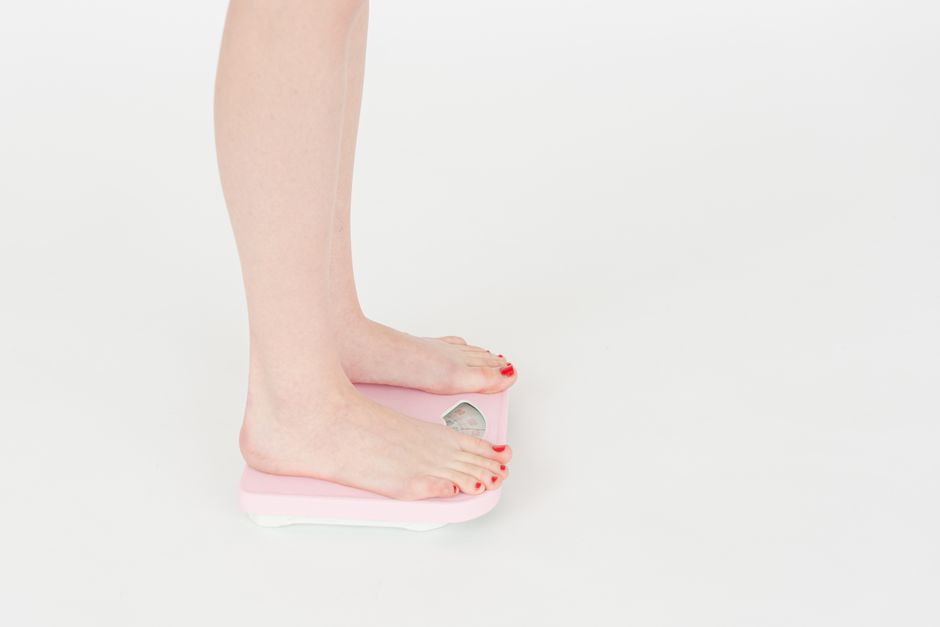
Creatine pulls water into muscle cells, and a gain of roughly 1 to 2 kg of intracellular water in the first weeks is common. Total body water data from controlled work supports exactly this pattern.
Scale weight in month one measures water, not fat gain and not failure.
The creatine water retention effect distorts scale weight for weeks, so track what creatine actually changes:
| Metric | How to track | Review at |
|---|---|---|
| Strength | Top set of each main lift, reps at a fixed effort | Every 4 weeks |
| Body composition | Scan or calipers, quarterly not weekly | Week 8 and beyond |
| Function | Stairs, carries, walking pace | Week 8 |
| Brain | Reaction-time app, weekly fog self-rating 1 to 10 | Every 2 weeks |
Compare every reading to week 0, never to yesterday. Strength on the log rising while scale weight also rises is the signature of a protocol working: more muscle, more cell water, zero fat gain implied.
Choosing a Clean Creatine Monohydrate
Creatine monohydrate is the form the entire evidence base was built on, and it is also the cheapest effective option on the shelf. That combination makes the surrounding marketing easy to judge.
- Look for one ingredient: creatine monohydrate. Micronized is fine, purely for mixability.
- Demand third-party certification, NSF Certified for Sport or Informed Choice, because supplement labels are self-reported. An independently tested creatine list is a reasonable starting point for products that clear certification.
- Skip proprietary blends and "for women" markup. On premium forms like hydrochloride or ethyl ester, the fair case against them is cost and a thin evidence base, not solubility: the newest brain trial moved brain creatine with a low-dose, highly soluble hydrochloride. What premium forms still lack is monohydrate's decades-long outcome record, which is why monohydrate stays the default.
The best creatine monohydrate for women is simply plain, certified powder at a fair price, whatever the label claims.
Safety, Side Effects, and Interactions
No cycling is required and no washout is needed. For kidneys, kidney safety reviews of creatine in healthy adults at standard doses find no adverse effect on renal function, and the ISSN position stand reaches the same conclusion for healthy people. The caveats are specific rather than general: diagnosed kidney disease, medications that stress the kidneys such as chronic NSAID or diuretic use, and conditions where fluid shifts matter. Those warrant a clinician conversation before the first scoop, not after.
Side effects are practical rather than dangerous. Bloating and gastrointestinal upset cluster in the loading phase; splitting the dose across the day, taking it with meals, and mixing it thoroughly into enough liquid resolves most of it. Drink normally. The frequently asked hair-loss question traces to one small, unreplicated study in male rugby players, which is a far thinner evidence base than the hundreds of trials behind the benefits above.
The 8 Week Starter Protocol
| Week | Action | Watch for |
|---|---|---|
| 0 | Baseline: record top sets, weight, hip and waist, fog rating 1 to 10 | Establish the comparison point |
| 1 | Optional: load at 0.3 g per kg split four ways for 5 to 7 days, or start at 5 g daily | Water weight, mild bloating |
| 2 to 4 | 5 g daily, post-workout on training days, with breakfast otherwise | Strength trend on the log |
| 5 to 8 | Continue unchanged; review all metrics against week 0 | Decision point |
Decision rules for the week 8 review:
- Strength up, scale up: working as intended. The scale is reporting water and the log is reporting progress.
- Nothing moved: audit adherence first. How many of the 56 days actually included a dose? Consistency failures outnumber true non-responders.
- Cognition was the goal, no change: either accept the muscle-and-bone returns and stop there, or discuss a block above 5 grams with a clinician and run a second tracked experiment.
The compressed version of creatine during menopause: 3 to 5 grams of certified monohydrate, every day, post-workout when convenient, measured with a strength log instead of a bathroom scale. The muscle evidence is strong, the bone signal is promising, and the brain fog case is the experiment you run on yourself, with expectations set to match the evidence rather than the marketing.
Stay in the loop.
Get the latest posts and exclusive content delivered to your inbox.
Join 37 readers. No spam. Unsubscribe in one click, anytime.
About the author
Dr. Mara Whitfield
Longevity Protocols Lead
Mara translates aging research into protocols people can actually follow. With a background in preventive medicine and years tracking the longevity literature, she writes the healthspan routines, supplement stacks, and testing cadences she runs herself.
Related Posts
Creatine Without Training Is Cheap Lean-Mass Insurance
Creatine without training does build lean mass, and part of it is water. Here is what the new study found, plus dosing for injuries, layoffs, and aging.
Chest and Back Superset Workout Audit for Lifters Over 60
Can a 30-minute chest and back superset workout keep muscle over 60? We audit Dolph Lundgren's routine as a weekly dose of volume, effort, and pairing.

Autoregulation Training Only Works Once You Calibrate RIR
Autoregulation training works only once you fix your RIR error. Learn a filmed-set calibration drill, load adjustments, and when fixed percentages win.