Senescent Fat Cells Speed Aging, What Actually Works
Senescent fat cells act as an inflammatory organ that speeds aging. Learn what ANGPTL8 research shows and which evidence-ranked levers blunt it.
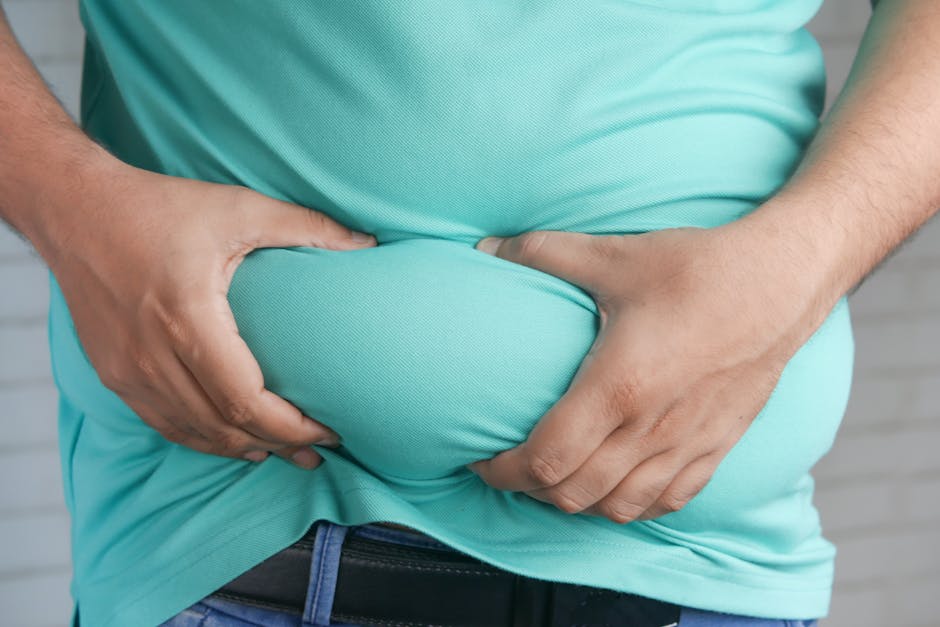
Your most controllable reservoir of aged, damage-secreting cells sits at your waistline. Senescent fat cells stop dividing, refuse to die, and pump out inflammatory signals that degrade insulin sensitivity both next door and body-wide, and new research now ties one of their outputs, a circulating protein called ANGPTL8, to age-related disease and mortality in mice and humans. That result is already being marketed as proof you need a senolytic supplement, when the defensible response is cheaper: shrink and stabilize the visceral fat that breeds these cells, train consistently, and file today's senolytic products as the weakest tier of your stack.
Stay in the loop.
Get the latest posts and exclusive content delivered to your inbox.
Join 37 readers. No spam. Unsubscribe in one click, anytime.
This piece walks the chain from mechanism to protocol. You get an honest mice-versus-humans breakdown of the ANGPTL8 findings, an evidence-graded ranking of every lever from fat-mass management down to retail senolytic blends, and a weekly plan with the short list of biomarkers that actually track senescent burden.
Your Fat Is an Endocrine Organ That Can Turn Against You
Adipose tissue behaves as a distributed endocrine organ rather than a passive fuel tank. Its cells talk constantly to your brain, liver, immune system, and blood vessels, releasing hormones like leptin (satiety signaling) and adiponectin (insulin sensitizing) alongside dozens of other peptides, as reviews of fat's endocrine function catalog. When you are lean and young, that conversation keeps metabolism flexible.
Sustained overnutrition changes the tone. Adipocytes swell, local oxygen delivery struggles to keep up, some cells turn insulin resistant, inflammatory immune cells infiltrate, and the secretory profile tips toward cytokines. Researchers call this drift adipose tissue aging, and it converts a metabolic asset into a low-grade inflammation source. The next question is why some of those cells escalate from merely irritated to permanently arrested saboteurs.
What Makes a Fat Cell Senescent

Cellular senescence is a state, not a cell type. A stressed cell trips a checkpoint governed by proteins like p16 and p21, permanently exits the cell cycle, and stays metabolically active. Crucially, it also switches on the senescence-associated secretory phenotype, or SASP: a cocktail of IL-6, TNF-alpha, IL-1 family cytokines, chemokines, and matrix-dissolving proteases documented across a Nature Reviews Endocrinology paper. A senescent cell is loud. It recruits immune cells, irritates its neighbors, and reshapes the tissue around it.
Fat is overrepresented among the body's senescent-cell reservoirs, for structural reasons. Preadipocytes, the precursors that replenish your adipocytes, keep dividing across adult life, and every division is another chance for stress-induced arrest. Senescent fat cells also concentrate in visceral depots more than subcutaneous ones as age climbs, and obesity accelerates the clock. The Tchkonia and Kirkland review of fat tissue aging found that preadipocytes from older human donors carry senescence markers and lose differentiation capacity. That is a double hit: a senescent preadipocyte secretes SASP factors and no longer matures into a fat-storing cell, so lipids get parked in liver and muscle instead, where they cause fresh damage.
What the ANGPTL8 Research Actually Found
ANGPTL8 (angiopoietin-like protein 8) is best known as a metabolic regulator involved in triglyceride handling and pancreatic beta-cell biology, with circulating levels that respond to insulin, as coverage of ANGPTL8's normal metabolic roles explains. The new study, laid out accessibly in the Lifespan.io summary, asked whether senescent fat cells drive it up with age, and what that rise costs.
The human side is association
Using data from roughly 10,000 participants in a Chinese cardiometabolic cohort, the researchers built a biomarker-based aging clock whose estimates landed within about five years on average, and ANGPTL8 was one of its meaningful inputs. Levels around 250 nanograms per liter of serum lined up with the youngest biological-age estimates, while people running roughly four times higher tended to look markedly older to the model. Pulling ANGPTL8 out of the clock degraded its accuracy. A second model built for ten-year mortality flagged higher ANGPTL8 as predictive, clustering with hypertension and other established risk factors. Every bit of this is observational. Nothing in the human arm intervened on the protein.
The mouse side is where causation lives
In mice, circulating ANGPTL8 rises with age, and tissue analysis traced the increase to adipose rather than the liver. The decisive experiment used animals engineered to lack Angptl8. In old age they carried less fat mass, less senescence within that fat, and lower circulating SASP factors. They held a rotarod longer, ran farther on a treadmill, explored more, kept more fast-twitch muscle, and lived longer than wild-type peers. Mechanistically, ANGPTL8 binds AKT2 and shifts the AKT/mTOR/S6K axis, and experiments in preadipocytes from old mice confirmed that AKT signaling is required for the senescence effect.
What the study did not test
No drug was given to normal animals to lower ANGPTL8, so there is no adult-dosing intervention evidence, only lifelong knockout. And ANGPTL8 has normal physiological jobs, which is why earlier reviews have argued it can be more friend than foe in metabolic health. Chronically suppressing it in people is an untested idea, not a protocol.
How Senescent Fat Cells Drive Disease
Zoom in on visceral fat and follow one molecule outward. IL-6 and TNF-alpha from SASP-active cells activate JNK and IKK kinases in neighboring cells, which phosphorylate insulin receptor substrate 1 on serine residues and blunt insulin signaling at its first relay step. That is a named mechanism connecting senescent fat to local insulin resistance, not a vibes-level claim. Visceral fat also drains directly into the portal vein, so its secretions hit the liver first, which is part of why this depot tracks so tightly with metabolic dysfunction.
Spread the same signaling body-wide and you get inflammaging, the chronic, low-grade inflammation that climbs with age and predicts frailty and disease. Senescent cell burden in fat rises with both age and obesity, more burden means more SASP output, and the cohort data above suggests the downstream cost shows up as measurable mortality risk. Your waistline is the visible proxy for all of it.
Tier One, Shrink Visceral Fat and Keep It Stable
If you came here asking how to reduce senescent cells naturally, this is the honest core of the answer: run down the tissue that houses them.
Weight loss moves the markers
Does weight loss reduce senescent cells? At the level of human tissue data, yes. In one controlled trial, Imperial College's writeup describes reduced p16 expression in subcutaneous fat biopsies after adults completed a diet-driven weight-loss program. Caveats worth keeping attached: the samples were small, the biopsies were subcutaneous rather than visceral, and marker expression is a surrogate, not a hard endpoint. Even so, this is the only lever in the entire article with human tissue evidence showing senescent burden in fat moving the right way as fat mass falls.
Yo-yo dieting may be worse than staying heavy
In a mouse weight cycling study published in Nutrition and Healthy Aging, animals put through repeated cycles of weight loss and regain accumulated more senescent cells in adipose tissue and showed worse metabolic measures than animals that gained weight and simply held it. Mice, one study, and a plausible mechanism (repeated lipid flux stressing adipocyte turnover). That is exactly the confidence level to hold: suggestive, not settled.
Fat-mass rule: slow cuts of 0.5 to 1 percent of body weight per week, protein around 1.6 to 2.2 g per kg daily, deliberate 4 to 8 week maintenance phases between cuts, and no crash deficits you cannot sustain. Stability is part of the mechanism, not a footnote.
Tier Two, Training as a Senescence Lever

The research linking exercise and cellular senescence markers points one direction: trained older adults tend to show lower p16 and p21-type expression in muscle and adipose tissue than sedentary peers, and training trials in older adults report reductions after structured programs. Same calibration as always: modest samples, surrogate markers, no hard-endpoint trials. Plausibility is strong anyway, because training improves glucose disposal, reduces the lipid overflow that stresses fat cells, and builds muscle that buffers the whole system.
One nuance separates informed readers from headline readers. A hard session transiently raises circulating IL-6, and that acute spike is normal signaling that resolves within hours. The pattern that matters is chronically elevated baseline inflammation, month after month, which is what SASP-driven fat produces.
A practical weekly floor:
- 2 to 3 resistance sessions, compound lifts prioritized, because muscle is your largest glucose sink
- 90 to 150 minutes of zone 2 cardio, conversational pace, for the mitochondrial and metabolic base
- 1 optional interval session for a VO2 max stimulus
- 7,000 to 10,000 daily steps as the connective tissue of the week
Tier Three, Senolytics Graded Honestly
So, do senolytics work in humans? The accurate answer: small trials in specific conditions show early signals, while clearing senescent fat cells from adipose tissue in healthy adults remains unproven.
Dasatinib plus quercetin
Early dasatinib plus quercetin trials used short intermittent courses, a few consecutive days repeated over months, in small open-label studies including people with diabetic kidney disease and pulmonary fibrosis, and reported improvements in physical function along with reductions in some senescence measures in skin. Two hard caveats. Dasatinib is a prescription oncology drug with real cytopenia and infection risks, making this supervised-research territory rather than self-experimentation. And none of this work demonstrated clearing of senescent visceral fat in people.
Fisetin and retail senolytic blends
Fisetin trials in older adults have tested gram-scale intermittent dosing and generally reported reassuring safety with mixed results on markers and function. That is thin, and it is still thicker than the commercial tier: retail senolytic capsules commonly deliver tens to a few hundred milligrams of fisetin or quercetin-style flavonoids, far below the gram-scale loading used in research protocols, sometimes with minimal third-party verification.
| Lever | Human evidence | Main gap | Verdict |
|---|---|---|---|
| Fat mass management | tissue-level p16 reduction after weight loss | small samples | adopt now |
| Exercise training | lower senescence markers in trained elders | surrogate endpoints | adopt now |
| D plus Q, research dosing | small open-label trials, function gains | no fat-clearing data | research only |
| Fisetin, research dosing | small randomized trials, mixed results | few and short trials | wait for data |
| Retail senolytic blends | none specific to products | doses far below protocols | skip |
A Weekly Protocol and the Markers Worth Tracking
| Slot | Prescription | Purpose |
|---|---|---|
| Resistance | 2 to 3 sessions weekly, compound focus | muscle mass, glucose disposal, marker response |
| Zone 2 | 3 sessions of 30 to 45 minutes | mitochondrial base, lipid handling |
| Intervals | 1 optional session | VO2 max stimulus |
| Nutrition | slow cut or stable maintenance, protein 1.6 to 2.2 g per kg | shrink visceral fat without cycling |
| Sleep | 7 to 9 hours, consistent schedule | appetite and regain control |
Markers worth paying for:
- Waist at the iliac crest, same time of day, same tape tension. A waist-to-height ratio under 0.5 is a commonly used screening cut point, and it is the closest thing to a visceral fat longevity number you can track at home.
- hsCRP, quarterly, read as a trend rather than a single value, since infection and injury spike it.
- Fasting insulin and glucose, computed into HOMA-IR (insulin in µU/mL × glucose in mg/dL ÷ 405). A falling HOMA-IR at stable weight is evidence the inflammaging loop is quieting.
- ANGPTL8, research-grade curiosity only. It is not a routine clinical assay, and the human data behind it is associative.
Be equally clear about what you cannot track. The field still lacks a consensus blood biomarker for senescent cell burden, as a 2025 biomarker review makes plain; p16 and p21 are tissue measurements, not lines on your annual panel. Visceral fat and aging biomarkers converge in practice, so waist circumference, insulin dynamics, and hsCRP are the proxies available today.
Closing the loops opened at the start. ANGPTL8 is causal in knockout mice and associative in a large human cohort, with no adult intervention tested yet. Weight loss is the only lever with human tissue data showing senescent markers in fat retreating. Training shows consistent marker associations in older adults. Senolytics show early signals in small trials and nothing yet for fat tissue in healthy people. Treat the ANGPTL8 findings as a reason to take your waistline seriously a decade earlier, not as a reason to buy a capsule.
Stay in the loop.
Get the latest posts and exclusive content delivered to your inbox.
Join 37 readers. No spam. Unsubscribe in one click, anytime.
About the author
Elena Park
Sleep and Recovery Specialist
Elena has spent a decade helping people fix their sleep and recover faster, pairing wearable and HRV data with the cold, heat, and breathwork protocols she tests on herself first. She writes recovery routines that hold up under real, busy lives.
Related Posts
Growth Hormone and Aging Pull in Opposite Directions
Growth hormone and aging pull in opposite directions: blunted GH signaling extends mouse lifespan while secretagogues raise IGF-1. Audit your stack here.
How to Increase Bone Density With Impact and Heavy Loading
How to increase bone density with impact and heavy loading, when to retest with DXA or REMS, and what the new GPR133 bone study actually means for you.

Wearable Health Monitoring Protocol to Catch Disease Early
A wearable health monitoring protocol built on your own baseline, with deviation rules for RHR, HRV, respiratory rate, and skin temp, plus when to act.