How to Increase Bone Density With Impact and Heavy Loading
How to increase bone density with impact and heavy loading, when to retest with DXA or REMS, and what the new GPR133 bone study actually means for you.
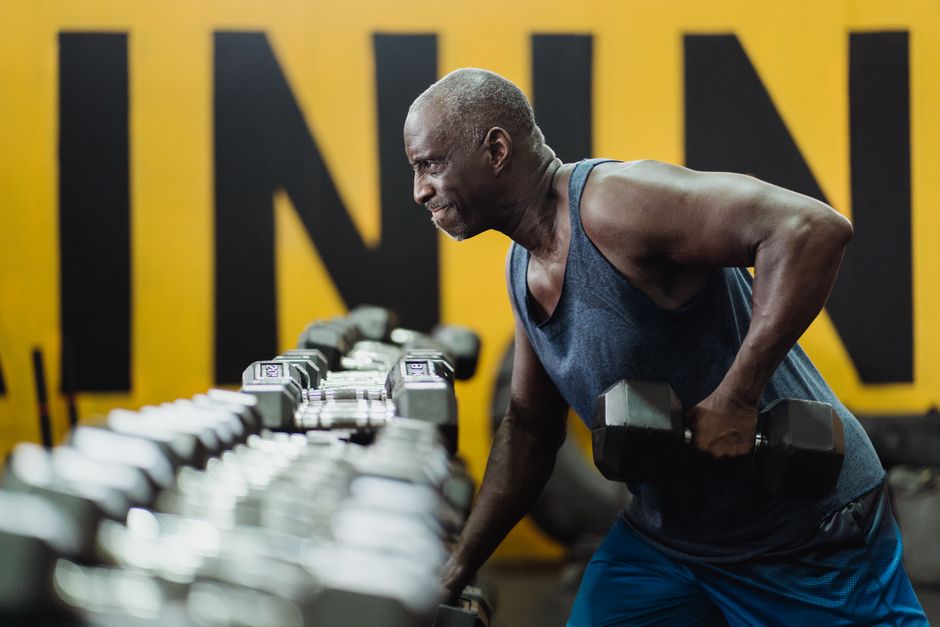
Bone rewards intensity and shrugs at volume. You can ride 8,000 kilometers a year, sleep eight hours a night, and still hand the DXA technician a spine that looks untrained. That is the puzzle of how to increase bone density compressed into one sentence: bone only adapts to loading above a certain strain intensity, and most of what fit people do for cardio never crosses that threshold.
Stay in the loop.
Get the latest posts and exclusive content delivered to your inbox.
Join 9 readers. No spam. Unsubscribe in one click, anytime.
Treat the problem as a dosing question, like protein or training volume, and the answers get specific fast: heavy compound lifts near peak strength, a few dozen jumps a week, calcium split across meals, one scan a year. Those inputs carry randomized-trial support in exactly the population everyone worries about, and none of them require waiting on the GPR133 headlines.
Three questions run this article, and each gets numbers: why your current training underdoses bone, what dose the trials actually used, and when a bone-building pill could realistically reach you.
Why Bone Density Belongs in Your Longevity Stack
Peak bone mass is largely locked in by your late twenties. From there, adults typically lose bone steadily through midlife, with losses accelerating around menopause for women and creeping upward with falling hormone levels for men. None of it shows up in the mirror or in your VO2max, which is why the skeleton escapes attention until a low-trauma fracture forces the issue.
The stakes are not symmetric with a pulled muscle. Among older adults who break a hip, a meaningful share die within the following year, and many survivors never regain independent mobility. Aerobic fitness does not reliably protect against that outcome, because the failing tissue was never trained by your zone 2 hours.
You already manage silent structural risk for muscle. Bone is the same kind of tissue, governed by the same loading logic, and it is the pillar with the hardest deadline. After 40 the goal is no longer building a bigger reserve; it is defending the one you have with the highest-strain loading you can safely deliver, then verifying it annually with imaging instead of guessing.
What the GPR133 Study Actually Found
The news that put bone on the biohacker feed: per the AP503 mouse study coverage, an experimental compound called AP503 made mouse bone meaningfully stronger by switching on GPR133, a receptor that both drives new bone formation and slows bone loss. The same pathway has been tied to stronger muscle, which is why the release frames it as a potential twofer against osteoporosis and age-related decline.
Strip the framing and the facts are simple. A receptor called GPR133, activated by a compound, produced denser bone in mice, with signals of muscle benefit. It is real science and a genuinely interesting target, since bone-formation drugs are rare. It is also, today, a mouse result. No human dosing data, no human safety data, no timeline. Molecules at this stage typically need a decade or more to reach approval, and most never arrive. If AP503 becomes a drug you can take, the training you start this year will have compounded for a decade first.
The Mechanostat Sets the Minimum Effective Dose
In the 1980s, the orthopedic researcher Harold Frost proposed the mechanostat: bone compares the strain it experiences against internal thresholds, and only strain above the modeling threshold triggers new bone formation. Sub-threshold loading maintains bone at best. Mechanostat theory converts every exercise argument into arithmetic, because duration barely counts. Osteocytes, the strain sensors embedded in bone, respond to how hard and how fast a load lands, not how long the session ran. An hour of comfortable pedaling can deliver less osteogenic signal than ten seconds of drop landings.
| Activity | Strain character | Bone verdict |
|---|---|---|
| Walking | Low magnitude, familiar | Maintenance at best |
| Cycling, swimming | Minimal skeletal impact at hip and spine | Underdose |
| Steady running | Moderate, repetitive | Modest, site-specific gains |
| Machine hypertrophy at 8 to 15 reps | Moderate strain, slow rate | Some stimulus, often sub-threshold |
| Heavy compounds at 80 to 85 percent | High peak strain | Above threshold |
| Jumps and drop landings | Very high strain rate, tiny dose | Above threshold, most efficient |
Two corollaries drive the whole protocol. Bone habituates, so the loads that built today's skeleton stop stimulating it, which makes progressive overload as non-negotiable for bone as for muscle. And the effective dose is small: animal loading studies suggest bone's sensors respond best to brief, spaced, high-intensity signals, which is why a few dozen jumps per week can move hip density while thousands of pedal strokes do not. That is osteogenic loading in one line: strain above the threshold, delivered briefly, progressed over time. It is the operating principle behind all serious bone density training.
Why Cycling, Swimming, and Standard Hypertrophy Underdose Bone
Does cycling or swimming increase bone density? At the hip and spine, usually not, and the athlete data are blunt about it. A systematic review of athletes and the broader comparisons around it find that competitive and masters cyclists and swimmers often show hip and spine bone density similar to, and sometimes lower than, sedentary peers. Runners tend to be modestly denser at loaded sites, and racket-sport athletes provide the cleanest natural experiment in human bone: the racquet arm is markedly denser than the non-dominant arm, a difference built entirely from loading.
The mechanisms are not mysterious. The swimmer's skeleton is unloaded by buoyancy, the cyclist's by the saddle, and neither sport delivers meaningful ground-reaction force to the spine or femoral neck. Serious endurance training adds confounders, calcium losses in sweat and energy deficits among competitive athletes, but the load-dose explanation comes first.
Standard hypertrophy fails bone for a different reason. A set of 12 leg presses at a load you could press 14 times generates moderate strain at a slow rate, and machine support trims the stabilizing demands further. Muscle grows from total tension and metabolic stress; bone tracks peak force and loading speed. Your hypertrophy block is not wasted, it is aimed at a different tissue. Stop counting it toward your bone work.
How to Increase Bone Density With Heavy Loads and Impacts
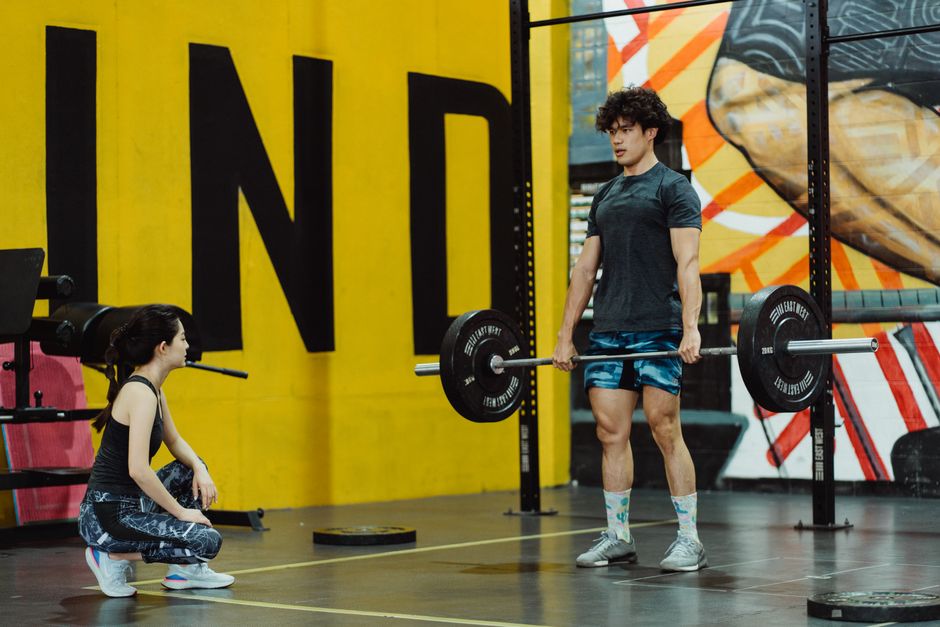
Two literatures, heavy resistance training and impact training for bone density, converge on one prescription, and both have randomized-trial support in older adults with low bone mass, the exact population people worry about loading hard.
The heavy half
The reference point is LIFTMOR, an eight-month randomized trial in postmenopausal women with low bone mass. Supervised heavy resistance training plus impact loading, at about 80 to 85 percent of peak strength, increased lumbar spine bone density by roughly 2 to 3 percent, versus little or no change in controls, with no serious training injuries reported. The Osteo-cise trial reached a similar verdict with supervised high-intensity resistance plus impact work over 12 months, improving femoral neck bone density versus controls.
Note what those protocols looked like: deadlifts, presses, and impact drills under supervision, in the population doctors instinctively protect from barbells.
Two sessions weekly. Deadlift, back squat, and overhead press as the spine-and-hip carriers, plus a heavy pull. Work sets of 4 to 6 reps at 80 to 85 percent of a tested one-rep max, 3 to 5 sets, 2 to 3 minutes rest. Log every load; add weight when the top set clears all reps cleanly.
These are the best exercises to increase bone density after 40 for one reason: they load the spine and femur axially, at intensities the mechanostat respects.
The impact half
Jump and drop-landing trials have produced measurable hip gains with strikingly small doses: a few dozen impacts per session, two or three sessions per week. After 40, earn the progression. Two-foot hops in place until landings are silent, then 10 to 20 cm drop landings, then boxes at 30 to 40 cm. Three to 5 sets of 5 to 10 landings, full rest between sets, and land quietly enough to pass a sleeping-household test. Rest matters; spacing impacts outperforms jamming them together.
Safety gates
Is heavy lifting safe with low bone density? The trials say supervised heavy loading was safe in women with low bone mass, which should retire walking-plus-calcium as the default osteoporosis prevention exercise prescription. Two gates still apply. Diagnosed osteoporosis (T-score at or below -2.5) or any prior low-trauma fracture means scan first and get a clinician's sign-off before loading a barbell at 85 percent. And the errors spine specialists actually fear, loaded end-range flexion and sudden rotational loads, stay out of the program at any T-score. Spend the first 8 to 12 weeks building from 65 to 70 percent with crisp technique before touching trial-matched intensity.
Testing Cadence, DXA Versus REMS

Knowing how to increase bone density is half the job. Proving you did it is the other half, and it starts with a baseline scan before your first heavy session, not after.
DXA remains the reference standard: a few minutes, minimal radiation, separate readings for lumbar spine, total hip, and femoral neck. The number most reports omit is the least significant change (LSC), the margin below which a difference is measurement noise. Commonly on the order of 3 to 6 percent depending on site and scanner, the LSC is the only honest way to read a retest. A spine BMD moving from 0.980 to 1.000 g/cm² is plus 2 percent, below a typical LSC, and therefore not a result. The same site reaching 1.025 is a real gain. This is also the answer to how often you should retest a DXA scan: annually, ideally on the same machine, because bone remodeling cycles take months and anything faster mostly measures the scanner.
REMS, radiofrequency echographic multi spectrometry, is the serious newcomer: radiation-free, ultrasound-based, validated at spine and hip. Systematic reviews of REMS versus DXA agreement report good concordance, so in the DXA vs REMS choice, what changes is access. Where DXA needs a referral and a waitlist, REMS rewrites the practical math of bone density testing frequency. One rule survives every modality swap: compare like with like. A REMS spine number does not speak DXA, so retest on the same device.
Nutrient Dosing for Bone, With Numbers
Loading without substrate wastes stimulus. The dosing that matters fits in one table.
| Nutrient | Daily target | How to take it | Honest notes |
|---|---|---|---|
| Calcium | 1,000 mg; 1,200 mg for women 51+ and men 71+ | Split into doses of ~500 mg or less across meals | Absorption gets less efficient above roughly 500 mg per dose |
| Vitamin D | 600 to 800 IU baseline; many clinicians target 30+ ng/mL | With a fat-containing meal; adjust to your 25(OH)D test | One blood test beats guessing forever |
| Protein | About 1.6 g per kg bodyweight | 3 to 4 feedings of 30 to 40 g | Feeds bone matrix and the muscle that loads it |
| Magnesium | 310 to 420 mg | Food first: nuts, greens, whole grains | Widely under-consumed; modest supplementation is reasonable |
The calcium quirk is the one people miss: because absorption is less efficient above roughly 500 mg per dose, a single 1,200 mg serving wastes the back half. Split it across meals. The NIH calcium fact sheet also sets the tolerable upper intake at 2,000 to 2,500 mg depending on age, a ceiling food rarely threatens but stacked supplements can.
On the shelf beyond the table: vitamin K2 has supportive data mostly from high-dose MK-4 trials in Japanese populations, which is hard to generalize, and collagen's bone evidence is thinner than its tendon evidence. Neither is dangerous; neither is load-bearing for your plan. Most bone health supplements are calcium and vitamin D with different labels, and the table above is the honest core.
How Far Away Is a Bone-Building Pill
When will a GPR133 bone drug be available? Apply standard pipeline math to a preclinical compound with zero human data: typically a decade or more, and most candidates never arrive. The reasonable posture is interest without turning calendar pages. AP503 may drive bone formation and muscle at once, which makes it worth watching precisely because bone drugs are rare. It changes nothing about this year's training plan.
If you already have diagnosed osteoporosis, waiting is the wrong frame, because the shelf is not empty. Teriparatide, abaloparatide, and romosozumab are approved anabolic agents with human data showing substantial vertebral fracture reductions in pivotal trials. They are injections, reserved for genuinely high fracture risk, and romosozumab carries a cardiovascular warning. The Endocrine Society guideline framework places anabolic-first treatment at the very-high-risk tier, such as recent spine or hip fracture or a T-score well below the osteoporosis threshold. If that describes you, the conversation with your doctor should already have happened. For everyone else, the drug news is an argument for banking bone density now, while the anabolic you actually control is a barbell.
Your First 12 Months of Bone Training
Everything above compresses into one calendar.
| Window | Training | Testing and nutrition | Decision point |
|---|---|---|---|
| Month 0 | Nothing yet | Baseline DXA or REMS; 25(OH)D test; fix the calcium split | Record the baseline before the first heavy session |
| Months 1 to 3 | Ramp from 65 to 85 percent loads; learn silent landings | Protein at ~1.6 g/kg daily | If joints complain, change exercise variants first, not intensity |
| Months 4 to 9 | Full dose: 2 heavy sessions plus 2 impact blocks weekly | Keep the log; adjust vitamin D to the blood test | None. This is the boring, effective middle |
| Month 12 | Maintain | Retest on the same scanner; compare against the LSC | Gain: continue. Loss despite training: investigate causes |
If bone fell despite real training, the next conversation is metabolic, not motivational. Vitamin D deficiency, primary hyperparathyroidism, celiac disease, early menopause or low testosterone, over-replaced thyroid hormone, and chronic drugs like glucocorticoids and proton-pump inhibitors all quietly drain the skeleton, and every one is checkable.
Week to week, the template fits inside training you probably already do: heavy lower plus drop landings on day one, heavy upper plus optional hops on day two, easy cardio wherever you enjoy it, and nothing heroic elsewhere.
The loops from the opening close here. Fitness did not equal bone strength because bone runs on a strain threshold your mileage never crossed. The pill is interesting and roughly a decade away at best. The dose is available this week, and the scan will tell you, within the honest margin of the machine, whether it worked. Bone obeys the same rule as muscle: it adapts to what you demand, and it ignores what you merely do.
Stay in the loop.
Get the latest posts and exclusive content delivered to your inbox.
Join 9 readers. No spam. Unsubscribe in one click, anytime.
About the author
Marcus Bao
Strength and Conditioning Coach
Marcus has programmed training for everyone from desk-bound beginners to masters athletes, treating every workout as an experiment with a measurable result. He writes ready-to-run strength, hypertrophy, and Zone 2 programs built around progression you can track.
Related Posts

Wearable Health Monitoring Protocol to Catch Disease Early
A wearable health monitoring protocol built on your own baseline, with deviation rules for RHR, HRV, respiratory rate, and skin temp, plus when to act.
Senescent Fat Cells Speed Aging, What Actually Works
Senescent fat cells act as an inflammatory organ that speeds aging. Learn what ANGPTL8 research shows and which evidence-ranked levers blunt it.
Clonal Hematopoiesis Is the Heart Risk ApoB Misses
Clonal hematopoiesis (CHIP) accelerates cardiovascular disease and aging. Discover how to test for these hidden somatic mutations and mitigate your risk.