Sleep When Sick, Train Again When Data Clears
Sleep when sick feels wrecked because fever rewrites your sleep architecture. Decide whether to train or rest from your RHR, temperature, and HRV baselines.
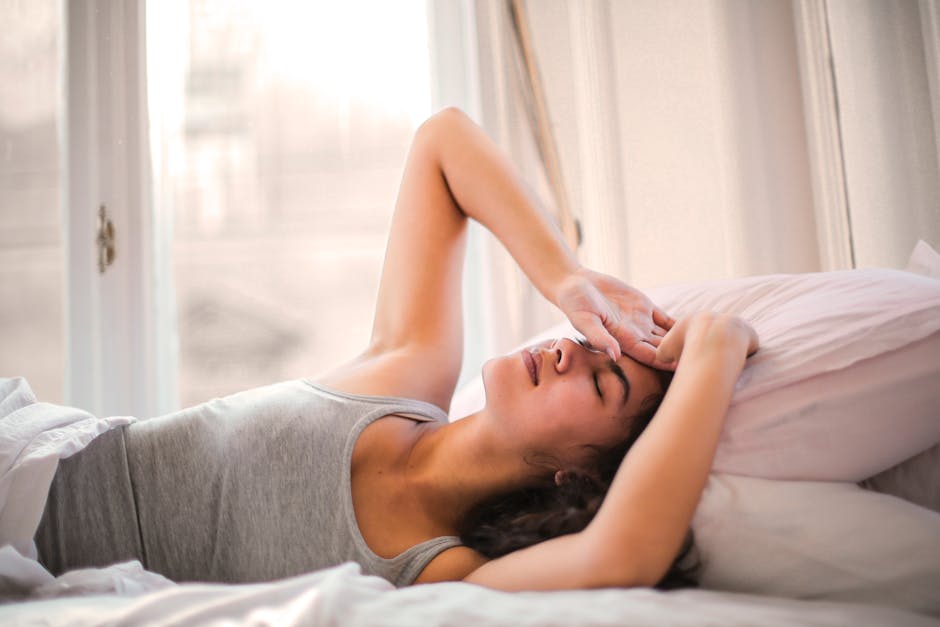
Ten hours of sleep when sick can leave you feeling more wrecked than six healthy hours the week before. That gap is real, and it is not a recovery failure. Illness switches your body into a different physiological regime. Immune signaling rewrites your sleep architecture, fever inflates your overnight metabolic bill, and both distort the exact metrics your wearable uses to grade the night. Readiness scores were calibrated on healthy days, so on sick days they can lag, they can overstate recovery, and they can quietly green-light a session your body has no business taking.
Stay in the loop.
Get the latest posts and exclusive content delivered to your inbox.
Join 58 readers. No spam. Unsubscribe in one click, anytime.
The fix is to stop asking the composite and start reading raw deltas: resting heart rate, skin temperature, and HRV measured against your own baselines. This guide covers what fever and immune activation do to your sleep stages and overnight biometrics, how to make today's train-or-rest call from your own numbers, a sick-day sleep protocol you can run tonight, and explicit exit criteria for when to start training again after the flu or a bad cold.
Why Illness Rewrites Your Sleep
Why does sleeping more when sick feel worse? Because sleep when sick is immune work with a bill attached, not a failed copy of a healthy night. Your immune system runs the night on its own terms, and the bill has line items:
- Requisitioned sleep. Early in infection, pro-inflammatory cytokines such as interleukin-1 and interleukin-6 are somnogenic and bias the brain toward extra non-REM sleep. A review of sleep immunology ties these cytokine effects to host resistance, and studies of infected animals find the non-REM increase holds across pathogens. A shift that consistent is an adaptive program, not an accident.
- Degraded quality. Symptomatic illness brings REM suppression, more frequent awakenings, and lower sleep efficiency, so the extra hours come back lighter and more broken than your baseline.
- A hotter engine. Each 1°C of fever raises metabolic rate by roughly 10 to 13 percent, so the night burns more energy even though you lie still.
More sleep in, worse rest out, at a higher price. That is the receipt.
The strategy still pays. In a 2015 behavioral sleep study in the journal Sleep, adults averaging fewer than six hours in the nights before rhinovirus exposure developed a cold about four times more often than those sleeping more than seven hours. Sleep is the part of your immune response you can most directly control.
The same immune signals that requisitioned your sleep are the ones your tracker misreads. That is the next problem.
What a Sick Night Does to Your Wearable Data

What a night of sleep when sick does to your numbers is strikingly consistent across brands, even though Oura, WHOOP, Garmin, and Apple Watch each display it differently. The table below shows how illness changes sleep stages and overnight metrics in the same directions everywhere.
| Signal | Sick-night direction | What to look for |
|---|---|---|
| Wearable temperature deviation | Rises above baseline | Several tenths of a degree, above +1°C on fever nights |
| Resting heart rate | Elevated while sick | Often 5 to 10 bpm above baseline, more with higher fever |
| HRV | Falls | Below your personal range, sometimes sharply |
| Respiratory rate | Can climb | Especially in respiratory infections (healthy adult resting range is roughly 12 to 20 breaths per minute) |
| Sleep stages | Shift | More light sleep and awake time, less deep and REM |
| Sleep efficiency | Falls | Awakenings and fragmentation rise |
The phrasing differs by app, but resting heart rate when sick climbs and HRV when sick falls across brands, because both track the same autonomic shift. On Oura, temperature deviation is reported relative to your own baseline, so illness reads as a persistent positive deviation on consecutive nights rather than a one-off spike.
Oura's own Flu Season analysis of members in five countries put numbers on the pattern. On illness nights, people went to bed 17 to 30 minutes earlier, slept 9 to 13 minutes longer, spent 13 to 18 extra minutes in light sleep and 16 to 21 extra minutes awake, and lost 2 to 3 minutes each from deep and REM sleep, for a Sleep Score 0.9 to 1.7 points lower.
These shifts often start before you feel anything. In the UCSF-led TemPredict study, an algorithm trained on temperature, heart rate, heart rate variability, respiratory rate, and activity data detected physiological changes on average 2.75 days before participants were tested for COVID-19, while symptoms began about two days before testing. An HRV drop when sick is part of the same response, with studies of HRV in colds documenting the autonomic changes that accompany upper respiratory infection.
One illustrative fever night, with realistic but invented numbers:
- Baseline (30-night median): resting heart rate 52, temperature wobble ±0.3°C, HRV 64 ms, sleep efficiency 90%.
- Fever night: resting heart rate 68, temperature deviation +1.2°C, HRV 38 ms, sleep efficiency 78%, 41 minutes awake.
Magnitudes vary by bug and by person. The diagnostic signature is all three channels moving at once, which is what separates illness from a late meal, alcohol, or a travel night.
Why Readiness Scores Miss Sick Days
Readiness scores are composite indices. They blend HRV, sleep, and activity signals into one number, and they were designed to answer a healthy-day question: given recent training load, how hard should today's session be?
Sick days break that question in both directions.
First, lag. Composites weight multi-day trends, so a single fever night gets diluted by a week of green days. You can wake up at 38.5°C to a readiness score in the 70s. The score is not lying so much as answering last week's question.
Second, misread. Sleep ten hours while sick and the duration component rewards you. Move very little, and the activity-balance component can read your adaptive rest as recovery. A misread readiness score on a sick day looks like this: the composite climbs while your temperature deviation and resting heart rate are still elevated. The reverse happens too, when rest days drag the score down and punishment arrives exactly when you did the right thing.
Oura, for one, advises interpreting scores alongside symptoms and switching on Rest Mode while ill. That is honest, and it also concedes the point: the composite was not built for the sick-day regime. During illness, read the raw channels and let the composite go quiet until you are healthy again.
Train or Rest Using Your Own Baselines
Training while sick needs a floor before it needs data.
The Hard Floor: Fever Means No Training
The question "should I work out with a fever" gets a flat no, and not because you might underperform. Exercising with a fever is associated with rare but serious risks, most importantly viral myocarditis, inflammation of the heart muscle, which is why standard clinical guidance is complete rest while feverish per a review of myocarditis risk. Below-the-neck symptoms such as chest congestion, body aches, vomiting, or diarrhea sit on the same floor.
Fever or below-the-neck symptoms mean no training today. That is a hard floor, not a judgment call. Everything above it is negotiable with data.
The Neck Rule for Exercise
Above the floor sits the neck rule for exercise, the classic sports-medicine triage: symptoms above the neck (runny nose, sneezing, mild sore throat) may permit light activity. Exercising with a cold that stays above the neck may be fine at easy intensity, but the rule grades symptom location rather than systemic response.
Read Your Morning Deltas
That is what your deltas are for. Compare this morning's readings to a baseline computed over the previous 7 to 30 healthy nights:
- Resting heart rate: up 5 bpm or more, reduce to easy; up 10 or more, rest.
- Temperature deviation: above roughly +0.5°C, rest.
- HRV: more than about 10 to 15 percent below your median, treat as caution and weigh it with the other two.
When Your Deltas Override the Neck Rule
A worked scenario. A runner has a stuffy nose and sneezing, purely above the neck, so the neck rule clears an easy jog. Her morning numbers say otherwise: resting heart rate +8 bpm, temperature +0.6°C, HRV down 22%. That is a systemic response in progress, not a head cold. She rests, and the same delta table clears her two days later. The neck rule grades the symptom. The data grades the response.
The Sleep When Sick Protocol
Run this the night symptoms arrive. The premise is simple: sleep during illness is immune work, and the goal is continuity rather than duration.
The evidence backs the effort. Sleep around immune challenges measurably shapes the response. In a hepatitis B vaccination study, people who slept fewer than six hours in the nights around the shot mounted weaker antibody responses than those who slept longer. Protecting sleep while your immune system is actively fighting is plausibly at least as consequential.
- Open the window earlier. Shift bedtime forward 30 to 60 minutes. Sick sleepers already drift earlier (Oura's data showed 17 to 30 minutes), and an earlier start buys margin for the fragmentation you know is coming.
- Decide on fever treatment deliberately. Moderate fever does useful immune work, so do not suppress it automatically. Antipyretics such as acetaminophen or ibuprofen buy comfort and can protect sleep continuity. The practical rule: treat when fever is fragmenting sleep or climbing into real discomfort.
- Hydrate on a schedule, not on thirst. Fever increases fluid losses while illness blunts thirst. Keep water at the bedside and judge yourself by urine color, aiming pale.
- Permit naps without guilt. Daytime sleep when sick is adaptive sickness behavior, not broken sleep hygiene. Keep naps long enough to help (30 to 90 minutes) and early enough not to collide with the night window.
- Keep recording, ignore the verdicts. Wear the tracker, tag the day (fever, cold, flu), and let the scores go unopened. The raw record is your recovery dashboard. The composite is noise this week.
One illustrative protocol night: bedtime 9:10 pm after scheduled fluids. Acetaminophen at 38.6°C, because chills were already fragmenting sleep. A 1:40 am wake for water, then back down. Nine and a half hours in bed, 41 minutes awake, 78% efficiency, morning resting heart rate 69, temperature deviation +1.1°C. As a score, a bad night. As protocol, a success, because the numbers documented the peak and will document the exit.
Return-to-Training Thresholds and Timeline

One honest caveat before the numbers: no randomized trials validate specific numeric thresholds for return to training after illness. What follows is a set of conservative defaults built from personal baseline deltas and coaching practice, not a clinical standard. Adapt them with a doctor if you have any cardiac or respiratory history.
Clear all five before the first session back:
- Fever-free at least 24 hours (48 if it was influenza or a hard fever), without antipyretics.
- Resting heart rate within about 3 bpm of baseline for two consecutive nights.
- Temperature deviation back inside your noise band, roughly within ±0.3°C.
- HRV back inside your personal range, within about 10% of baseline.
- Sleep efficiency back to your usual range, with symptoms resolved or trivial.
Then ramp instead of leaping:
| Day | Session | Morning gate to proceed |
|---|---|---|
| 1 | 30 to 40 minutes easy, conversational | All five exit criteria still hold |
| 2 | 45 to 60 minutes easy | Resting heart rate and temperature stable, no symptom rebound |
| 3 | Easy plus two short moderate pickups | HRV within 10% of baseline |
| 4 | About 80% of normal volume | Sleep efficiency back to normal |
| 5 | Normal volume, intensity capped | Two clean nights in a row |
Cap intensity at conversational effort through day five. Aerobic base tends to return before top-end capacity, and your HRV will tell you which one is back first.
Two more rules hold the ramp together. Never chase lost volume in the first week, because the missed sessions are gone and relapse is the price of catching up. And if a gate fails on a given day, repeat the previous day rather than pushing through. The five-day timeline is illustrative; a hard flu may need ten. The gates decide, not the calendar.
Medical Red Flags That Outrank Your Data
Some signals outrank every metric in this article. Public health guidance on influenza, including the CDC's emergency warning signs, lists difficulty breathing, chest pain or pressure, a persistent high fever, confusion, inability to stay hydrated, and symptoms that improve and then return worse. That last one matters most for athletes: feeling better on day three can precede a secondary crash, and mistaking it for clearance is how relapses happen. Data does not overrule these signs. Neither does a green readiness score.
Build Your 30-Day Healthy Baseline
While you are healthy, build the reference values that make every threshold above work. For 30 nights, log four numbers each morning: overnight resting heart rate, HRV, temperature deviation (or your brand's temperature trend), and sleep efficiency. Then extract the middle of your data, not its best days: median resting heart rate (say 54), typical HRV band (say 55 to 75 ms), temperature noise band (say ±0.3°C), and usual efficiency range (say 86 to 93%).
Fast-forward to your next sick morning. Resting heart rate 62 against a 54 median. Temperature +0.8°C against a ±0.3 band. HRV 41 against a 55 to 75 band. You do not need Symptom Radar, Oura's illness-detection alert, or any composite to read that. You need the baseline you captured while healthy, and the thresholds above.
The wearable industry has largely solved detection. The response is still yours. Treat a sick day as its own physiological regime, sleep for your immune system rather than for your score, and let your own numbers, not a green ring, decide when you train again.
Stay in the loop.
Get the latest posts and exclusive content delivered to your inbox.
Join 58 readers. No spam. Unsubscribe in one click, anytime.
About the author
Marcus Bao
Strength and Conditioning Coach
Marcus has programmed training for everyone from desk-bound beginners to masters athletes, treating every workout as an experiment with a measurable result. He writes ready-to-run strength, hypertrophy, and Zone 2 programs built around progression you can track.
Related Posts
Best Sleep Position by Symptom, With a Retraining Plan
Find your best sleep position for reflux, snoring, or shoulder pain, plus the mechanisms, graded claims, and a retraining plan that finally sticks.
The Cannabis and Cortisol Awakening Response Sleep Trap
The cannabis and cortisol awakening response explains why frequent THC users see inflated wearable recovery scores but still wake up exhausted.

Orthosomnia, When Your Sleep Tracker Creates Insomnia
Orthosomnia is insomnia your sleep tracker can create. Learn the mechanism, run a two-week blind test, and replace nightly scores with a quarterly audit.