Contrast Therapy Protocol for Sauna and Cold Plunge Rounds
A dosed contrast therapy protocol for the bathhouse, with sauna and plunge temperatures, round counts, heat-to-cold ratios, and timing around training.

Most people run a sauna and cold plunge visit on feel: sit hot until bored, plunge until it hurts, repeat until the booking ends. That improvisation wastes most of what the session could do. A real contrast therapy protocol treats the alternation itself as the dose, the same way a training block treats sets and reps as the dose rather than the choice of exercise. Four dials decide the outcome: round count, which side you start on, your heat-to-cold time ratio, and where the session sits in your training week. Set them the way the default bathhouse pattern sets them and you either underdose the recovery effect or, timed badly after lifting, blunt the very gains you trained for.
Stay in the loop.
Get the latest posts and exclusive content delivered to your inbox.
Join 37 readers. No spam. Unsubscribe in one click, anytime.
What Dosing Means in a Contrast Therapy Protocol
The venue sells access. You supply the dose. Six variables define every contrast session, and each one gets a number in this article:
- Sauna temperature and duration, how hot the room runs and how long each heat bout lasts
- Plunge temperature and duration, how cold the water sits and how many minutes each immersion runs
- Rounds, how many complete heat-cold cycles you finish
- Ratio, total heat time divided by total cold time
- Order, which side comes first and which side you finish on
- Timing, where the session sits relative to lifting, endurance work, or a competition
If you cannot write your session on an index card, you do not have a protocol, you have a spa day. Nothing wrong with a spa day. It is simply a different product.
What Alternating Heat and Cold Actually Does
Heat dilates superficial blood vessels and pushes blood toward the skin. Cold constricts them and shunts blood centrally. Alternating the two turns your circulatory system into a pump: every transition moves a large volume of blood and interstitial fluid, which is the physiological core of contrast bath recovery. Layered on top are the autonomic swing, with heat driving parasympathetic relaxation while cold spikes sympathetic arousal and catecholamines such as norepinephrine, plus the slower arc of heat adaptation, including heat shock proteins that help protect and repair muscle tissue.
Now the honest caveat. Deliberate alternation is studied far less than each modality alone. Single exposures have deep literatures, and a large Finnish cohort study has even tracked habitual sauna use against cardiovascular mortality over decades. Heat-cold alternation has mostly been tested in small contrast-bath trials with mixed results, as one systematic review of contrast immersion in athletes makes clear. So a defensible contrast therapy protocol borrows its logic from two places: contrast-bath convention out of sports physiotherapy, and dose targets from single-modality research. It does not cite alternation trials that do not exist.
Temperature and Duration Targets for Each Side
Start from the two windows the research clusters around:
| Side | Temperature window | Duration per round | Working notes |
|---|---|---|---|
| Sauna | 80 to 100°C (176 to 212°F) | 10 to 20 min | Outcome studies cluster around traditional saunas and 15 to 20 min bouts |
| Cold plunge | 10 to 15°C (50 to 59°F) | 1 to 3 min, up to 5 for the trained | Cap closer to 1 to 2 min when water drops below 10°C |
On the heat side, Finnish sauna guidance points to the same band as the outcome research: a properly hot traditional room, entered repeatedly for roughly 15 minutes at a stretch. How long in the cold plunge after sauna? One to three minutes covers most of the dosing range supported by a cold immersion meta-analysis, with trained and cold-adapted users pushing toward five.
Colder is not proportionally better. Discomfort and cardiovascular strain climb faster than any recovery benefit as the temperature falls, which is why water near 5°C demands short, deliberate immersions rather than longer ones. Humidity changes the math too: a steam room at 45°C can hit harder than a dry sauna at 90°C, so shorten heat bouts when the air is wet.
Round Order and the Heat-to-Cold Ratio
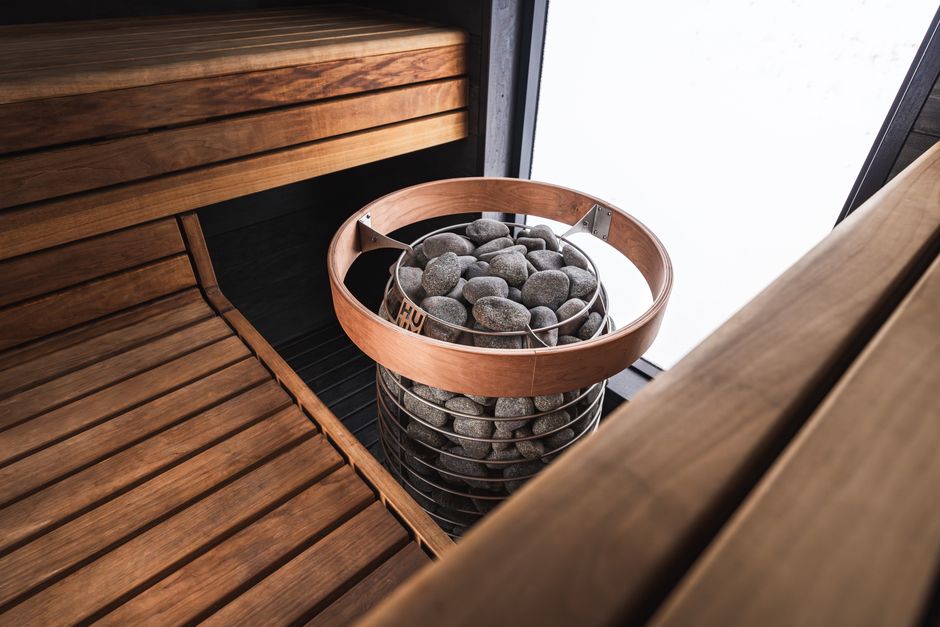
The sauna then cold plunge order is settled: heat first. Warmed tissue handles the cold transition better, the plunge registers as relief rather than shock, and every clinical contrast convention starts with the warm phase. Finish order is the real choice, and it comes at the end of this section.
How many sauna and cold plunge rounds should you run? Two to five. Classic contrast bath physiotherapy prescribes three to five cycles of roughly 3 to 4 minutes warm against about 1 minute cold, a 3:1 to 4:1 warm-to-cold ratio. Sauna-plus-plunge sessions skew even hotter-side-heavy, because heat bouts run long while plunges stay short, so plan for a heat-to-cold ratio around 4:1 to 6:1. Fifteen minutes of sauna against a two-and-a-half-minute plunge lands almost exactly at 6:1.
The finish sets your exit state. Ending on cold leaves prolonged vasoconstriction and elevated catecholamine tone, which reads as alertness. Ending on warmth favors relaxation and parasympathetic rebound, the better default for evening sessions near bedtime. Pick it on purpose instead of by whichever exit happens to be closer.
Three Contrast Sessions You Can Run This Week
Three scripts, one architecture. The heat side grows with experience; the cold plunge protocol stays conservative in all three, because cold dosing tips into risk faster than heat dosing tips into wasted time.
First Visit, two rounds
- 10 min sauna at 80 to 90°C
- 2 to 3 min seated rest, cool shower if you want one
- 1.5 to 2 min plunge at 12 to 15°C
- 3 min rest
- Repeat once, then finish warm: 10 min in the sauna or the warm lounge
- Totals: about 20 min heat, 4 min cold, roughly 5:1
Recovery Day, three rounds
- 15 min sauna at 85 to 95°C
- 3 min rest
- 2 to 3 min plunge at 10 to 13°C
- 3 min rest
- Run three rounds, final exposure is the plunge, then 10 min warm-down
- Totals: about 45 min heat, 8 min cold, roughly 5:1 to 6:1
Peak Week, four to five rounds
- 12 to 15 min sauna at 90 to 100°C
- 2 to 3 min plunge at 10 to 12°C
- 2 min rests between sides, kept short to hold the contrast
- Finish cold when you want alertness afterward, warm when the session ends near bedtime
- Totals: 55 to 60 min heat, 10 to 12 min cold, roughly 5:1
Progression is boring on purpose. Start at two rounds and add a round, or two minutes of heat per bout, every one to two weeks until you reach four to five. Track weekly totals of heat minutes and cold minutes rather than chasing extremes in either direction. A colder plunge is a heavier dose, not a better one.
Timing Contrast Therapy Around Training

The order of training and recovery matters as much as anything inside the venue. Contrast therapy before or after training resolves simply: after, or on a separate day. Cold exposure immediately before lifting can acutely reduce power output, and the more interesting costs sit on the other side of the workout.
After hypertrophy work
The concern that a cold plunge after lifting blunts gains is not internet folklore. In a multi-week immersion trial, trainees who soaked in cold water straight after resistance sessions gained less muscle and strength than matched groups on the same program, likely because the cold dampens the post-exercise signaling and satellite-cell activity that drive adaptation. The growth-friendly defaults: separate the plunge from lifting by several hours, so a morning lift and an evening bathhouse trip clears it, keep plunges to non-lifting days, or bias the whole session toward sauna. Sauna after a workout carries no comparable blunting signal in the available research, and a small post-exercise sauna trial in runners even pointed toward endurance gains, with the authors crediting plasma volume expansion.
Endurance and competition weeks
Peak week flips the logic. Acute soreness reduction and next-day readiness now outweigh whatever adaptation signal you might mute, so a full contrast session after hard efforts is acceptable and often exactly right. Cold water immersion timing matters most in this window: use contrast freely in the days around competition, then step back to sauna-biased recovery once the event passes and the next hypertrophy block begins.
Rule of thumb: in a growth block, stay sauna-biased and schedule the plunge hours away from lifting. In a peak week, run the full contrast after hard sessions and stop second-guessing it.
Safety, Blood Pressure, and Warning Signs
Sauna and cold plunge safety runs through blood pressure. Moving from a hot room into a standing cold immersion is a double stress on circulatory regulation, dilated vessels and pooled blood on one side, sudden systemic constriction on the other, and orthostatic symptoms are the main practical risk for otherwise healthy users. Enter the plunge gradually, keep a hand on the edge, and sit for a moment before standing anywhere in the venue.
Modify or skip contrast work with cardiac conditions, uncontrolled blood pressure, pregnancy, or alcohol in your system. Finnish forensic case series have repeatedly found alcohol involved in the large majority of sauna-related deaths, and drinking plus hot-cold cycling stacks the two worst inputs for fainting.
End the session immediately on any of these signs:
- Dizziness or lightheadedness, especially on standing
- Nausea, chest pressure, or a sudden headache
- Confusion or feeling strangely detached
- Uncontrollable shivering
- Numb, clumsy, or painful hands and feet
Do Saunas Detox or Flush Your Lymph?
No, and the physiology is unambiguous. Sweat is overwhelmingly water, sodium, and other electrolytes, and the trace metals it carries are negligible next to what your liver and kidneys clear every day, as a detailed sweat composition analysis concludes. Lymph does not get flushed by heat either, since it moves with muscle contraction and pressure changes rather than temperature. The vascular pump from alternating vasoconstriction and vasodilation is real and worth using, as are the relaxation and perceived-recovery effects. Buy those, and skip the brochure's detox language.
Running the Protocol in a Real Bathhouse
Knowing what to do at a bathhouse recovery session is mostly logistics discipline, because a contrast therapy protocol only works if it survives contact with a real venue. Book 60 to 90 minutes for three or four rounds with rests; 45 minutes is the floor for two. Ask staff for the actual sauna and plunge temperatures, since posted numbers drift from real ones, and adjust durations rather than architecture when a room runs hotter or a tub runs warmer than target. If the plunge sits above 15°C, extend immersion time toward three minutes instead of adding rounds. In a steam room, cut heat bouts to 8 to 12 minutes.
Bring sandals, two towels, and 500 ml to a liter of water, and sip across the session rather than chugging at the end. Shower before your first sauna entry, both for etiquette and because sweat needs clean skin to do its one real job, cooling you. Use the rest areas as part of the dose: two to three seated minutes between sides, ten to close. Any warning sign from the safety section ends the session, full stop.
Write the card before you go. Two rounds or five, heat first, ratio near 5:1, finish chosen on purpose, plunge kept hours away from lifting unless you are peaking. That index card is the difference between renting the rooms and running the protocol.
Stay in the loop.
Get the latest posts and exclusive content delivered to your inbox.
Join 37 readers. No spam. Unsubscribe in one click, anytime.
About the author
Dr. Mara Whitfield
Longevity Protocols Lead
Mara translates aging research into protocols people can actually follow. With a background in preventive medicine and years tracking the longevity literature, she writes the healthspan routines, supplement stacks, and testing cadences she runs herself.
Related Posts
Home Cold Plunge Buying Guide Built on Chiller Math
A home cold plunge buying framework: match chiller size to tub volume, master water care, estimate running cost, and plunge safely without a brand roundup.

Home Sauna Running Cost per Session vs the Gym Lounge
Home sauna running cost, cold plunge electricity, and water care priced per session, with break-even math showing when a home setup beats the gym lounge.
Which Luxury Gym Recovery Amenities Actually Work
Luxury gym recovery amenities like IV drips and saunas promise faster recovery. Discover which ones actually work and how to replicate them at home.