Which Luxury Gym Recovery Amenities Actually Work
Luxury gym recovery amenities like IV drips and saunas promise faster recovery. Discover which ones actually work and how to replicate them at home.

Most luxury gym recovery amenities are a high-margin product dressed up as a medical procedure. The recovery lounge at your upscale fitness club sells a compelling image: IV bags on rolling stands, infrared pods glowing amber, cold plunges steaming against the wall, and a treatment menu listing longevity facials at spa prices. The promise is that paying more buys faster recovery and measurable longevity gains. The physiology tells a more useful story. A narrow set of stress-based protocols (heat, cold, and properly dosed light) carries genuine evidence behind it. The rest is wellness theater with a premium price tag. This article treats each amenity as a purchasing decision, separates the ones with a real mechanism from the ones with a marketing budget, and shows you how to replicate the effective protocols at home for a fraction of the cost.
Stay in the loop.
Get the latest posts and exclusive content delivered to your inbox.
Join 10 readers. No spam. Unsubscribe in one click, anytime.
The Real Cost of Luxury Gym Recovery Amenities
A standard commercial gym membership in most US metros typically runs between $30 and $80 per month. The luxury tier, the one with eucalyptus towels and a dedicated recovery wing, depending on the market often clears $200 to $400 monthly. Many of these facilities also charge per-session fees for IV drips, cryotherapy, and facials on top of dues. You are not paying that premium for better squat racks. You are paying for ambiance and an amenity menu.
The adaptations that actually improve recovery come from physiological stress, not ambiance. Heat raises core temperature and triggers cardiovascular adaptations. Cold activates the sympathetic nervous system and modulates inflammation. Light at specific wavelengths interacts with mitochondrial chromophores in your cells. These mechanisms are cheap to produce once you understand them. They are also the only ones with robust evidence behind their recovery claims.
The rest of this article walks through each major amenity category, assigns a clear verdict based on available evidence, and hands you a home substitution protocol with real cost numbers.
IV Drips and Vitamin Infusions
The IV bar in your gym's recovery lounge operates in a regulatory gray zone that most members never question. Intravenous vitamin therapy is not FDA-approved for any condition. The Merck Manual IV therapy overview notes that these infusions, often marketed as Myers' cocktails or recovery drips, lack approval for energy, immunity, or athletic recovery claims. Yet gyms and wellness clinics deploy them with explicitly medical framing: staff in scrubs, rolling IV stands, treatment menus that read like a hospital chart. The framing sells because the margin is extraordinary. Industry estimates place the materials cost of a standard saline-and-vitamin bag at roughly $1 to $20. That same bag typically retails for $100 to $300 per session in a recovery lounge. Few products in any industry carry that margin.
The physiological pitch centers on absorption. Intravenous delivery bypasses the digestive system and pushes nutrients directly into the bloodstream, which marketers frame as inherently superior. For an athlete who is dehydrated after training, though, the delivery route barely matters if the gut is functioning normally. A clinical review of hydration strategies in athletic populations concluded that oral rehydration restores fluid balance effectively for the vast majority of exercise-induced dehydration scenarios. IV fluids are genuinely indicated only in narrow clinical situations: severe dehydration, gastrointestinal dysfunction that prevents oral intake, or a diagnosed deficiency requiring rapid correction.
The vitamin layer is weaker still. Unless you have a documented deficiency in B12, iron, vitamin D, or another specific nutrient, megadosing vitamins intravenously does not produce a measurable recovery advantage. Healthy kidneys filter and excrete the surplus within hours. The same Merck Manual source notes that these treatments carry real, if uncommon, risks including infection at the insertion site, vein irritation, and fluid or electrolyte imbalance.
Do IV drips help muscle recovery? For the vast majority of athletes training and recovering normally, the answer is no. The practical substitute costs about $2: one liter of water with an electrolyte packet containing sodium and potassium, consumed over 20 to 30 minutes post-training. For nearly all normal-training scenarios, the hydration outcome is comparable.
Verdict: Skip it.
Saunas and Cold Plunges as the Real Workhorses
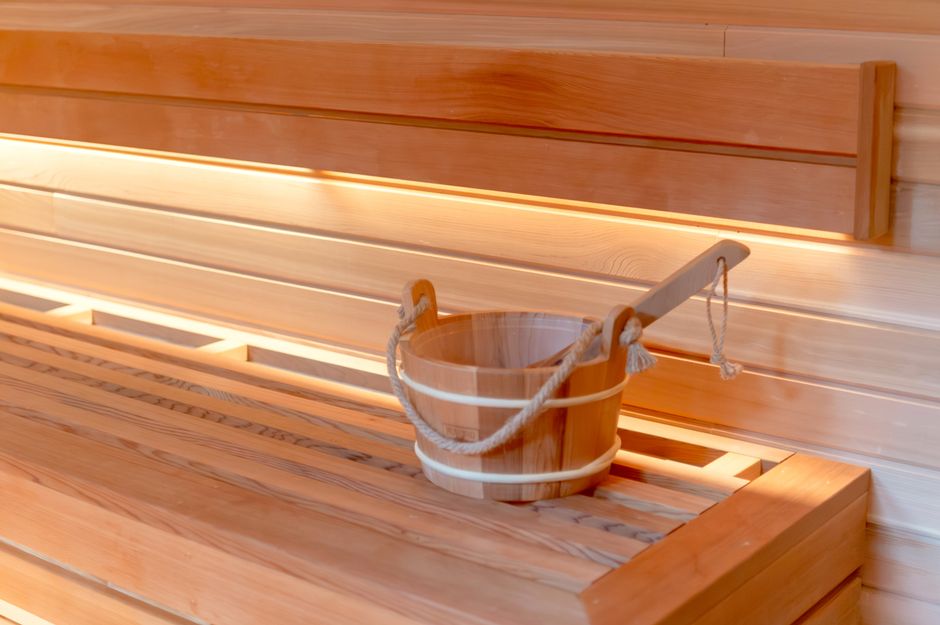
This is where luxury gym recovery amenities earn their keep. Unlike IV drips or facials, heat and cold exposure impose a genuine physiological stress that your body must adapt to. The adaptations are measurable, repeatable, and difficult to fake.
Sauna: Cardiovascular Stress in a Wooden Box
Heat exposure raises your core temperature, dilates blood vessels, and elevates heart rate in a pattern that closely mimics moderate aerobic exercise. A systematic review of sauna bathing associates frequent sauna use with reduced all-cause mortality and lower incidence of cardiovascular events. The proposed mechanisms include improved endothelial function, reduced systemic inflammation, and lower resting blood pressure over time.
The dose matters. Observational data from Finnish cohorts consistently associates sessions of 15 to 25 minutes at temperatures around 175°F to 210°F (approximately 80°C to 99°C), repeated two to three times per week, with cardiovascular benefit. Infrared saunas, which operate at lower ambient temperatures of 120°F to 140°F and use radiant heat rather than heated air, may produce similar core-temperature elevations. The cardiovascular outcome data is thinner for infrared specifically than for traditional Finnish saunas, though. If your primary goal is the longevity and cardiovascular benefit, traditional saunas have the deeper evidence base.
Verdict: Keep it, or build it at home.
Cold Plunge: Timing and Hypertrophy Trade-offs
Cold water immersion is the other stress-based modality with solid evidence behind it. Submersion in water between 50°F and 59°F for 10 to 15 minutes triggers norepinephrine release, reduces perceived muscle soreness, and can improve subjective recovery between sessions. Athletes who train twice a day or compete on consecutive days often benefit from the acute pain reduction.
But timing is critical. Cold exposure applied immediately after resistance training can blunt the hypertrophic adaptation you are trying to build. A cold immersion and hypertrophy review found that routine post-workout cold exposure appears to suppress key signaling pathways that drive muscle growth and long-term strength gains. The inflammation you feel after lifting is not purely damage. It is also the stimulus your body uses to rebuild bigger and stronger tissue. Suppressing it with cold right after training suppresses the gain.
A separate cold modality is whole-body cryotherapy, which blasts air at roughly minus 200°F for two to three minutes. The evidence is mixed, with some research suggesting modest soreness reduction and other studies finding little advantage over active recovery. Cold water immersion carries the deeper evidence base if you are choosing between the two.
Verdict: Use strategically. Cold plunge on rest days or at least several hours after lifting. Skip it immediately post-session if hypertrophy or strength is your primary goal.
Red Light Therapy and Longevity Facials
Recovery lounges routinely mix cosmetic dermatology with athletic recovery, and the two categories require completely different evaluation frameworks. Both red light panels and longevity facials have real science behind them, but the science applies to skin and superficial tissue, not to the muscular recovery most gym-goers are actually paying for.
Red Light Therapy: Mechanism and Dosing Requirements
Red and near-infrared light (typically 630 to 670 nm and 810 to 850 nm) penetrates the skin and interacts with cytochrome c oxidase in mitochondria, potentially boosting ATP production and reducing oxidative stress. A red light therapy meta-analysis suggests that properly dosed light therapy can reduce delayed-onset muscle soreness and improve recovery markers when applied before or after exercise.
The key phrase is properly dosed. Effective treatment requires specific wavelengths, sufficient irradiance (power density at the skin surface), and correct exposure time. Most cheap consumer wands and small panels do not deliver enough energy to reach therapeutic thresholds in muscle tissue. The clinical devices used in published research typically output high irradiance over large surface areas and cost thousands of dollars. A budget handheld device is unlikely to replicate those parameters.
Verdict: Conditionally useful, but device quality determines everything. If you want red light therapy for muscle recovery, invest in a full-body panel with documented irradiance specs from a manufacturer that provides third-party testing data.
Longevity Facials: Dermatology vs. Recovery
The longevity facial, which typically combines microneedling, radiofrequency, growth factor serums, or similar procedures, has genuine dermatological science behind it. A clinical review of anti-aging treatments outlines how procedures like microneedling and controlled energy devices stimulate collagen remodeling and improve measurable skin quality over time. These are legitimate dermatology tools used by legitimate practitioners.
But they are not muscle recovery. If your goal is athletic performance and faster recovery between workouts, a facial does nothing for your quadriceps, your hamstrings, or your deadlift. Conflating skincare with recovery is one of the clearest signals that a recovery lounge is selling ambiance rather than physiology.
Verdict: Buy it for your skin, not your training. And consider buying it from a board-certified dermatologist rather than a gym front desk.
The Home Substitution Playbook

If the legitimate modalities are heat, cold, and properly dosed light, the good news is that all three are replicable at home. Here is what each setup costs and how quickly it pays for itself compared to commercial pricing.
| Modality | Home Setup Cost | Commercial Equivalent | Break-Even Point |
|---|---|---|---|
| Cold plunge (DIY tub + ice) | $100 to $500 | $30 to $60 per session | 2 to 8 sessions |
| Infrared sauna (home unit) | $1,000 to $2,500 | $200 to $400 monthly membership | 3 to 12 months |
| Red light panel (clinical grade) | $300 to $1,200 | $20 to $40 per session | 8 to 30 sessions |
Cold Plunge on a Budget
The cheapest effective way to cold plunge at home is a stock tank or insulated tub filled with water and ice. Field Mag's cold plunge guide walks through several DIY configurations, from a basic livestock tank with bagged ice to chiller-fed systems with precise temperature control. A 50-gallon stock tank runs about $100 to $150. Add $5 to $10 in ice per session, or invest $400 to $800 in a small circulating chiller for temperature stability without daily ice runs, and you have water in the same 50°F to 59°F range as a commercial plunge tub.
Home Infrared Sauna
A home infrared sauna is the largest upfront investment in this playbook, but it also delivers the clearest long-term savings. Peak Saunas' cost breakdown lays out the comparison: a mid-range home unit costs roughly $1,000 to $2,500, while a luxury gym membership with sauna access runs $200 to $400 monthly. Even at the high end of the home unit price, the break-even point lands within the first year if you sauna two to three times per week. After that, every session is effectively free.
Red Light That Actually Works
Skip the handheld wands. If you want a device that delivers a therapeutic dose, look for a panel with published irradiance measurements expressed in mW/cm² at the treatment distance, and wavelengths in the 630 to 670 nm or 810 to 850 nm range. Budget $300 to $1,200 for a body-sized panel from a manufacturer that supplies independent testing data. Treat for 10 to 20 minutes per session at the distance the manufacturer specifies.
When a Luxury Membership Pays Off
None of this means a luxury gym is always a bad purchase. The real question is whether you are paying for physiology or paying for convenience, and the answer depends on how often you actually use the evidence-based amenities.
Start with frequency economics. If you sauna three times per week and cold plunge twice, you are logging roughly 20 recovery sessions per month. At a $300 monthly membership, that works out to about $15 per session, which is competitive with standalone studio pricing for the same modalities. Drop your usage to once or twice a week, though, and the per-session cost balloons past $35. The math only works if you are a consistent, high-frequency user.
Then there is the friction argument. Home setups demand maintenance. You haul ice, scrub tubs, ventilate the sauna, and keep panels clean and stored. If those chores mean the cold plunge sits empty more often than not, the gym membership with its turnkey access will produce better outcomes simply because you will actually use it. A protocol you follow three times a week at a gym beats a flawless home setup you touch twice a month.
Finally, consider whether the recovery wing is a bonus or the main draw. If you already train at the facility through classes, equipment, or coaching, and you would pay that membership fee regardless of the lounge, then recovery access is effectively a free add-on. The marginal cost drops to zero, and even the lower-evidence amenities become harmless if you enjoy them.
The decision collapses to that single question. If physiology is the goal, build the home setup and skip the IV drips. If convenience and compliance outweigh absolute cost for your lifestyle, the membership can earn its premium, provided you use the workhorses (sauna, cold plunge, and red light) and ignore the theater. The most expensive recovery protocol is the one you pay for and never use. The second most expensive is the one that feels luxurious but delivers no physiological stimulus. Filter every luxury gym recovery amenity through that lens, and the menu sorts itself very quickly.
Stay in the loop.
Get the latest posts and exclusive content delivered to your inbox.
Join 10 readers. No spam. Unsubscribe in one click, anytime.
About the author
Jordan Reyes
Registered Dietitian
Jordan ditched diet dogma for metabolic health, running continuous glucose monitors and food journals to see what actually moves the needle. He writes nutrition and supplement protocols grounded in evidence, not influencer trends.
Related Posts

Home Sauna Running Cost per Session vs the Gym Lounge
Home sauna running cost, cold plunge electricity, and water care priced per session, with break-even math showing when a home setup beats the gym lounge.

Contrast Therapy Protocol for Sauna and Cold Plunge Rounds
A dosed contrast therapy protocol for the bathhouse, with sauna and plunge temperatures, round counts, heat-to-cold ratios, and timing around training.

Should I Train or Rest Today? Trust Your Own Baseline
Should I train or rest today? Check HRV against your personal baseline and noise band, watch resting heart rate drift, and let warm-up RPE break ties.