4 to 6 Whole Grain Servings Per Day, Dosed in Grams
Whole grain servings per day, translated into grams. Turn the 4 to 6 servings from 87 trials into a protein-first heart health protocol you can weigh.
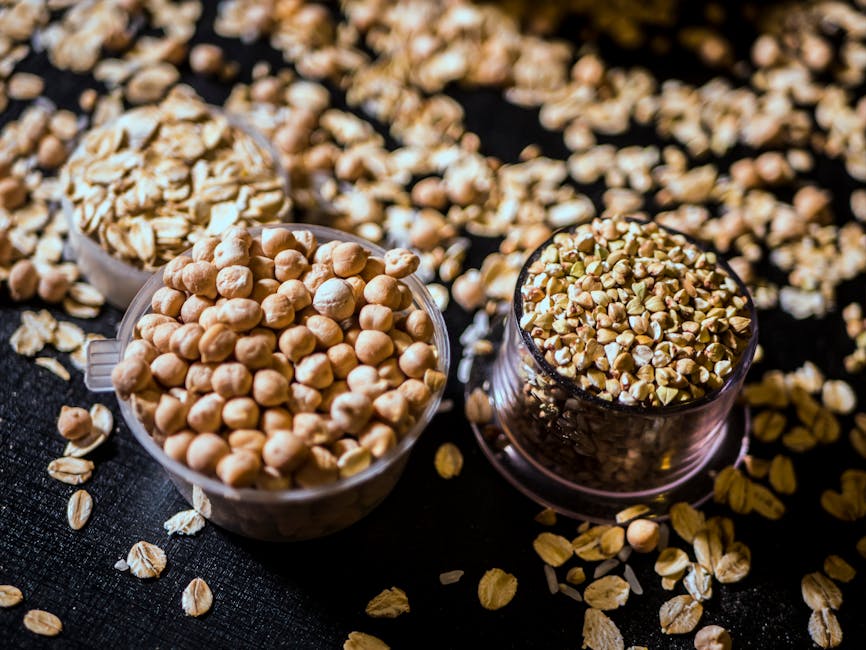
A review pooling 87 randomized trials on whole grains for heart health just delivered a dose, not a food-group sermon: 4 to 6 whole grain servings per day, an intake associated with improvements in body weight, waist circumference, blood pressure, cholesterol, and blood sugar. A dose is runnable; a serving is not, because the serving is the one variable the headline leaves undefined, and the two counting standards disagree by roughly a factor of two.
Stay in the loop.
Get the latest posts and exclusive content delivered to your inbox.
Join 10 readers. No spam. Unsubscribe in one click, anytime.
Under the 16 g standard behind the Whole Grains Council stamp and much of the trial literature, that dose is 64 to 96 g of whole-grain ingredient per day. Under the looser counting behind US labels and guidelines, it can mean 120 g or more of dry grain. That gap decides whether any of this fits your carb budget.
The protocol below converts the finding into grams, ranks grains by mechanism instead of marketing, and gives explicit run, halve, and skip rules for a protein-first reader who owns a CGM.
What the 87-Trial Review Actually Found
Start with what the evidence supports, because the press release and the paper license different amounts of confidence. The 87-trial umbrella review reports that people assigned higher whole-grain intake, roughly 4 to 6 servings of whole grains a day, improved on body weight, waist circumference, blood pressure, cholesterol, and blood sugar relative to control arms. Press materials around the review also flag triglycerides and some inflammatory markers.
Three boundaries matter before you dose anything:
- The comparator is usually refined grains, not zero grains. Most of the pooled trials swapped whole grains in for refined ones. The finding supports whole over refined, and says much less about six servings versus none for someone already metabolically tight.
- There is no head-to-head against lower-carb diets at matched protein. Nobody in this pool randomized grain eaters against an equally protein-forward, lower-carb arm. If you already run that diet, this review cannot tell you to stop.
- Per-marker effect sizes belong to the paper. I am deliberately not quoting pooled deltas secondhand, because paraphrased effect sizes are where serving-size confusion compounds. The direction of every marker is modest in absolute terms: population-scale improvement, not one person's dramatic quarterly lab shift.
Honest summary: solid evidence that replacing refined starch with whole grains helps the listed markers, and no proof that stacking whole grains onto an already-clean diet adds much. That distinction drives everything below.
What Whole Grain Servings Per Day Means in Grams

The whole grain serving size in grams depends on who is counting, and the two systems disagree by enough to change your decision.
| Counting standard | One serving means | 4 servings | 6 servings |
|---|---|---|---|
| 16 g ingredient (Whole Grains Council stamp, common trial definition) | 16 g dry whole-grain ingredient, e.g. oats or quinoa | 64 g | 96 g |
| US oz-equivalent (labels, Dietary Guidelines) | 1 slice 100% whole grain bread, or half a cup cooked grain, or 1 cup flaked cereal | roughly 70 to 90 g dry | roughly 100 to 130 g dry |
How many grams is one serving of whole grains, in real food
Cooked volume is where intuition breaks, because grains roughly triple in weight when cooked:
- Steel-cut oats: a 40 g dry bowl, the modest breakfast most people would call one serving, is already 2.5 servings under the 16 g standard.
- Quinoa: 32 g dry cooks to about half a cup, 2 servings.
- Pearled barley: 16 g dry is a scant third of a cup cooked, 1 serving.
- Rye crispbread: two slices carry roughly 16 g of grain, 1 serving.
- Buckwheat: 30 g dry is about two-thirds of a cup cooked, roughly 2 servings.
The surprise runs both directions. Six servings is a smaller total than the listicles imply if you count 16 g units, and much larger if you count bread slices and half-cup portions. Pick your standard, state it, and stick to it, because mixing the two is how people hit what they believe is the dose while eating half of it.
Which Grains Earn the Dose
Treat grains as delivery vehicles for specific fractions, because the best whole grains for heart health are not interchangeable, and the whole grains and cholesterol story concentrates in exactly two of them. Oats and barley beta-glucan for cholesterol is the strongest mechanism in the category: the approved EFSA claim covers 3 g per day of oat or barley beta-glucan for maintaining normal blood cholesterol, the only grain-based lipid claim with that regulatory standing in Europe. Barley carries the fiber at higher density, and a barley beta-glucan trial shows the LDL response in practice.
| Grain | Mechanism | Tier |
|---|---|---|
| Oats | Viscous beta-glucan, typically 3 to 5% | 1, lipid claim |
| Barley | Beta-glucan, typically 4 to 8% | 1, lipid claim |
| Rye | Dense fiber, intact kernels, decent glycemia data | 2 |
| Buckwheat | Fiber, magnesium, gentler glycemic load | 3 |
| Quinoa | Fiber plus about 2 to 3 g of protein per 16 g serving, the grain that defends the protein anchor at 6 servings | 3 |
| Brown rice | Bran fiber and magnesium; least-bad training-day swap, run post-workout where its glycemic cost is lowest, strictly in place of white rice | 4 |
Run the arithmetic on the lipid arm: at typical concentrations, hitting the claim-level 3 g of beta-glucan takes roughly 60 to 100 g of oats, or somewhat less barley. The cholesterol case for this protocol is basically an oats-and-barley protocol. Rye and buckwheat fill volume and add fiber variety, quinoa fills volume while paying protein rent, and all of them support the waist and glycemia endpoints without being your LDL levers.
A Sample Day at 2, 4, and 6 Servings
All gram figures are dry whole-grain ingredient at 16 g per serving. Protein anchors hold at every dose, roughly 35 g at breakfast and 40 g at lunch and dinner. That is whole grains without displacing protein, the entire engineering constraint of this protocol.
| Slot | 2 servings (32 g) | 4 servings (64 g) | 6 servings (96 g) |
|---|---|---|---|
| Breakfast | 32 g steel-cut oats + whey + 2 eggs | 32 g oats + whey + 2 eggs | 40 g oats + whey + 2 eggs |
| Lunch | no grain | 2 rye crispbreads under tuna salad | 2 crispbreads under tuna or smoked salmon |
| Dinner | no grain, extra vegetables | 16 g quinoa beside 200 g protein | 40 g barley-and-quinoa mix beside 200 g protein |
| Carbs added | about 21 g | about 43 g | about 65 g |
Notes on the numbers:
- Grain protein is not trivial: the 6-serving day carries an extra 10 to 13 g of protein on top of the anchors.
- At 6 servings, grains occupy the starch slot that sweet potato or white rice would otherwise hold. Substitution, not addition, is the design.
- Carb estimates use typical dry-weight composition of 60 to 75% carbohydrate; your product label is the tiebreaker.
Fitting the Dose into a Low-Carb, Protein-First Stack
The question of whole grains on a low carb diet is an arithmetic problem, and the arithmetic mostly says yes at half dose.
- Under the 16 g standard, two servings cost roughly 20 to 25 g of carbohydrate.
- Under real-portion counting, two servings as one honest bowl of oats, 60 to 80 g dry, runs about 40 to 50 g of carbohydrate and still clears a 100 to 150 g daily budget if it displaces something you were already eating.
The displacement rule is absolute: grain replaces refined starch or added fat. Never protein.
If it displaces the chicken, you have traded a satiety lever for a fiber lever and will lose the exchange. Swap the post-dinner nuts, the sushi rice, the second pour of olive oil.
The stronger argument for the half dose is the shape of the curve. In the dose-response meta-analysis pooling cohort data, risk gradients rise fastest over the first two to three daily servings and flatten beyond roughly 90 g per day. That is observational and suggestive rather than proven, but it rhymes with the trial data, and it means 2 to 3 whole grain servings per day of oats and barley placed around training plausibly captures most of the cardiometabolic benefit at a third of the carb cost.
| Your carb budget | Verdict |
|---|---|
| Under 50 g (keto) | Skip, or run a 1-serving oat or barley test for the fiber and blood pressure effects |
| 100 to 150 g | Half dose fits cleanly, post-training |
| 150 g and up | Full dose fits, split between breakfast and dinner |
When to Skip the Protocol Entirely

ApoB or LDL already at goal
If diet or a statin already has your ApoB where you want it, the marginal lipid effect of whole grains is modest relative to the levers you are already pulling. Pooled beta-glucan trial estimates commonly land around 5 to 10 mg/dL of LDL at the full 3 g dose, an order of magnitude less than pharmaceutical levers. Opting out is rational. The honest case for running it anyway is waist, blood pressure, and glycemic control, not cholesterol.
Strict low-carb with clean markers
If weight, waist, and fasting glucose are already dialed and extra starch threatens ketosis or your CGM targets, skip without guilt. The fiber mechanisms survive elsewhere: psyllium covers viscous soluble fiber, legumes cover bulk fermentation, and neither costs meaningful carbohydrate.
CGM wearers with poor grain tolerance
Whole grains postprandial glucose CGM response varies enormously between people. Run a clean self-experiment before deciding: same grain, same dry weight, one version intact (steel-cut, whole kernels) and one milled (flour, instant), each paired identically with protein and fat, two or three repetitions, standardized timing. If intact kernels plus protein pairing still push you past your tolerance band, drop the grains and keep the fiber targets through other sources. Your CGM is a legitimate inclusion criterion even when it disagrees with a meta-analysis, because the meta-analysis estimates a population average and your monitor estimates you.
Markers to Retest After 8 to 12 Weeks
Run the protocol 8 to 12 weeks before judging it, and retest under matched conditions: same lab, same time of day, same fasting window.
| Marker | Direction if working | Realistic expectation |
|---|---|---|
| ApoB and LDL-C | Down | Small; single-digit to about 10 mg/dL, mostly from beta-glucan |
| Blood pressure | Down | Whole grains and blood pressure trials generally show modest systolic shifts, often on the order of 1 to 2 mmHg in pooled analyses |
| Fasting glucose, HbA1c | Down | Largest with elevated baselines; small if yours is already normal |
| Waist circumference | Down | The pooled weight analysis supports the direction; measure at the navel, morning, fasted |
| CGM averages | Flatter excursions | Compare two matched weeks, before versus on-protocol |
Two calibration points. Blood pressure is home-measurable and cheap, so average seven mornings rather than trusting one reading. And if nothing moves at a real dose after 12 weeks, you have your answer, and the opt-out logic above takes over.
Where the Protocol Fails in Practice
Flour fraud
Whole-grain labeling is gameable. FDA's whole grain claim does not require purity, only that the food carry a majority of its grain as whole grain, which leaves a large minority of refined flour in legal good standing. Multigrain means nothing. "Made with whole grain" means almost nothing. Read the ingredient list and ask one question: can I see the kernel, or is this flour? Build the protocol from identifiable kernels, oat groats, steel-cut oats, pearled barley, rye kernels or honest crispbread, quinoa, buckwheat.
Pulverized structure
Grain structure changes physiology. Kernel versus flour trials show intact and coarsely cut grains producing lower postprandial glucose excursions than the same grains finely milled, which compresses much of the whole grains vs refined grains blood sugar difference the moment you pulverize the kernel. Steel-cut beats rolled beats instant, roughly, and pairing with protein and fat beats all three. Your CGM can rank these on yourself within a week.
Calorie creep
Six servings is roughly 350 kcal of dry grain. Added on top of maintenance intake, that is on the order of a pound every week or two, and the weight gain will erase the cardiometabolic benefit you ran the protocol for. The dose must displace, never stack.
Edge cases
Barley and rye contain gluten; celiac readers substitute purity-protocol oats, quinoa, buckwheat, and brown rice. Wheat and rye fructans are FODMAPs, and a sudden jump to six servings can generate enough fermentation to mimic grain intolerance when it is really a ramp problem. Halve the dose for two weeks and reassess.
The Verdict
Run the half dose, 2 to 3 whole grain servings per day, roughly 32 to 48 g of oats and barley placed around training, if your waist, blood pressure, or glycemic control have room to improve and your carb budget holds 25 to 40 g of slack. Skip it, rationally and without ceremony, if your ApoB is already optimized and your CGM hates even intact kernels. The serving was always the variable hiding inside this headline. Now it is a number you can put on a food scale.
Stay in the loop.
Get the latest posts and exclusive content delivered to your inbox.
Join 10 readers. No spam. Unsubscribe in one click, anytime.
About the author
Marcus Bao
Strength and Conditioning Coach
Marcus has programmed training for everyone from desk-bound beginners to masters athletes, treating every workout as an experiment with a measurable result. He writes ready-to-run strength, hypertrophy, and Zone 2 programs built around progression you can track.
Related Posts
Reduce TMAO Levels and Keep Your High-Protein Diet
Reduce TMAO levels without giving up red meat. Target the gut microbiome to intercept TMAO production and protect against atrial fibrillation risk.

Build a Hydration Protocol From Your Sweat Rate
Your hydration protocol starts with a 30-minute sweat rate test, then dose fluid and sodium for heavy training, sauna sessions, and low-carb cutting.

How to Choose Protein Powder by Job, Not Brand
How to choose protein powder by job, not brand. Match whey, casein, plant, and collagen to cutting, sleep, and over-50 goals with leucine threshold math.