Build a Hydration Protocol From Your Sweat Rate
Your hydration protocol starts with a 30-minute sweat rate test, then dose fluid and sodium for heavy training, sauna sessions, and low-carb cutting.

A real hydration protocol is a dosing problem, and eight glasses a day and the bodybuilder's gallon both fail at it for the same reason: neither number has anything to do with what you lose in a training session. A 90-minute squat day in a warm gym can cost you close to two liters of sweat and well over a gram of sodium. A rest day costs a fraction of that, and a sauna block doubles it. When daily fluid losses swing by liters depending on what you did, a fixed volume is the wrong unit.
Stay in the loop.
Get the latest posts and exclusive content delivered to your inbox.
Join 10 readers. No spam. Unsubscribe in one click, anytime.
The workable approach is the one you already apply to training load, sauna minutes, and Zone 2 heart rates: measure it, calculate it, dose it. You get a 30-minute sweat rate test you can run this week, per-liter sodium math, dosing templates for lifting, sauna work, and low-carb cutting, the overhydration failure mode that myth-busting listicles skip, and a way to read fluid status in the HRV and readiness data you already collect.
Why 8 Glasses and a Gallon Fail Hard Trainers
Start with where the eight-glass rule came from. In 2002, kidney specialist Heinz Valtin searched the literature for supporting evidence and found no scientific support. The trail led to a 1970s nutrition book whose line about six to eight glasses explicitly included coffee, tea, milk, beer, and the water in food, and it opened by noting that intake is normally well regulated by thirst. The rule survived by dropping its own caveats.
The closest thing to an official answer, the 2004 National Academies intake report, frames needs as total water: about 3.7 L per day for men and 2.7 L for women, with roughly 20 percent supplied by food, and it explicitly notes that thirst plus food meets needs for most healthy people. That is the population-level answer to "how much water should you drink," and it describes average days, not training days.
Sweat rates during hard exercise commonly run from roughly 0.5 to more than 2 liters per hour across individuals. Two athletes doing the same workout can differ by more than a liter per hour in fluid needs before heat, humidity, and acclimation move either number, and a single heavy session can shift your daily requirement by two or three liters. The gallon is not wrong so much as meaningless: on some days it is 60 percent of what you need, on others it is 150 percent, and it says nothing about the hour you are actually training in. The right unit is liters per hour, in the contexts you actually train in.
Test Your Sweat Rate in 30 Minutes
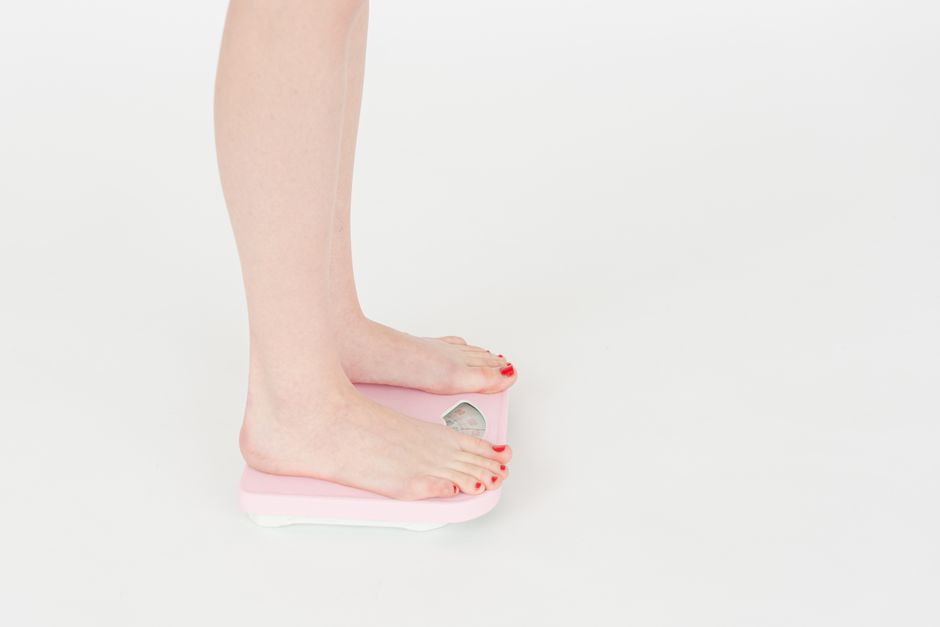
The pre and post weigh-in is the standard field method, and it needs only a scale that reads to 0.1 kg, one bathroom visit, and a normal session.
- Urinate, then weigh yourself dry, in minimal clothing, immediately before training.
- Train at normal intensity in the conditions you actually train in, for at least 30 minutes. Longer sessions shrink measurement error, so a 60 to 90 minute block is better when you have one.
- Track every drop you drink. One liter of water weighs almost exactly 1 kg, so milliliters convert straight into body mass.
- Towel off completely and weigh again in the same clothing state.
- Compute: pre-session weight minus post-session weight, plus liters drunk, divided by session hours. That is your liters per hour, and it is the entire answer to how to calculate your sweat rate without a lab.
An 85 kg lifter weighs in at 85.0 kg before a 90-minute session, drinks 0.6 L during it, and weighs 83.8 kg after. That is 1.2 kg lost plus 0.6 L drunk, or 1.8 L of fluid, over 1.5 hours: a sweat rate of 1.2 L per hour. A schedule of roughly 250 mL every 15 to 20 minutes delivers 0.75 to 1.0 L per hour in-session, keeps the gut comfortable, and leaves a small deficit to fix with food and fluid afterward.
Validation studies of the method note one bias worth knowing: the weigh-in slightly overestimates true sweat output, because body mass also drops through respiratory water loss and through burned substrate leaving as carbon dioxide. For dosing purposes that is a feature. You are trying to replace total fluid lost, and the calculation captures total fluid lost.
Treat the number as conditional, not permanent. Sweat rate shifts with heat, humidity, fitness, and acclimation, so retest when the season changes or when a new training block starts. Two or three tests across different conditions give you a personal range instead of a single fragile point.
Estimate Your Sodium Loss Per Liter of Sweat
Volume is half the dosing problem. Sodium is the other half, and it varies even more than sweat rate.
Patch data summarized in a 2022 review of sweat testing shows sweat sodium concentration commonly spanning roughly 200 to 1,700 mg per liter between individuals. Two athletes with identical 1.5 L per hour sweat rates can lose 0.3 g of sodium in an hour, or 2.6 g, from the same training. That is the difference between a salted meal and a deliberately dosed bottle.
You likely sit toward the high end if dark shirts come out with white streaks, your eyes sting mid-session, dried sweat leaves a crust on your skin or hat brim, or you cramp in long sessions even when fit and fueled. Salty sweater signs and cramping together are the classic fingerprint of a concentrated sweater.
| Sweat sodium concentration | Sodium lost at 1.5 L per hour |
|---|---|
| 300 mg per liter (low) | about 0.45 g per hour |
| 950 mg per liter (mid-range) | about 1.4 g per hour |
| 1,700 mg per liter (high) | about 2.6 g per hour |
For how much sodium per hour of exercise you should actually ingest, sports medicine guidance for sessions lasting an hour or more commonly lands at 0.5 to 0.7 g of sodium per liter of fluid consumed, per ACSM's position stand. Typical commercial sports drinks sit near the bottom of that range at around 0.45 g per liter, so a heavy sweater usually needs a stronger drink mix, a packet with real sodium numbers on the label, or about a quarter teaspoon of table salt per liter, which adds roughly 0.55 g. Most sodium for athletes advice stops at "take electrolytes." The numbers on the label are what matter.
None of this contradicts sodium guidance for sedentary adults, which NIH's resources for professionals summarize. Heavy sweating is simply a second, training-driven sodium sink that standard intake advice never models, which is why electrolyte dosing has to be personal.
Dose Fluid and Sodium by Context

With a sweat rate and a sodium estimate in hand, the hydration protocol reduces to three short templates.
Heavy Training Sessions
Defend the 2 percent line. Fluid deficits around 2 percent of body mass are commonly where performance measurably declines, which for an 85 kg lifter means keeping the in-session deficit under roughly 1.7 kg. Sessions under an hour in a cool gym rarely need in-session sodium if you eat salted food normally; scheduled plain water is enough. Past 60 minutes, or in any heat, apply the 0.5 to 0.7 g per liter rule: the 1.2 L per hour lifter drinking 0.8 L per hour wants 0.4 to 0.55 g of sodium with it. Afterward, a common rehydration guideline is 1.25 to 1.5 L of fluid per kg of body mass lost, spread over the following hours with meals.
Hydration for Sauna and Heat Sessions
The weigh-in works identically in the sauna: weigh before entering, weigh after exiting, add anything drunk, divide by hours. Timing is what changes. How much water to drink in a sauna matters less than when you drink it. About 200 to 300 mL before entering is plenty, because a liter chugged pre-session mostly sits in the stomach and gets filtered out before you ever sweat it.
A 90 kg athlete weighs 90.0 kg before a 60-minute sauna block and 89.2 kg after, drinking nothing inside: 0.8 L lost. Replace about 1.2 L across the rest of the day, roughly 1.5 times the deficit, with 0.5 g or so of sodium attached, and treat regular sauna use as a standing sodium drain on par with training days.
Low-Carb Cutting and Water Weight
Cutting carbs changes both sides of the ledger. Each gram of glycogen is stored with roughly 3 g of water, a ratio confirmed in human muscle biopsy work, so a trained person carrying 400 to 500 g of glycogen who drains those stores in week one loses 1.2 to 1.5 kg of water with them. Water weight loss the first week of low carb is real, fast, and almost entirely not fat.
Meanwhile, falling insulin signals the kidneys to excrete sodium and water, a well-described natriuresis that raises sodium needs exactly when lifters often cut salt hardest to please the scale. During the first week or two of a cut, adding 1 to 2 g of sodium per day with meals is a reasonable starting dose. Expect the morning weight to fall, do not slash water in response, and know that the flat look and weak pump commonly reported around day four are fluid and glycogen. The low-carb water weight drop is scale drama, not body change.
Can You Drink Too Much Water While Training?
Yes, and it has a name and a documented body count. Exercise-associated hyponatremia occurs when plain water is consumed well beyond sweat losses, diluting blood sodium below 135 mmol/L. A consensus statement on EAH records symptomatic cases and fatalities in endurance events, and its core conclusion is blunt: overdrinking, not sodium loss alone, is the main driver.
The simplified math shows how thin the margin is. Take a 70 kg adult with about 42 L of body water and serum sodium of 140 mmol/L. Accumulate a 3 L net surplus of plain water across a slow five-hour effort, beyond what the kidneys can excrete, and the same sodium now floats in 45 L: roughly 131 mmol/L, squarely in hyponatremic range. This model deliberately ignores sweat sodium losses, exercise hormones that further suppress urine output, and NSAID use, which impairs the kidneys' ability to dump water. Every ignored factor pushes the same direction.
The risk profile is specific: events longer than about four hours at slow paces, aggressive pre-drinking, drinking to "stay ahead" of thirst with plain water, NSAIDs, and smaller bodies. Warning signs during an event include bloating, nausea and vomiting, headache, confusion, and visibly swollen hands or fingers, with seizures possible in severe cases. A 75-minute lifting session is very unlikely to get there. A slow half marathon, an ultra, or a long hot hike floated on plain water is exactly where it happens. The defense is the same card this article builds: drink to your measured sweat rate with sodium attached, never to a maximization rule, and remember that salt tablets do not rescue an already-overdiluted bloodstream.
Reading Fluid Status in HRV and Readiness Data
Deficits around 2 percent of body mass are commonly where measurable costs appear, with declines in endurance performance and cognition documented in a review of mild dehydration. Wearables often show the dip before you feel it.
Does dehydration lower HRV and readiness scores? Commonly, yes. Mild hypohydration reduces plasma volume, so the heart beats faster at any given output: resting heart rate drifts up, and the volume stress and sympathetic tilt tend to dampen HRV. The morning after a heavy sweat session, a readiness score can look like a bad night of sleep when the real story is fluid.
A morning triage routine separates the two:
- Weigh in after the bathroom, before food, and compare against your 7-day average rather than yesterday.
- If weight is down about 1 percent or more from baseline, resting heart rate is up a few beats, and HRV is suppressed, suspect fluid and sodium first: take in 1 to 2 L with sodium across the day and recheck the next morning.
- Sleep debt, alcohol, and stress move the same metrics, which is exactly why the scale reading matters: it separates a hydration dip from genuine fatigue.
- First-void urine color is the coarse third check. Pale straw is the target, dark means catch up, and clear all day every day suggests you are overdrinking.
Your Weekly Hydration Protocol Card
| Cadence | Check | Action |
|---|---|---|
| Every morning | Weight vs 7-day average, urine color, RHR and HRV | If weight is down ~1% with RHR up, dose 1 to 2 L plus sodium and recheck tomorrow |
| Every session past 60 min | Fluid on schedule, about 250 mL per 15 to 20 min | 0.5 to 0.7 g sodium per liter consumed |
| After any heavy sweat session | Post-session weight change | 1.25 to 1.5 L per kg lost over the following hours |
| Once per week | Morning weight against RHR, HRV, readiness log | Watch the relationship emerge in your own data |
| Seasonal or new block | Retest sweat rate, note conditions | Update the dosing schedule |
Two habits close the loop. Retest sweat rate whenever the season or training block changes, because the January number will lie about July. And run the logging experiment once: one week of morning weight, resting heart rate, HRV, readiness, and sodium dose in one place. Watching readiness fall the morning after a big sweat session, then recover after a salted rehydration day, is what converts a hydration protocol from an article you read into a lever you control.
Stay in the loop.
Get the latest posts and exclusive content delivered to your inbox.
Join 10 readers. No spam. Unsubscribe in one click, anytime.
About the author
Jordan Reyes
Registered Dietitian
Jordan ditched diet dogma for metabolic health, running continuous glucose monitors and food journals to see what actually moves the needle. He writes nutrition and supplement protocols grounded in evidence, not influencer trends.
Related Posts

How to Choose Protein Powder by Job, Not Brand
How to choose protein powder by job, not brand. Match whey, casein, plant, and collagen to cutting, sleep, and over-50 goals with leucine threshold math.
Compute Your FIB-4 Score Before Trusting a Normal ALT
Compute your FIB-4 score from bloodwork you already have, see why normal ALT misses fatty liver, and run a quantified diet protocol to reverse early MASLD.
Intermittent Fasting Protein Intake Is a Math Problem
Intermittent fasting protein intake is a math problem. Per-meal synthesis caps decide if your feeding window fits your target or quietly costs muscle.