GLP-1 Diet Plan Built on Protein Arithmetic
A GLP-1 diet plan built on arithmetic, not willpower. Set a protein floor, split it across the feedings a suppressed appetite allows, and defend muscle.
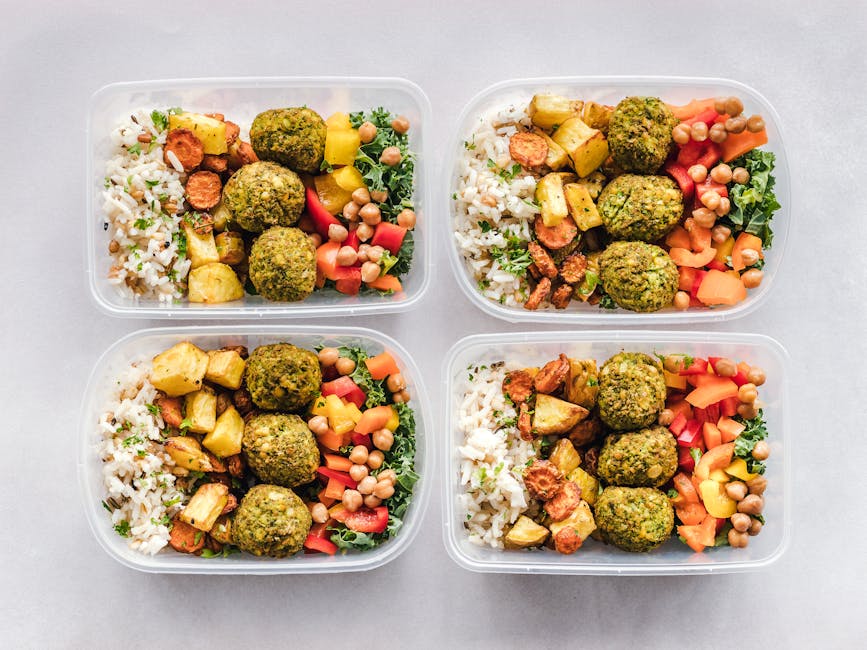
"Eat a little more than you feel like." That is the standard advice handed to people on Ozempic and Wegovy, and it collides with the pharmacology. Semaglutide and tirzepatide do not weaken appetite, they remove it. Food noise goes quiet, hunger stops arriving on schedule, and advice that depends on wanting to eat has nothing left to attach to. That is how people on these drugs slide into months of under-consuming protein without noticing a thing.
Stay in the loop.
Get the latest posts and exclusive content delivered to your inbox.
Join 41 readers. No spam. Unsubscribe in one click, anytime.
The fix is arithmetic rather than motivation. This GLP-1 diet plan computes your numbers up front: a daily protein floor anchored to your goal weight, a split across the two or three feedings the drug actually permits, a training and creatine stack that biases weight loss toward fat, the micronutrient gaps that open when food volume halves, and dated rules for coming off the drug without handing the results back.
The Eating Problem a GLP-1 Actually Creates
Before the drug, intake was spread across a dozen small decisions, snacks, seconds, the leftover bite off a kid's plate. Semaglutide deletes most of those decisions. Users commonly describe settling between 1,200 and 1,800 calories a day with no sensation of restriction, across two or three real feedings. Slowed gastric emptying means fullness arrives early and lingers, and dense protein is precisely the food that trips that alarm fastest.
Run the volume math. Someone who used to eat 2,600 calories across a day of grazing now has perhaps two credible feeding windows. Protein is the most satiating macronutrient, protein foods take the most stomach room, and appetite on these drugs is pharmacologically absent rather than merely weak. Intake drifts down because the eating opportunities disappeared, not because of poor choices. The question of how to eat on a GLP-1 reduces to scheduling: what goes into the few feedings you can actually finish.
The folk advice to eat more is directionally fine and operationally empty. You will not out-discipline a receptor agonist. You can make every remaining feeding an engineered one, and that is the job of the next five steps.
What the Trials Say About GLP-1 Muscle Loss
The lean-mass numbers come from small substudies, and they deserve honest calibration. In the STEP 1 body composition substudy, roughly two-fifths of the total weight lost on semaglutide over 68 weeks was lean tissue, measured by DEXA. Reviews pooling GLP-1 trials generally place the lean share of total loss between about a quarter and two-fifths, depending on the population and the measurement method.
Two caveats keep those figures from being as alarming as headlines suggest. DEXA lean mass includes water and glycogen, both of which fall in any large deficit, so true skeletal muscle loss is probably somewhat lower. And substudy samples are small.
The comparison that matters: diet-only weight loss commonly produces a similar lean fraction. The drug does not uniquely cannibalize muscle, and it does not protect it either. Because total loss is larger on the drug, absolute lean loss is larger too, which is why GLP-1 muscle loss gets attention at all. What you can modify is protein quantity and distribution, the training stimulus, and creatine. What you cannot modify is the deficit while your dose titrates, your gastric emptying rate, and your starting body composition. Everything below is an attempt to bias the loss toward fat.
Step One, Set Your Daily Protein Floor

Any semaglutide diet plan worth running starts with one number. Reviews of higher protein intakes during caloric restriction support a working range of 1.2 to 1.6 g per kg of goal body weight per day for adults losing weight while resistance training. For most people that lands between 90 and 130 g, treated as a floor rather than an aspiration.
Worked example. You weigh 105 kg and your goal weight is 85 kg. Multiply the goal by 1.4, the middle of the range: 85 × 1.4 = 119, call it 120 g per day. Notice the anchor. The floor is computed for the body you intend to keep, not the one you are leaving behind, and it settles the question of how much protein per day on semaglutide you personally need.
| Goal weight | 1.2 g per kg | 1.4 g per kg | 1.6 g per kg |
|---|---|---|---|
| 60 kg | 72 g | 84 g | 96 g |
| 70 kg | 84 g | 98 g | 112 g |
| 80 kg | 96 g | 112 g | 128 g |
| 90 kg | 108 g | 126 g | 144 g |
| 100 kg | 120 g | 140 g | 160 g |
Adjustment rules:
- Not lifting yet? Start at 1.2 to 1.4. Protein defends muscle before the training habit exists.
- Lifting three or more times a week? Take 1.4 to 1.6.
- Over 50? Bias toward the top of the range, since aging muscle responds less briskly to each gram.
- Kidney disease or a single kidney? Get physician sign-off before raising protein. In healthy adults, reviews have found no harm at these intakes.
Why goal weight rather than current weight? Scaling our example to 105 kg gives 147 g, which mostly feeds the fat mass you are trying to unload and overshoots what a suppressed appetite can realistically deliver. Some clinicians use an adjusted body weight formula; goal weight is simpler and errs on the doable side, which matters on a drug where eating is already work.
Treat the floor like a utility bill. Targets you aim at quietly fail when appetite is absent. Minimums you clear every day are what survive contact with the medication.
Step Two, Split the Floor Across Feedings You Can Finish
Daily totals do not build muscle, feedings do. Per-meal dosing research puts the protein per meal needed to robustly stimulate muscle protein synthesis at roughly 0.4 g per kg, which is 30 to 50 g for most adults, with diminishing returns above that as more amino acids get oxidized for energy. Distribution arithmetic, not just the daily total, decides how much muscle you keep.
Divide the 120 g floor:
- Three feedings: 40 g each. Clean and comfortable, the default.
- Two feedings: 60 g each. Workable but past the saturation point, so stack each one, 40 g of solid protein plus a 20 to 30 g liquid serving 60 to 90 minutes later.
How to get enough protein with no appetite is a density problem, the most grams in the least stomach room:
| Food | Portion for about 35 g | Approx energy |
|---|---|---|
| Whey isolate | 40 g powder in water | 140 kcal |
| Canned tuna, drained | 140 g, one large can | 150 kcal |
| Egg whites | 300 ml, about 10 whites | 160 kcal |
| Chicken or turkey breast | 120 g cooked | 200 kcal |
| Nonfat Greek yogurt or skyr | 350 g | 210 kcal |
Liquids earn their place here. Shakes leave the stomach more easily than solids, which is why a whey feeding goes down on days when the thought of a chicken breast does not.
A sample day inside a suppressed budget, clearing the floor with margin:
| Feeding | Contents | Protein | Energy |
|---|---|---|---|
| Midday | 300 g nonfat Greek yogurt, half a scoop of whey stirred in, 100 g blueberries | 43 g | 300 kcal |
| Late afternoon | 150 g cooked chicken breast, large salad, a tablespoon of olive oil, a banana | 46 g | 600 kcal |
| Evening | 200 g shrimp or white fish, stir-fried vegetables, a teaspoon of oil | 48 g | 320 kcal |
| Day total | 137 g | 1,220 kcal |
The margin is deliberate. Real days degrade, a feeding gets skipped, a portion shrinks, and a 137 g plan that lands at 115 g still sits near the floor. This is the difference between a GLP-1 meal plan and a GLP-1 diet plan: recipes rotate, arithmetic holds.
Step Three, Lift and Take Creatine

Muscle keeps what it is asked to keep. Feeding is half the signal; the other half is resistance training, the strongest modifiable lever you own if you want to prevent muscle loss on semaglutide. In dieting adults, adding resistance training shifts the composition of weight loss toward fat, and it works at conservative volumes:
- Two to three sessions per week is the minimum effective dose.
- Compound lifts first: a squat or leg press, a hinge, one press, one pull.
- Two or three hard sets per movement, five to fifteen reps, adding weight or reps over the weeks. That progression is the retention signal.
- Train within a few hours of a feeding. Sessions on 1,300 calories feel different, and short beats heroic.
Then the cheap adjunct. The ISSN creatine position stand reviewed the evidence and supports creatine monohydrate at 3 to 5 g per day, any time, every day, no loading phase, as safe for healthy people. Does creatine help on Ozempic specifically? No large drug-specific trial exists, and honesty beats invention here. The mechanism argument is straightforward: during caloric restriction, creatine can modestly support training performance and lean mass, which is precisely the physiological state a GLP-1 user lives in. Cost is cents per day. Expect one to two kilograms of scale increase from intracellular water in the first weeks. That is not fat, and it is not a reason to stop.
Step Four, Close the Micronutrient Gaps
Micronutrient gaps on GLP-1 medications are a volume problem before they are a food-quality problem. When intake halves, everything halves with it unless you engineer it back. The plausible shortfalls on a collapsed menu are fiber, magnesium, potassium, calcium, vitamin D, vitamin B12, and iron, and one recent micronutrient analysis found a meaningful share of GLP-1 users below recommended intakes on several of them.
Gastrointestinal side effects compound the shortfall. Constipation, among the most common complaints on these drugs, pushes out exactly the vegetables and whole grains that carry fiber, magnesium, and potassium. Nausea pushes out cooking smells and leafy greens. The fix runs in a hierarchy:
- Compact, dense foods first. Dairy covers calcium and B12, so the Greek yogurt in your feeding plan is doing double duty. Canned oily fish covers vitamin D and omega-3s. A tablespoon of chia or psyllium adds grams of fiber and helps the constipation directly.
- Insurance supplements second. A basic multivitamin plus vitamin D at the commonly used adult dose of 1,000 to 2,000 IU covers most of the list cheaply. Add magnesium citrate or glycinate if constipation persists.
- Labs if you are in this for the long haul. After several months, vitamin D, B12, ferritin, and a complete blood count are reasonable checks. Plant-based eaters and women with heavy periods should treat the iron panel as mandatory.
Potassium is the one you cannot supplement your way out of, since over-the-counter pills are capped at small doses in the US, around 99 mg. Route it through food instead: yogurt, potatoes, tomato products, orange juice.
Step Five, Plan the Off-Ramp
The STEP 1 extension followed participants who stopped semaglutide at the end of the main trial. Over the following year they regained about two-thirds of the weight they had lost. Hunger and food noise come back when the drug stops, often faster than people expect, and that average outcome is the default you are planning against. Rules beat wishes:
- The protein floor survives the taper. It was computed for your goal weight, and nothing about stopping the drug lowers it.
- The training survives the taper. Muscle defended through a year of deficit is expensive tissue your body will reclaim the moment you stop asking it to work.
- Weigh weekly, same scale, same conditions, with a threshold set in advance. More than 2 to 3 kg above your exit weight for two consecutive weeks means cutting intake roughly 10 percent or restoring the engineered feeding structure for two weeks. A pre-committed rule beats vigilance you have to feel like honoring.
- Recompute maintenance honestly. A body 20 kg lighter burns meaningfully less, and eating like your old body is how the fat loss gets handed back.
- What to eat when coming off semaglutide: the same foods, in gradually larger portions, with protein eaten first at every meal while your fullness signals recalibrate.
The GLP-1 Diet Plan on One Page
Screenshot this.
Daily
- Protein floor: goal weight in kg times 1.2 to 1.6 g. Most people land between 90 and 130 g. Cleared every day.
- Feedings: two or three engineered feedings of 30 to 50 g each, or 60 g stacked if you only manage two.
- Liquids as gap fillers when solids fail.
- Creatine monohydrate: 3 to 5 g.
- Micros: multivitamin, vitamin D, psyllium if constipated.
Weekly
- Two or three resistance sessions built on compound lifts, progressing over time.
- One weigh-in, with the 2 to 3 kg over two weeks action rule.
Minimum viable day, for the worst no-appetite days
- Feeding 1: one scoop of whey in milk, about 33 g protein, 200 kcal.
- Feeding 2: repeat.
- Feeding 3: 150 g of chicken, tuna, or shrimp with whatever vegetables you can face, about 45 g protein.
- Total: roughly 110 g protein for under 900 kcal. A bad day with the protocol intact.
The drug took appetite out of the equation, and most of the folk wisdom left with it. What remains is exactly the kind of problem arithmetic handles well: a floor in grams, feedings engineered to clear it, a training signal worth spending it on, and a dated plan for the day the appetite comes back. Compute your numbers once. Then run them.
Stay in the loop.
Get the latest posts and exclusive content delivered to your inbox.
Join 41 readers. No spam. Unsubscribe in one click, anytime.
About the author
Marcus Bao
Strength and Conditioning Coach
Marcus has programmed training for everyone from desk-bound beginners to masters athletes, treating every workout as an experiment with a measurable result. He writes ready-to-run strength, hypertrophy, and Zone 2 programs built around progression you can track.
Related Posts

Valine Restriction Longevity Conflicts With Your BCAA Stack
Valine restriction longevity data shows 23.4 percent longer lifespan in male mice, challenging BCAA supplements taken for muscle growth and recovery.

Low-Fat Vegan Diet Type 2 Diabetes Trial, an Omnivore's Audit
A mechanism audit of the low-fat vegan diet type 2 diabetes trial, plus the fat, fiber, and cooking swaps omnivores can steal for better blood sugar.
4 to 6 Whole Grain Servings Per Day, Dosed in Grams
Whole grain servings per day, translated into grams. Turn the 4 to 6 servings from 87 trials into a protein-first heart health protocol you can weigh.