CPAP Alternatives Ranked by Evidence and Phenotype
CPAP alternatives graded by evidence and apnea phenotype: weight loss and tirzepatide, oral appliances, Inspire, positional therapy, and the drug pipeline.

The sleep study confirmed obstructive sleep apnea, CPAP is off the table for you, and the search results are a wall of affiliate listicles. Choosing among CPAP alternatives is a phenotype-matching problem, not a preference problem. Severity, sleep position, body weight, airway anatomy, and your history with the machine determine the shortlist. Device marketing has almost nothing to do with it.
Stay in the loop.
Get the latest posts and exclusive content delivered to your inbox.
Join 43 readers. No spam. Unsubscribe in one click, anytime.
Sleep apnea treatment without CPAP works, sometimes very well. This article grades every credible rung by strength of human evidence, from weight loss and the first FDA-approved OSA drug to oral appliances, positional devices, and hypoglossal nerve stimulation, then calibrates the pill headlines honestly. A novel drug dosing its first patient in a Phase 2 dose-optimization study is routine pipeline progress, plausibly years from an approval decision. The productive move this month is climbing one evidence-tiered rung with a sleep physician, and the sections below give you the ladder, five worked cases to self-locate in, and the exact questions to ask at your next appointment.
Where CPAP sits on the evidence ladder
CPAP is a pneumatic splint. Constant pressure holds the airway open regardless of where it collapses, and decades of randomized trials across mild, moderate, and severe disease back it. On pure efficacy it is the ceiling every alternative gets graded against, and nothing on this ladder outperforms it when it is worn all night, every night.
The weak point is the "when." Clinicians treat roughly four hours per night as minimal acceptable use, and a substantial share of patients fall below it. Reviews commonly find that a third to half of adults prescribed CPAP use it less than prescribed within the first year. That single fact explains why alternatives exist, and why they can win on real-world outcomes despite weaker efficacy numbers: a somewhat less effective treatment you actually use can beat a more effective one that lives in a closet.
Three grades are used throughout this article:
- Strong: multiple randomized controlled trials and guideline endorsement.
- Moderate: consistent controlled evidence with real limitations in size, duration, or generalizability.
- Emerging: plausible mechanism and early signals, low certainty, acceptable as an adjunct, risky as a solo plan.
CPAP alternatives are chosen by phenotype
Four variables do the sorting, and you already own most of the data.
| Axis | What it captures | Where to find it |
|---|---|---|
| Severity | AHI 5 to 15 mild, 15 to 30 moderate, 30+ severe | Your sleep study report |
| Positionality | Supine AHI at least double non-supine AHI | Supine versus non-supine tables |
| Weight and anatomy | BMI, neck circumference, jaw position | Exam, sometimes imaging |
| CPAP status | Treatment-naive, tolerant, intolerant | Your own history |
Now the five cases that recur through the rest of this article. Find the one closest to you.
| Case | Snapshot | Severity | Positional | Weight and anatomy | CPAP history |
|---|---|---|---|---|---|
| A | Snores and desaturates only on his back | Mild, AHI 11 | Yes | Normal BMI | Naive |
| B | Machine sits by the bed, used rarely | Moderate, AHI 22 | No | BMI 28 | Averages 2.5 hours |
| C | Mask panic, AHI in the 40s | Severe, AHI 42 | No | BMI 30 | Intolerant |
| D | Asking about Zepbound before anything else | Severe, AHI 35 | Partly | BMI 38 | Naive |
| E | Appliance failed, jaw recessed | Severe, AHI 50 | No | Retrognathia | Failed |
The rest of the ladder tags each rung to the cases it fits, so you can read selectively and still leave with a shortlist.
Weight loss and GLP-1 drugs, the newest rung
How much does weight loss reduce AHI? In cohort data going back decades, a 10 percent weight loss has tracked with roughly a 20 to 30 percent AHI reduction on average. Remission happens, but it is a minority outcome, and apnea frequently returns with weight regain, sometimes faster than the kilograms do. Fat infiltrates the tongue and pharyngeal walls; unload it and the airway widens, until the weight comes back. Grade: strong as an adjunct, weak as a solo bet for anything beyond mild disease.
Tirzepatide for obstructive sleep apnea changed the pharmacology picture in December 2024, when the FDA approved Zepbound for moderate-to-severe OSA in adults with obesity, the first medication ever approved for the indication (FDA approval announcement).
The pivotal SURMOUNT-OSA trial results, published in the New England Journal of Medicine, randomized adults with moderate-to-severe OSA and obesity to tirzepatide or placebo for a year. The drug roughly halved AHI on average, with absolute reductions on the order of 25 to 30 events per hour, against a modest placebo change.
The mechanism matters more than the headline. Does Zepbound help obstructive sleep apnea? In the obese moderate-to-severe phenotype, yes, but it works through weight, not through the airway. It shrinks the fuel feeding the obstruction, which makes it a complement to an airway strategy, not a replacement for one.
Practical notes for a quantified-self reader: gastrointestinal side effects are common early and usually settle; lean mass loss is a real consideration given that pharyngeal muscles are lean mass; and stopping the drug predictably reverses the benefit. Case D is the target user, and the correct ask is tirzepatide plus an airway plan, in parallel.
Oral appliances for mild to moderate apnea
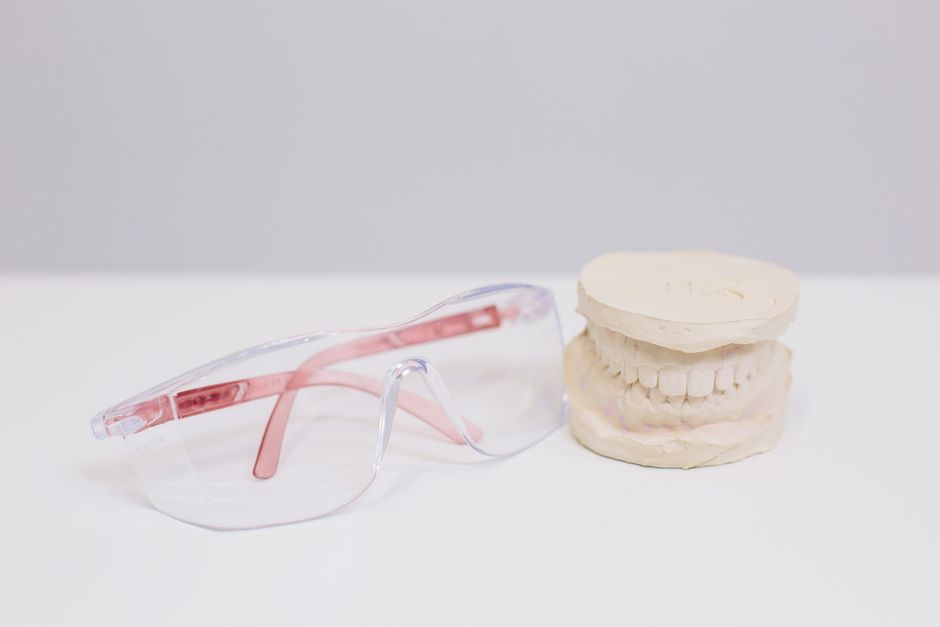
A mandibular advancement device holds the lower jaw forward, enlarging the phngeal space and stiffening the airway against collapse. The AASM clinical practice guideline recommends oral appliance therapy as first-line treatment for mild-to-moderate OSA, and for patients with more severe disease who cannot tolerate CPAP.
On the oral appliance versus CPAP question for mild OSA, the honest summary is a trade, not a winner. Head-to-head trials usually show CPAP reduces AHI somewhat more, while adherence to the appliance is typically better, and real-world outcomes in the mild-to-moderate band often end up comparable because people actually wear the device. For many patients that trade is rational, and the guideline language reflects it.
Three requirements separate the therapy from the gadgets:
- A custom, titratable device fitted by a dentist experienced in dental sleep medicine. Boil-and-bite sports guards do not qualify.
- Structured titration over weeks, moving the jaw forward in small increments until symptoms resolve.
- Objective retesting, either a home sleep apnea test or a lab study, to verify the AHI actually fell.
Side effects are the tax: morning jaw discomfort and temporary bite changes are common, and a minority of users develop persistent dental movement that leads them to quit. Case B is the textbook fit, and Case A is a reasonable one. As solo therapy for severe OSA, an appliance is usually underpowered.
Positional therapy for positional apnea
Positional OSA means your supine AHI is at least double your non-supine AHI. If your events nearly vanish off your back, your obstruction is posture-dependent, and that is a different engineering problem than a collapsing airway in every position. Devices range from chest-worn vibrators that buzz you off your back to supine alarms to the tennis ball sewn into a shirt, which remains the cheapest fidelity test available.
The evidence is a sizeable notch thinner than CPAP or appliances. A systematic review of positional therapy found the devices can markedly reduce AHI in the true positional phenotype, but the review authors flag lower overall certainty and a familiar failure mode: compliance decays over months as users sleep through vibrations or remove the device. The best CPAP alternative for positional sleep apnea is this one, with two conditions. First, positionality must be proven from your study's supine versus non-supine tables, not guessed from where you think you sleep. Second, mild disease is where it can plausibly stand alone; anything heavier should treat it as a layer on top of an appliance or pressure therapy. Case A starts here.
Hypoglossal nerve stimulation for CPAP-intolerant apnea

Hypoglossal nerve stimulation implants a device that stimulates the nerve controlling the tongue, pushing the tongue base forward in sync with each breath during sleep. Inspire is the flagship system, and for the CPAP-intolerant severe patient it is the most consequential rung on the ladder.
Candidacy is gated, and the gates are the story. The typical Inspire profile: moderate-to-severe OSA with an AHI commonly in the 15 to 65 range, documented CPAP intolerance or failure, a BMI commonly below roughly the low-to-mid 30s, and a drug-induced sleep endoscopy showing a favorable collapse pattern, because complete concentric collapse of the airway predicts a poor response. Patient selection criteria research consistently ties outcomes to these screens, which is why walking in and asking for the implant without the workup goes nowhere.
Outcomes are respectable within the screened population. The STAR trial long-term outcomes followed implanted patients for five years and found that the large majority remaining in follow-up were still using the device nightly, with durable AHI reductions and sustained quality-of-life gains. Across pivotal data, roughly two in three well-selected patients meet responder criteria. The costs are real: general anesthesia, a recovery period, weeks of titration visits to tune stimulation strength, and future MRI planning around an implanted pulse generator.
Treatment options when CPAP intolerant route through this rung and the oral appliance rung. Case C is the target user, and his homework is the sleep endoscopy.
The sleep apnea drug pipeline, calibrated
A novel OSA drug recently dosed its first patient in a Phase 2 dose-optimization study, and the coverage reads like a breakthrough. Calibrate it. A dose-optimization study answers which dose is tolerable and worth carrying forward. After it comes a Phase 3 program that must prove efficacy in hundreds of patients across multiple sites, then regulatory review. Most drugs entering Phase 2 never reach approval. The realistic read on any new sleep apnea medication in a Phase 2 dosing study: years to a decision, and if it arrives, likely adjunctive positioning, because no pill has yet matched a pneumatic splint for keeping an anatomically compromised airway open.
The adjacent programs illustrate both the promise and the attrition. AD109, a fixed-dose combination of atomoxetine and oxybutynin, works on a genuinely different mechanism, pharmacologically restoring airway muscle tone during sleep. Its Phase 3 SynAIRgy results, published in a major respiratory journal, reported significant AHI reductions, though the combination had not reached approval as of this writing. Orexin-receptor agonists, which aim to restore respiratory drive, sit earlier and riskier. Takeda halted a Phase 2 trial in this space over slow enrollment, a quiet reminder that programs stall without ceremony.
| Program | Mechanism | Stage | Realistic read |
|---|---|---|---|
| Tirzepatide | Weight-mediated | Approved | Adjunct for OSA with obesity |
| AD109 combination | Airway muscle tone | Phase 3 published | Awaiting approval decisions |
| Orexin agonists | Respiratory drive | Phase 2 and earlier | High attrition risk |
| Dose-optimization newcomer | Novel mechanism | Phase 2 dosing | Years from any decision |
So when will a sleep apnea pill exist? One already exists, for one phenotype, working through weight. The next ones are plausibly years out. The drug pipeline is not a CPAP alternative today, and treating it as one is a strategy for delaying care.
Surgery and myofunctional therapy, the last rungs
Maxillomandibular advancement moves the jaw skeleton forward structurally, expanding the entire airway. It delivers among the largest AHI reductions of any surgical option and can normalize severe disease in well-selected patients. The price is months of recovery, common temporary facial sensory changes, and a genuinely invasive operation. For Case E, whose recessed jaw is the mechanical root cause, this is the anatomically honest fix rather than a last resort.
Soft-tissue surgery, including UPPP and multilevel procedures, removes or repositions tissue at the palate and tongue base. It helps a select group with palate-level obstruction; in severe OSA the outcomes are variable and residual disease is common, so any post-operative claim should be verified with a repeat sleep study, not assumed from the surgical report.
Myofunctional therapy, structured tongue and throat exercise, shows meta-analytic signals of meaningful AHI reduction, but the Cochrane review of mouth exercises rates the certainty of that evidence as low. Train it the way you would train anything: as a layer on top of a proven rung, never as a substitute for one.
A decision ladder to take to your sleep doctor
Map yourself to the cases, then bring the matching asks.
| Case | First rungs to raise | The specific ask |
|---|---|---|
| A, mild and positional | Positional therapy, appliance | Pull my supine versus non-supine AHI; objective retest in 8 to 12 weeks |
| B, moderate and under-using CPAP | Titration rescue, oral appliance | Dental sleep dentist referral plus follow-up study to verify |
| C, severe and intolerant | Hypoglossal nerve stimulation | Sleep endoscopy workup; check AHI and BMI windows |
| D, severe with obesity | Tirzepatide plus airway therapy | Zepbound candidacy alongside, not instead of, a splint strategy |
| E, severe with failed therapy | MMA consult, implant re-screen | Surgical airway evaluation and repeat study |
Five questions that work in any appointment:
- What is my supine versus non-supine AHI, and am I formally positional?
- Am I a candidate for an oral appliance, and who titrates and retests it?
- Do I meet hypoglossal nerve stimulation screening criteria, and if not, which specific gate fails?
- Given my BMI, does tirzepatide make sense in parallel with an airway treatment?
- What is the retesting plan after any switch, and will it be objective?
Whatever rung you climb, verify it. A follow-up sleep study after a treatment change is the only honest scoreboard, with symptom tracking (Epworth Sleepiness Scale, and snoring apps only as a rough proxy) as the between-studies telemetry.
Two closing realities. Untreated moderate-to-severe OSA carries elevated cardiovascular and accident risk, so deferring treatment while waiting for a pill is not a neutral holding pattern. And no supplement stack or biohack currently substitutes for effective mechanical or approved pharmacological treatment of significant OSA; NAC will not hold your airway open at 3 a.m. Climb one evidence-graded rung this month, with the phenotype data in hand, and let the pipeline surprise you years from now instead of disappointing you next year.
Stay in the loop.
Get the latest posts and exclusive content delivered to your inbox.
Join 43 readers. No spam. Unsubscribe in one click, anytime.
About the author
Jordan Reyes
Registered Dietitian
Jordan ditched diet dogma for metabolic health, running continuous glucose monitors and food journals to see what actually moves the needle. He writes nutrition and supplement protocols grounded in evidence, not influencer trends.
Related Posts
Best Sleep Position by Symptom, With a Retraining Plan
Find your best sleep position for reflux, snoring, or shoulder pain, plus the mechanisms, graded claims, and a retraining plan that finally sticks.
Home Sleep Apnea Test Before Your Next Supplement
A green readiness score cannot rule out sleep apnea. See which wearable patterns warrant a home sleep apnea test and why a clean result can miss UARS.
Oura Ring Cost Over Three Years Is $560, Not $349
Our 3 year Oura Ring cost audit stacks hardware, membership, and battery wear into one true total, then names who should skip it for a cheaper tracker.