Home Sleep Apnea Test Before Your Next Supplement
A green readiness score cannot rule out sleep apnea. See which wearable patterns warrant a home sleep apnea test and why a clean result can miss UARS.
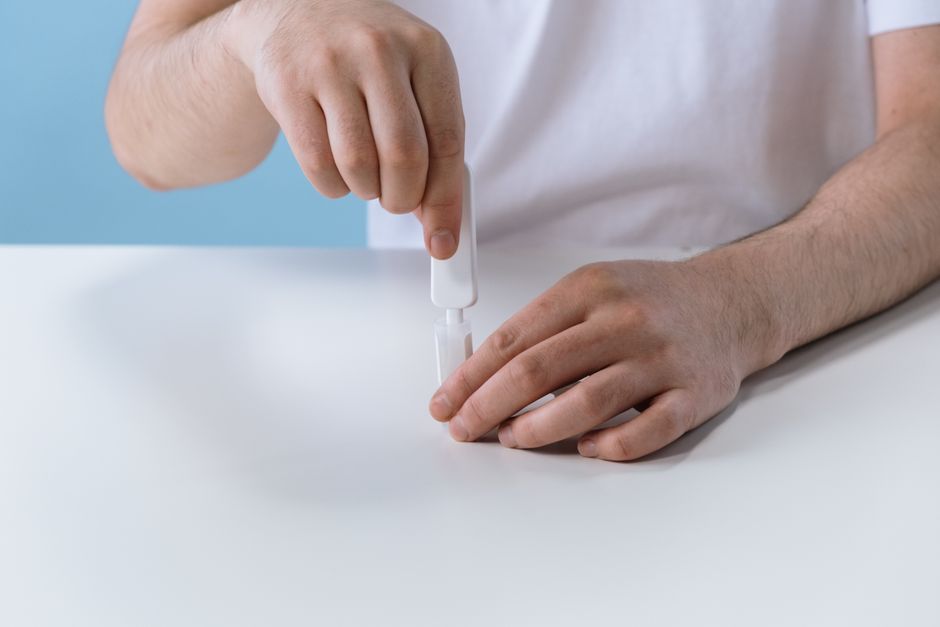
Your Oura ring says readiness 89. You still need two coffees before 10 a.m., you are waking with a headache after eight hours in bed, and your resting heart rate has crept up five beats a minute over two months with no illness or training block to explain it. Your ring is not lying. It is answering a narrower question than the one you keep asking it. Until you have formally screened for sleep-disordered breathing, every sleep optimization you run is stacked on an unverified airway. A home sleep apnea test, two validated checklists, and a hard look at your own tracker data will either close that question or tell you exactly when to escalate to a physician. The sleep apnea self-screening protocol below is built for people who already own the hardware, and it starts tonight.
Stay in the loop.
Get the latest posts and exclusive content delivered to your inbox.
Join 22 readers. No spam. Unsubscribe in one click, anytime.
Why a Green Readiness Score Cannot Rule Out Sleep Apnea
Your tracker infers rather than observes. An Oura, Whoop, or Apple Watch derives sleep stages, HRV, and resting heart rate from two signal streams: an accelerometer for movement, and photoplethysmography for blood-volume pulses at the skin. A systematic review of tracker accuracy found these devices perform reasonably at separating sleep from wake and tracking heart-rate timing, while estimating rather than measuring sleep architecture itself. The critical limitation is what is missing. No ring or wrist wearable measures airflow. None measures respiratory effort, the chest-and-abdomen motion that shows you struggling to breathe against a collapsed airway. None records brain activity, so none can detect the brief cortical arousals that shatter sleep architecture even when blood oxygen never dips.
A readiness score is therefore a certificate of recovery from the signals your device records, nothing more. Resting heart rate, HRV, duration, and timing can all sit in acceptable ranges while your airway is closing thirty times an hour, which meets the clinical threshold for severe apnea. When people ask whether wearables can detect sleep apnea, the honest answer is that they can hint but cannot rule out. That distinction drives every recommendation below.
Who Standard Sleep Apnea Screening Misses
The canonical apnea patient is an overweight man over fifty who snores like a sawmill, and clinical suspicion tracks that stereotype closely. The epidemiology has moved slower than the patient population. Frequently cited work by Young and colleagues estimated that around 80 percent of adults with moderate-to-severe obstructive sleep apnea were undiagnosed (80 percent undiagnosed estimate). As a general clinical observation, many of the undiagnosed do not match the stereotype: younger adults, lean adults, and women.
This matters for a quantified-self audience specifically. Signs of sleep apnea in lean adults get written off as stress, overtraining, or suboptimal sleep hygiene, precisely the explanations a biohacker community reaches for first. Fitness does not clear you. A lean marathoner with a narrow palate and a recessed jaw can have severe flow limitation every night. The stakes of missing it are real: untreated obstructive sleep apnea is associated with hypertension, cardiovascular disease, type 2 diabetes risk, and impaired cognition and mood, an association documented across cardiovascular consequences of apnea research.
Five Wearable Patterns That Warrant a Real Screen
None of these patterns is a diagnosis. Each is a trigger that says the airway question deserves a real test. Pull your last 30 nights and check yourself against the table.
| Pattern in your data | What it can suggest | What it does not prove |
|---|---|---|
| HRV stuck below your baseline despite dialed-in sleep hygiene | Recurrent autonomic arousals fragmenting sleep | HRV is nonspecific; alcohol, stress, and overtraining suppress it too |
| Elevated resting heart rate every night with no illness or overtraining | Sympathetic load from repeated breathing arousals | Many causes exist; apnea is one hypothesis among several |
| Breathing-disturbance or oxygen-variability flags | Desaturation clusters consistent with apnea | Sensor placement and motion artifact cause false flags |
| Waking with a headache after 8 hours of sleep | Nocturnal carbon-dioxide retention seen in apnea | Bruxism, tension, and dehydration are common alternatives |
| Partner reports gasping or pauses in breathing | Witnessed apnea, the strongest single clue | Very little; this one goes straight to a physician |
What the 2024 watch notifications actually do
Apple Watch sleep apnea notifications received FDA authorization in September 2024 (Apple's white paper), and Samsung's Galaxy Watch apnea feature was cleared by the FDA in early 2024, announced as a first for a wrist wearable. Both features work the same way in principle: they estimate risk from breathing-disturbance patterns accumulated across roughly a month of nights, with a minimum amount of qualifying data required before anything can fire. They estimate risk over time rather than diagnosing individual events. A notification is a prompt to get tested, and the absence of one is not clearance, particularly if you rarely wear the watch to bed.
The month-long accumulation also sets the timing. If you start the 30-night data pull today, do not expect a watch verdict this week on top of it, because the algorithm needs its full month before it will say anything. Treat the notification as a lagging confirmation of the audit you are already running, not a gate in front of it: pull the trends yourself, score the checklists tonight, and let the watch catch up on its own schedule.
Reading ring oxygen data honestly
Oura does not claim to detect apnea, but researchers have examined its overnight oxygen-saturation variability as a potential screening signal (Oura oxygen validation work). The evidence is promising for flagging risk and far short of diagnosis. Treat oxygen-variability alerts the way you would treat a smoke detector: a reason to investigate the kitchen, not proof of fire.
Two Validated Symptom Checklists to Run Tonight
Self-assessment only counts if the instrument is validated. Run both of these, score them honestly, and write the numbers down before you look at any tracker data, so the numbers cannot contaminate each other.
Run the STOP-BANG questionnaire
STOP-BANG takes two minutes and predicts your probability of obstructive apnea across eight yes-or-no items.
| Letter | Question | Point if yes |
|---|---|---|
| S | Do you snore loudly enough to be heard through a closed door? | 1 |
| T | Are you often tired, fatigued, or sleepy during the daytime? | 1 |
| O | Has anyone observed you stop breathing during sleep? | 1 |
| P | Do you have, or are you treated for, high blood pressure? | 1 |
| B | Is your BMI above 35? | 1 |
| A | Are you older than 50? | 1 |
| N | Is your neck circumference above 40 centimeters? | 1 |
| G | Are you male? | 1 |
Scoring: 0 to 2 is low risk, 3 to 4 intermediate, 5 to 8 high. A score of 3 or higher flags intermediate-to-high risk and warrants further evaluation, and STOP-BANG validation data show the threshold is deliberately tuned toward sensitivity, catching most true cases at the cost of false positives.
Now the caveat that matters for this audience. The instrument weights BMI, age, and male sex, so a lean, young woman scores structurally low. Picture a 38-year-old runner, BMI 23, neck 33 centimeters, who snores and is exhausted: STOP-BANG reads 2, nominally low risk, while her Epworth comes back 14. Her symptoms and tracker flags carry the case her questionnaire could not. Low STOP-BANG plus persistent symptoms still justifies testing.
Run the Epworth Sleepiness Scale
Epworth asks how likely you are to doze in eight everyday situations, from reading quietly to sitting as a passenger in a car, scored 0 to 3 each for a 0 to 24 total. Scores above roughly 10 suggest abnormal daytime sleepiness. A full Epworth scoring guide with interpretation bands is worth two minutes of your evening. If you are scoring high while your readiness score stays green, that mismatch is itself data.
What a Home Sleep Apnea Test Can and Cannot Detect

A home sleep apnea test typically records nasal-cannula airflow, respiratory effort (belts or peripheral arterial tone), pulse oximetry, heart rate, body position, and sometimes snoring. It is a genuine diagnostic channel set, not a toy. The AASM clinical practice guideline supports home testing for adults with a high pretest probability of moderate-to-severe obstructive apnea and nothing that contraindicates it.
| Signal | Home test | In-lab polysomnography |
|---|---|---|
| Airflow | Yes | Yes |
| Respiratory effort | Yes | Yes |
| Blood oxygen | Yes | Yes |
| EEG and sleep staging | No | Yes |
| Cortical arousals | No | Yes |
| Continuous technician observation | No | Yes |
The home sleep test vs polysomnography gap comes down to that absent EEG row. Without brainwave recording, the device cannot confirm you were asleep, cannot stage sleep, and cannot see arousals. Events get divided by total recording time rather than sleep time, so severity can read lower than it is, a well-documented reason home tests underestimate apnea burden. Add the single-night design and you get more blind spots: apnea is usually worse on your back and in REM, so if you happen to sleep on your side all night, you under-record. A clean home test means that night looked clean, not that the case is closed.
The UARS Gap in Standard Sleep Testing
Upper airway resistance syndrome (UARS) is the pattern that slips through both the home test and the standard score. The mechanics: your airway narrows, inspiratory flow flattens, and your brain fires a micro-arousal to restore muscle tone, over and over, without ever producing a full apnea or a meaningful oxygen desaturation. The apnea-hypopnea index (AHI) that defines diagnosis under most scoring rules counts events with amplitude drops and desaturations, so subtle flow limitation with arousals can leave your AHI sitting under the diagnostic threshold while your sleep is being shredded, a mechanism described in the classic UARS review literature.
So does a home sleep test detect UARS? Generally, no. The home device has no EEG to catch arousals and most reports do not score flow-limitation shape. Even in-lab polysomnography can miss it if the lab scores strictly by AHI. What can catch it: an in-lab study with careful respiratory-arousal and RERA scoring, inspection of nasal-pressure flow flattening, and in specialized centers, esophageal pressure monitoring to measure the work of breathing directly. When you talk to a sleep clinic, the single most useful question is whether they evaluate upper airway resistance and score respiratory arousals, because not all labs treat that as a target.
When to Skip the Home Test and See a Physician
Some situations make self-testing the wrong move. Per the AASM guidance cited above, home testing is generally inappropriate in the presence of significant cardiopulmonary disease, chronic opioid use, or suspected central apnea. Escalate directly to a sleep physician if any of these describe you:
- Heart failure, significant lung disease, or hypoventilation concerns
- Chronic opioid therapy
- Suspected central apnea, meaning pauses without respiratory struggle, or periodic breathing flags
- A negative home sleep test with persistent symptoms
- Partner-witnessed pauses or gasping, which is also the simple answer to when to see a sleep doctor for snoring
- STOP-BANG of 5 or higher alongside another condition such as hard-to-control hypertension
The negative-test-with-symptoms trap deserves emphasis because it is where motivated self-testers stall. A negative home sleep apnea test in a symptomatic person is an indication for further evaluation, most plausibly in-lab testing with arousal scoring, not a license to resume supplement tinkering.
Using Your Tracker to Measure Treatment Response

Once you are diagnosed and treated, your wearable flips from a weak screener to a strong outcome monitor, because relative trends in the signals it measures well are exactly what you want to track. Many users report resting heart rate drifting down and HRV lifting over weeks of consistent therapy, alongside CPAP treatment response data from the machine itself, whose nightly AHI readout is the primary metric. Trial evidence tempers expectations for physiological payoff: CPAP blood pressure meta-analysis results show measurable but often modest blood pressure improvements, and subjective sharpness returns unevenly.
Practical guidance: give therapy four to twelve weeks before judging trends, keep alcohol and sleep timing stable so you are comparing like with like, and read your tracker monthly rather than nightly. Wearables are noisy on the scale of one night and informative on the scale of one month, which is the same reason their silence was never diagnostic in the first place.
Screening as Step Zero in Your Sleep Stack
Reorder the stack. Magnesium, mouth taping debates, blue blockers, and REM-phase alarm tuning all sit above the airway in the dependency chain, and every one of them underperforms while breathing events go untreated. The audit takes about 30 minutes:
- Tonight: score STOP-BANG and Epworth on paper, before looking at tracker data.
- This week: pull 30 nights of wearable data and check the five patterns against your own trends.
- Decide: use the table below to route yourself to a home sleep apnea test or a physician.
- If the home test is negative but symptoms persist, ask a sleep clinic about UARS, RERA scoring, and respiratory arousals rather than closing the case.
- On treatment: trend resting heart rate and HRV monthly against your machine data to verify response.
| What you see | Next action |
|---|---|
| Green readiness but tired every morning, Epworth above 10 | Score STOP-BANG, audit 30 nights of tracker data, consider a home test |
| STOP-BANG 3 or higher | Home sleep test or physician referral |
| Partner witnesses pauses or gasping | Physician directly, skip the self-test debate |
| Cardiopulmonary disease, opioid use, or suspected central apnea | In-lab study; home testing is inappropriate |
| Negative home test but symptoms persist | Ask about UARS and arousal-scored polysomnography |
| On treatment | Trend resting HR and HRV monthly against device AHI |
The readiness score will still be there after you screen, and it will mean more. Spend one night and two checklists on the airway before the next supplement order, because an 89 with morning headaches is not a solved case, it is a hypothesis conflict, and the tiebreaker has always been a test that actually measures breathing.
Stay in the loop.
Get the latest posts and exclusive content delivered to your inbox.
Join 22 readers. No spam. Unsubscribe in one click, anytime.
About the author
Elena Park
Sleep and Recovery Specialist
Elena has spent a decade helping people fix their sleep and recover faster, pairing wearable and HRV data with the cold, heat, and breathwork protocols she tests on herself first. She writes recovery routines that hold up under real, busy lives.
Related Posts

Why Sleepmaxxing Backfires and the Minimum Dose That Works
Sleepmaxxing backfires when effort turns into arousal. Learn the orthosomnia loop, the sleep-effort paradox, and a minimum-effective-dose sleep fix.

CPAP Alternatives Ranked by Evidence and Phenotype
CPAP alternatives graded by evidence and apnea phenotype: weight loss and tirzepatide, oral appliances, Inspire, positional therapy, and the drug pipeline.

Waking Up at 3am to Check Positions? Break the Loop
Waking up at 3am to check positions is conditioned arousal, not poor hygiene. A 1,009-investor survey and a stimulus control protocol to end the loop.