Pickleball Recovery After 50, Dose the Tool to the Tissue
A dosed pickleball recovery protocol for players over 50: match sauna, cold plunge, massage guns, and compression boots to the tissue each one serves.

Most players over 50 have an aiming problem, not a recovery problem. The massage gun goes on the elbow bone. The boots go on after every rec session. The plunge tub gets used whether tomorrow holds a tournament final or a rest day. Four tools, sprayed at everything.
Stay in the loop.
Get the latest posts and exclusive content delivered to your inbox.
Join 54 readers. No spam. Unsubscribe in one click, anytime.
A dosed approach to pickleball recovery starts from the sport's injury map instead. Cold buys post-match symptom control when the next match is a day away. Heat handles pre-match and off-day tissue prep. Percussion targets the guarding forearms and calves, not the tender insertions they pull on. Pneumatic compression drains legs across multi-match days. And none of these tools rebuilds the worn tendons that dominate the over-50 injury list, because tendon remodeling responds to load, not to temperature, vibration, or pressure.
That last point closes a loop our lifting coverage left open. We have flagged that routine post-workout cold can blunt strength and hypertrophy adaptations in lifters, which made the plunge awkward advice for training days. The pickleball player is the different case. You are chasing next-day readiness rather than adaptation, your next performance is often 24 hours out, and symptom relief is most of the game. Cold was questionable for the lifter, and for the between-match racket athlete it is often exactly right.
Pickleball's Injury Map for Players Over 50
Emergency department surveillance shows pickleball injuries climbing among older adults, and the failures cluster in predictable tissues rather than scattering randomly.
Plantar fasciitis from pickleball shows up as morning heel and arch pain after big lunging days. Achilles trouble follows all the backpedaling for lobs, with the tendon loaded in a stretched, braking position. Lateral elbow tendinopathy, the classic tennis elbow, comes from grip pressure and thousands of dinks. Knee flare-ups trail pivot-heavy changes of direction. Falls remain the mechanism that turns a bad step into a fracture in this age group.
Age multiplies all of it. Research on masters athletes shows tendon collagen turnover slowing and stiffness rising across the decades, so the tendon that survived pickup basketball at 30 does not arrive conditioned for repeated sprint-stop-pivot loading at 58. The longevity crowd this sport recruits is entering through the most tendon-hostile door in racket sports.
The practical takeaway for pickleball injuries over 50: these are mostly overuse problems, which means they respond to dose management. The recovery question is never "which gadget is best." It is always which tool, on which tissue, at which hour relative to the next match.
The Tissue Rule, Why Recovery Tools Are Not Interchangeable
Each modality has one physical mechanism, and each mechanism has one primary job. Shopping for the best recovery tools for pickleball players 50 and older without this map is how players end up aiming a percussion gun at a degenerative tendon insertion.
- Cold water immersion lowers tissue temperature and dampens perceived soreness. Job: symptom control after matches.
- Heat raises tissue and core temperature. Job: prep before play and systemic recovery on off days.
- Percussion drives mechanical vibration into muscle. Job: acute soreness and range of motion in muscle bellies.
- Pneumatic compression applies external pressure to the limbs. Job: assisting venous and lymphatic return in tired legs.
Two timing rules sit on top of the map. First, time-to-next-match decides heat versus cold, so the shape is heat before play, cold after it, heat again on off days. Second, passive tools manage symptoms while something else does the healing. Reviews of loading exercise protocols support progressive loading as first-line care for plantar fasciitis, and the same principle governs Achilles tendon recovery and elbow tendinopathy. Expect a loading program to run weeks, commonly six to twelve, and expect the gadgets to keep you playing comfortably while it works rather than substitute for it.
Cold Plunge After Match Play, Not After Lifting
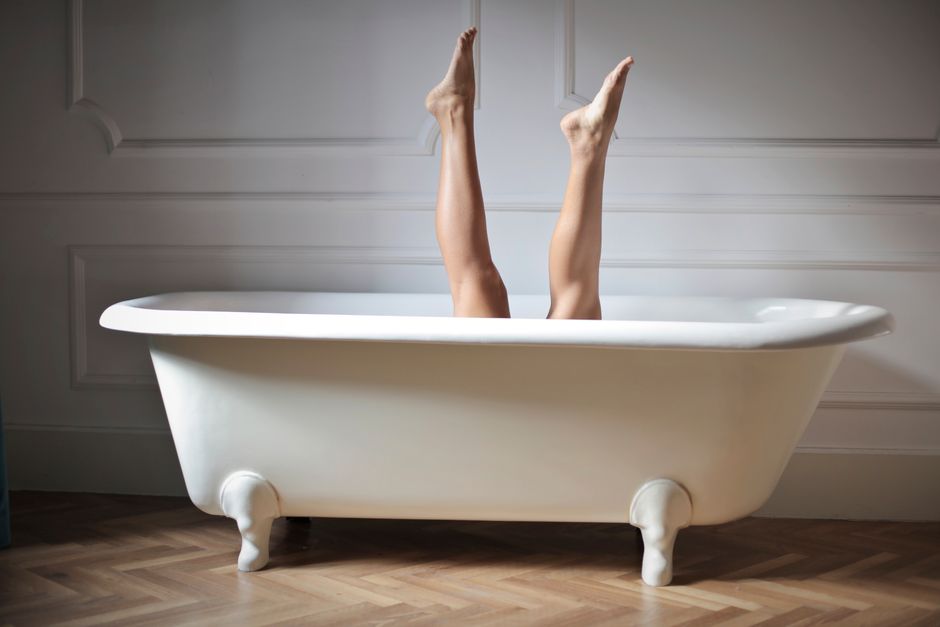
The evidence for a cold plunge after pickleball is strong where it counts. A cold water immersion review from Cochrane found it reliably reduces perceived muscle soreness after exercise compared with passive rest. That is the exact outcome a 58-year-old wants after two hours of lunging: less soreness tonight, better-moving legs tomorrow.
The adaptation worry is real but narrowly aimed. Some randomized trials have reported smaller strength and hypertrophy gains when cold water immersion follows every resistance session, which is why we told lifters to keep cold away from training days. Pickleball is not that scenario. You are not trying to grow muscle from the match itself, and with your next performance roughly a day away, soreness relief plausibly outweighs any theoretical blunting. The between-match athlete is the plunge's correct customer.
A dose that matches common practice:
- Duration: 10 to 15 minutes
- Temperature: roughly 10 to 15 °C (50 to 59 °F)
- Timing: within about an hour of the final game
One exception: cold water immersion between tournament matches on the same day. Cold applied right before explosive movement can reduce power output, and a numbed calf changes how you push off for a lob in game three. Between same-day matches, skip the plunge or keep it under about five minutes and save the full dose for the day's end.
Worked example: a 58-year-old with a plantar flare after league night plunges that evening for symptom control, runs her plantar loading program the next morning, and plays again two days later without the flare dictating terms.
Sauna Before or After Pickleball, Two Different Jobs
Players ask whether to use the sauna before or after pickleball, and the honest answer is that it depends which job you want. Sauna for muscle recovery is an off-day, systemic tool. Short heat is a pre-match prep tool. Same cabinet, two prescriptions.
Off-day systemic recovery. Long-running Finnish cohort analyses have associated regular sauna bathing with cardiovascular benefits, and heat exposure is a mild systemic stressor that fits neatly on rest days. A common traditional-sauna dose is 15 to 20 minutes at 65 to 80 °C, followed by fluids and an unhurried cool-down. It is not a localized treatment for any pickleball injury, and no amount of cabin time remodels a tendon.
Pre-match tissue prep. Raising tendon and muscle temperature before play transiently improves extensibility and can quiet the stiffness that makes the first game feel like sandpaper. A short warm shower on the calves and forearms, or a brief sauna finish ending at least 30 minutes before the first serve, is enough. Cold is the opposite call here, since numbing tissue before explosive movement trades short comfort for reduced power.
Worked example: a 61-year-old with morning Achilles stiffness takes a warm shower, does two minutes of slow heel raises, then plays at 9 a.m. His sauna sessions move to off days, where they belong.
Massage Gun Dosing for Elbow and Calf Overload
A massage gun for tennis elbow has exactly one legitimate target, and it is not the lateral epicondyle. Current elbow tendinopathy management guidance centers on progressive loading plus grip and workload adjustments, not on hammering the bony insertion where the tendon attaches. High-amplitude percussion on a symptomatic insertion is the most common misuse we see courtside.
The gun's real job is the muscle that drives the problem. For pickleball elbow, that means the forearm extensor bellies, which guard up after heavy dinking sessions. For the Achilles and plantar fascia, it means the calf, which loads both structures on every push-off.
What the evidence supports is modest and acute. A percussive therapy review finds short-term reductions in perceived soreness and improvements in range of motion, with little evidence that percussion speeds the return of strength. So the dose stays brief:
- 30 to 60 seconds per area
- Low amplitude anywhere near a tendon insertion
- Never on bone, over acute swelling, or on areas with numbness or vascular problems
Worked example: a 55-year-old with dinking-session elbow pain runs the gun at low amplitude on his forearm extensor bellies before play, leaves the tendon itself to his loading program, and resizes his grip. The pain stops steering his week.
Compression Boots for Multi-Match Legs, Not Elbows
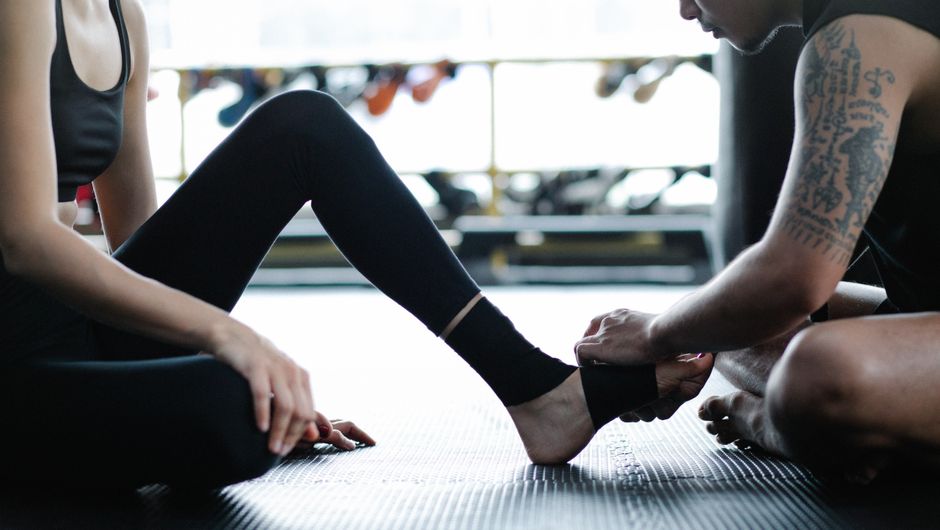
Intermittent pneumatic compression has the least glamorous mechanism of the four. The sleeves squeeze the legs in sequences that mechanically assist venous and lymphatic return, and randomized compression recovery trials in athletes have examined exactly this use, with outcomes centered on perceived fatigue and soreness after heavy exercise. Nothing in the mechanism touches tendon remodeling, and nothing in it reaches the elbow. Compression boots for recovery are a leg tool.
The job description is multi-match volume and travel. Compression boots after multi-match pickleball days help heavy legs feel game-ready again, which matters most at tournaments where you play a morning block, rest two hours, and play again.
- Dose: 20 to 30 minutes
- Pressure: moderate and comfortable, never painful
- Timing: between match blocks, or in the evening after play ends
The critical safety note: known deep vein thrombosis is a contraindication, which is why the calf-swelling red flag below comes before any boot session, never after.
Worked example: a 66-year-old at a three-match weekend uses the boots for 25 minutes between the morning block and the afternoon final, skips the plunge until the day ends, and drives home without the lead-legs feeling that used to cost her a week.
The Weekly Pickleball Recovery Protocol by Day Type
How to recover between pickleball matches comes down to matching tool, tissue, dose, and clock. First, the map:
| Problem tissue | Cold plunge | Heat | Massage gun | Compression boots |
|---|---|---|---|---|
| Plantar fascia | After matches, symptom control | Warm foot and calf before play | Calf belly, never the arch insertion | Legs after multi-match days |
| Achilles | After matches | Pre-match warm-up | Calf belly, low amplitude near the heel | Legs only |
| Lateral elbow | Brief cold for a flare | Forearm heat before play | Forearm extensor bellies | No role |
| Knee flare | After matches | Quads before play | Around the thigh, not the joint | Yes, whole legs |
Then the schedule. Treat this as the working pickleball recovery protocol for players over 50 and adjust it to your match calendar:
| Day type | Tool | Dose and timing | Target |
|---|---|---|---|
| Match day | Heat | 5 to 10 min warm shower or brief sauna, finish 30+ min before play | Calves, Achilles, forearm |
| Match day | Cold plunge | 10 to 15 min at roughly 10 to 15 °C, within an hour of the final game | Legs and symptomatic sites |
| Match day | Boots | 20 to 30 min, moderate pressure, evening | Legs |
| Next morning | Gentle heat plus loading | Warm shower, then the plantar or elbow loading program | Tendon prep and remodeling |
| Off day | Sauna | 15 to 20 min at 65 to 80 °C | Systemic recovery |
| Off day | Loading work | The session that actually remodels tendon | Plantar fascia, Achilles, elbow |
| Tournament day | Boots | 20 to 30 min between match blocks | Legs |
| Tournament day | Cold | Skip or under 5 min between same-day matches, full dose at day's end | Legs |
Worked example: a 63-year-old playing four times a week runs heat and calf work before morning matches, plunges only after his two hardest sessions, boots his legs on the doubles weekend, keeps one true sauna off day, and does his plantar and elbow loading on the two mornings he does not play. Every tool has a slot. Nothing gets sprayed.
Red Flags, When Gear Is the Wrong Answer
Recovery tools manage symptoms, and some presentations are past symptom management. Stop the protocol and see a clinician first for any of these:
- A sudden pop in the Achilles with weakness pushing off. Consistent with partial or full tear, this is a same-day medical visit rather than a plunge.
- A snap in the arch with bruising and lost push-off. Possible plantar fascia rupture.
- Elbow pain that weakens your grip or wakes you at night. The loading program still applies, but get the diagnosis confirmed before adding volume.
- One-sided calf swelling, warmth, or redness. Possible deep vein thrombosis. Clinical contraindication guidance excludes compression over suspected clots, so boots are off the table until a clinician clears you.
- Numbness or neuropathy in the feet or hands. Heat and percussion both become unsafe when you cannot feel the dose you are applying.
The stop rule underneath all of it: passive tools keep you comfortable between matches, progressive loading rebuilds the tendon, and anything sudden, one-sided, or strength-stealing belongs with a clinician rather than in your gear bag.
Stay in the loop.
Get the latest posts and exclusive content delivered to your inbox.
Join 54 readers. No spam. Unsubscribe in one click, anytime.
About the author
Dr. Mara Whitfield
Longevity Protocols Lead
Mara translates aging research into protocols people can actually follow. With a background in preventive medicine and years tracking the longevity literature, she writes the healthspan routines, supplement stacks, and testing cadences she runs herself.
Related Posts

Contrast Therapy Protocol for Sauna and Cold Plunge Rounds
A dosed contrast therapy protocol for the bathhouse, with sauna and plunge temperatures, round counts, heat-to-cold ratios, and timing around training.

Nervous System Recovery Is the Ceiling on Your Stack
Nervous system recovery is where most stacks stall. Learn the wearable signs of a sympathetic ceiling plus a dosed breathwork and NSDR protocol to fix it.

Sauna and Cold Plunge for Women by Cycle Phase and Menopause
Sauna and cold plunge for women needs re-dosing by cycle phase, birth control, and menopause. Morning basal temperature sets the week's heat and cold.