Zone 2 Training for Lifters, Dosed Like a Protocol
Zone 2 training dosed like a protocol for lifters: weekly minute targets, talk-test anchors, and placement rules that protect strength and size.

Your creatine has a dose. Your protein has a dose. Your cardio is a vibe. That mismatch is why most lifters either skip Zone 2 training entirely or run it in a way that quietly taxes the squat, when the fix is to treat it like everything else in the stack: an input with a defined intensity, a weekly amount, and an interaction profile you manage.
Stay in the loop.
Get the latest posts and exclusive content delivered to your inbox.
Join 43 readers. No spam. Unsubscribe in one click, anytime.
The short version: the top of Zone 2 is the highest effort where you can still speak in full, comfortable sentences, and you verify it with heart-rate drift rather than a watch percentage or a lactate draw. The effective weekly window runs from roughly 90 minutes for an unconditioned beginner toward about three hours as a long-run ceiling. And the interference effect that scares lifters off cardio is real but small on average, mostly a mode and scheduling artifact you engineer away with low-eccentric machines, lifting first, and keeping easy cardio clear of heavy lower-body days.
That leaves four decisions: how hard, how much, when, and when to pull back. None of them require a lab.
Why Zone 2 Training Earns a Slot in a Lifting Week
Three payoffs matter to someone whose key metric is a squat PR, and none of them involve living to 120.
Between-set recovery is the underrated one. A hard set is near-total local fatigue followed by a short rest, and lifters with a bigger aerobic base typically clear metabolic byproducts and restore phosphocreatine faster between sets. That shows up as an extra rep on the third and fourth sets of the same exercise, which compounds into real extra tonnage over months.
Work capacity is the second. Aerobic base building lowers the cost of everything peripheral: warm-ups arrive faster, training density goes up, and the sixth exercise of a long session stops degrading into junk.
The third layer is the slow compounding one, mitochondrial density, fat oxidation, and lactate clearance, the machinery that determines how much sub-threshold work you can absorb before fatigue becomes systemic. It also tends to drag resting heart rate and everyday recovery in the right direction.
Now the objection every lifter raises: does cardio kill gains? The honest reading of the evidence is reassuring if you program it. Wilson's concurrent training meta-analysis found the average effect of added endurance work on hypertrophy and strength to be small, with the penalty growing alongside cardio volume and frequency, and consistently larger for running than cycling. The interference effect is therefore dose-, mode-, and timing-dependent. That makes it a programming variable, the same class of problem as managing junk volume, not a law of nature.
Finding the Top of Zone 2 Without a Lactate Meter
Lab-defined Zone 2 sits below the first ventilatory threshold, roughly where blood lactate stays near or under 2 mmol/L. You do not need the lab. You need three field anchors, run at least two of them, and where they disagree, train at the lower intensity for two weeks before retesting.
The talk test
This is your primary anchor. Find the highest output at which you can speak in full, comfortable sentences without hunting for breath between clauses. Recite something, take a phone call, or talk to the person on the next bike. The moment your sentences clip or you need air mid-thought, you have crossed the border. Talk test validation studies comparing the method against gas exchange find that the last comfortable-speaking intensity tracks the first ventilatory threshold closely. In practice, hold your talk test intensity one notch below where speech first degrades, and recheck it every ten minutes, because perceived effort drifts with fatigue.
The 180-minus-age ceiling
The Maffetone 180 formula starts at 180 minus your age and subtracts another 5 to 10 for a history of injury, illness, or regression in training, treating the result as a maximum aerobic heart rate. Treat it as a ceiling and a rough heuristic, never a target, because individual error is real. Its job is to flag when the talk test is misleading you: if a fully conversational pace puts your Zone 2 heart rate wildly above or below the 180 line, you are probably unusually deconditioned or unusually aerobically gifted, and the drift check becomes the tiebreaker. This is also why watch zone defaults fail, they are age-formula guesses wearing a nicer screen.
The drift check
This is the verification step, the closest a lifter gets to lab confirmation for free. Hold a steady, conversational output for 45 to 60 minutes, then compare average heart rate across the two halves at the same pace or power. A drift of only a few percent, many coaches draw the line under roughly 5, suggests you genuinely stayed under the threshold. If heart rate climbs 8 to 10 percent at identical output, you started above Zone 2 even though breathing felt fine early. Endurance coaches formalize this as aerobic decoupling, and a heart rate drift check like this is exactly the cheap version a lifter can run on any bike or rower.
How Much Zone 2 per Week, by Starting Fitness
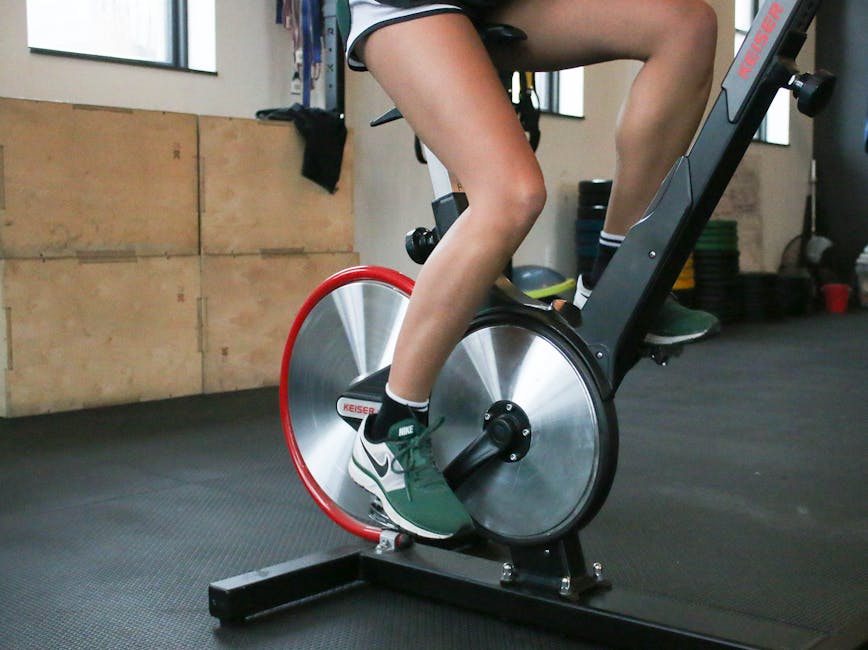
Start from an honest audit of your current conditioning, not your lifting numbers. A 500-pound deadlifter with no cardio in five years is a beginner here.
| Starting point | Weekly Zone 2 minutes | Typical layout | Ramp |
|---|---|---|---|
| Unconditioned (no cardio in a year or more) | 90 to 120 | 3 sessions of 30 to 40 min | Hold 2 to 3 weeks, then add 10 to 15% |
| Some conditioning (past sports, occasional cardio) | 150 to 180 | 3 to 4 sessions of 40 to 50 min | Same ramp rule |
| Established aerobic base | 180 to 240 | 4 to 5 sessions of 45 to 60 min | Hold |
| Long-run ceiling | Around 3 hours or a bit more | 4 to 5 sessions | Only if markers stay quiet |
For context, WHO physical activity guidelines put the general-health floor at 150 to 300 weekly minutes of moderate activity, which the intermediate blocks clear comfortably and the beginner block approaches. Zone 2 is one input among several for a lifter, not your only movement.
On the high end, longevity-focused clinicians such as Peter Attia, whose lactate-based framing of Zone 2 comes through throughout his San Millan interview, commonly point to roughly three or more weekly hours as a long-run target. A lifter does not need to start anywhere near it. Most early adaptations, the mitochondrial and fat-oxidation changes that arrive first, are captured by 90 to 120 weekly minutes, and beyond that the marginal returns for strength athletes thin out while the recovery cost keeps climbing. Zone 2 volume for strength athletes is a curve of diminishing returns, not a more-is-better ladder.
Scheduling Zone 2 Around Your Split
Placement beats discipline. The same weekly dose can either vanish into your recovery budget or eat your leg day, depending on four rules.
- Pick the machine, not the pavement. Cycling, rowing, incline walking, and the elliptical impose almost no eccentric damage, which is a large part of why running penalized hypertrophy more than cycling in the concurrent-training data. Zone 2 cardio should not leave you sore, ever.
- Lift first. If cardio shares a session with lifting, lifting goes first, so the quality work gets a fresh nervous system.
- Keep six or more hours of separation from heavy lower-body lifting wherever the schedule allows. The worst slot in the week is hard-ish cardio the evening before or the morning of squats.
- Default to upper-body days and rest days. On the lifting-days-versus-rest-days question, attach Zone 2 after upper work, and if you use rest days, keep those sessions short and genuinely easy. If your rest days are sacred, fold all of it behind upper sessions and cap same-day add-ons at about 40 minutes.
Four Sample Weeks With Zone 2 Built In
| Split | Zone 2 slots | Weekly minutes |
|---|---|---|
| 4-day upper/lower | After both upper days (2 × 35) plus one 45-minute weekend session | ~115 |
| 3-day full body | Tue and Thu 40 minutes on non-lifting days, plus Sat 50 | ~130 |
| 6-day push/pull/legs | After two or three push and pull days (30 to 35 each) plus Sunday 40 | 100 to 145 |
| 2 to 3-day strength, tight schedule | Three 30-minute sessions immediately after lifting | ~90 |
Every layout above keeps Zone 2 at least a full night away from heavy squat or deadlift sessions, and every one of them sits inside the beginner-to-intermediate dose window from the table. If your split is something else, the template transfers: anchor sessions to upper-body days, weekends, or the tail end of full-body sessions, and never the morning before legs.
Adjusting the Dose With Morning Signals
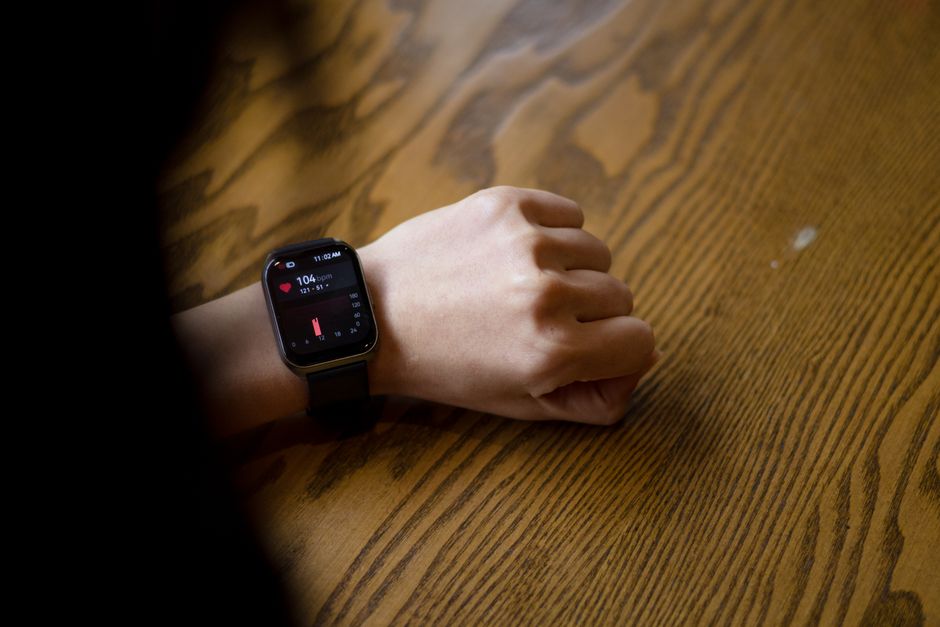
Zone 2 training is easy, but it is not free, and the bill shows up in morning data before it shows up in your training log.
Build a baseline first: measure resting heart rate on waking, same conditions, and track a rolling seven-day average. Reviews of heart rate variability research in athletes keep landing on the same caveat, the absolute HRV number means little, and your deviation from your own rolling baseline is the actual signal.
Treat any of the following as a trigger:
- Morning resting heart rate roughly 4 to 6 bpm or more above your seven-day baseline, on two consecutive mornings
- Repeated HRV dips below your baseline band across several days
- Early talk-test failure, sentences clipping ten minutes into a session that is normally comfortable
- Leg-day slides, a lost rep at the same RPE, or top sets moving slower
When a trigger fires, cut the week's Zone 2 volume by 30 to 50 percent, or swap a session for a plain walk. Worked example: your rolling baseline is 56, you wake at 62 on Monday and 61 on Tuesday, and Friday's top squat set is down a rep at the same effort. Two mornings 4 to 6 bpm over baseline plus a performance slide means the planned 160 minutes becomes about 100, with the longer weekend session downgraded to a walk. Hold the cut until the baseline normalizes for three mornings. And cut cardio before you ever cut lifting, because cardio is the supplement here.
Failure Modes That Quietly Ruin the Protocol
Zone 3 creep. The most common error. Intensity drifts up because easy feels unproductive, and you end up in the gap between zones that is too hard to be aerobic and too easy to be a stimulus. Fix: re-run the talk test every ten minutes; if you cannot recite a full sentence, drop the output immediately.
Cardio the morning before leg day. Even easy work costs something, and pre-fatigued legs turn a planned top set into a grind. Fix: move it to after upper work or to the following day, and keep six or more hours of clearance where possible.
Running on a hard cut. In a deficit, recovery is already rationed, and adding eccentric muscle damage from running is the worst possible mode choice. Fix: bike, row, or incline walk, and consider holding the lower end of your dose range until calories come back.
Trusting watch zone defaults. Wrist-based zones are age-formula guesses that can miss by 15 to 20 beats in either direction. Fix: your anchors are the talk test, the drift check, and your own breathing, in that order. The watch is a stopwatch and a heart-rate source, nothing more.
Fasted-session dogma. Whether you eat before Zone 2 makes little difference to the adaptations that matter, and morning fasted sessions that wreck adherence or morning alertness are a bad trade. Fix: schedule sessions wherever you will actually do them, and let total weekly minutes be the metric.
The Minimum Viable Zone 2 Protocol
If you want the smallest defensible version, it fits in three lines.
- Three sessions of 30 minutes, on a bike, rower, or inclined treadmill.
- Intensity capped by the talk test, rechecked every ten minutes.
- Placed after upper-body days or on rest days, never adjacent to heavy lower-body work.
Run that for 60 days, then audit: re-run the 45-minute drift check and see whether decoupling has tightened, compare your rolling resting heart rate to where you started, and check whether leg-day numbers held or improved while the weekly minutes went in. If all three are clean, add 10 to 15 percent and start the next block. If any of them slid, you already know the cut.
That closes every loop opened at the top. The intensity is self-verified in one gear-free session, the dose comes from a table rather than a vibe, the schedule protects the lifts, and the morning data tells you when to back off. Dose it like you dose everything else you take seriously, and the engine builds underneath the gains instead of eating them.
Stay in the loop.
Get the latest posts and exclusive content delivered to your inbox.
Join 43 readers. No spam. Unsubscribe in one click, anytime.
About the author
Dr. Mara Whitfield
Longevity Protocols Lead
Mara translates aging research into protocols people can actually follow. With a background in preventive medicine and years tracking the longevity literature, she writes the healthspan routines, supplement stacks, and testing cadences she runs herself.
Related Posts

Lengthened Partials vs Full ROM, 5 Lifts Re-Dosed
Range of motion is a dose you program. Learn when full ROM wins, when lengthened partials build more muscle, and how to audit your reps on camera.

Progressive Overload Without Adding Weight
Progressive overload is a programmable dose, not just added weight. Learn seven progression vectors, decision rules, and a stall audit for stalled lifts.

Creatine Without Training Is Cheap Lean-Mass Insurance
Creatine without training does build lean mass, and part of it is water. Here is what the new study found, plus dosing for injuries, layoffs, and aging.