Aerobic Exercise Neural Performance Sustained in 20 Minutes
Aerobic exercise neural performance for strength athletes. 20 minutes of moderate cycling preserves motor adaptation against natural coordination decay.
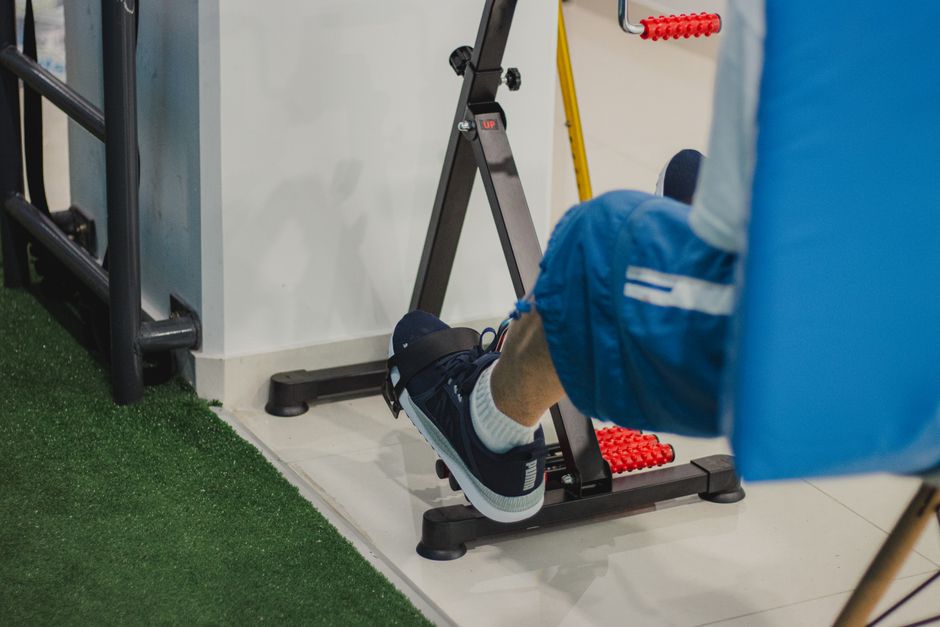
Strength athletes will spend hundreds on nootropics, recovery devices, and precisely periodized training blocks, then skip the one intervention that directly primes motor cortex plasticity. The standard framing puts cardio in a cardiovascular box. You tolerate it for heart health or endure it for fat loss. The neurological case rarely enters the conversation.
Stay in the loop.
Get the latest posts and exclusive content delivered to your inbox.
Join 22 readers. No spam. Unsubscribe in one click, anytime.
It should. A specific body of research shows that 20 minutes of moderate aerobic exercise acutely increases circulating brain-derived neurotrophic factor (BDNF), enhances motor cortex and cerebellar excitability, and preserves the brain's implicit motor adaptation systems. When we talk about aerobic exercise neural performance, we are talking about a targeted neurological intervention that neither heavy resistance training nor any supplement stack can replicate.
The Myth of Pure Strength Training for Neural Drive
The neural systems that govern movement quality operate differently from the ones that generate peak force. Heavy lifting hones motor unit recruitment, rate coding, and intermuscular coordination within practiced patterns. That is real and valuable. But it does little for the cerebellum's adaptive recalibration circuitry, the system that auto-corrects your movement when the bar path drifts, when you hit an unfamiliar sticking point, or when you learn a new technical skill.
Researchers studying aerobic exercise and CNS priming have documented that moderate-intensity cardiovascular work produces acute neurological changes distinct from the chronic adaptations of resistance training. The same moderate output that strength athletes dismiss as too easy to matter is precisely what triggers the neurochemical cascade that primes the motor learning system.
The literature on exercise-induced neuroplasticity and aerobic exercise neural performance has accumulated for years, yet the strength community has largely ignored its practical implications. Biohackers chase pharmaceutical cognitive enhancers and brain-training apps while overlooking a free, evidence-based intervention that directly targets the motor circuits governing physical performance.
Nootropics target attention, working memory, and executive function. None of them touch sensorimotor adaptation circuits. If you want to move better, learn technique faster, and auto-correct movement errors more efficiently, the most evidence-supported intervention costs nothing and takes 20 minutes.
The Neurological Mechanism Behind Aerobic Exercise and Neural Performance
The most firmly established finding from the behavioral research is a preservation effect, not an enhancement. Rather than elevating motor learning above baseline, moderate aerobic exercise preserves it against fatigue-driven decay. When researchers measured implicit motor adaptation after sustained repetitive reaching, participants who rested between task blocks saw their adaptation decline from 2.93 degrees to 2.20 degrees. Participants who completed 20 minutes of moderate cycling between blocks held nearly steady: 2.45 degrees before, 2.40 degrees after. The exercise bout maintained the brain's automatic movement-correction system at its starting level rather than pushing it beyond baseline.
BDNF is the leading candidate mechanism for that preservation. Moderate aerobic exercise is associated with increased circulating BDNF, a protein that facilitates synaptic plasticity by lowering the threshold for long-term potentiation in the motor cortex and cerebellum. Research on moderate cycling and BDNF release suggests that this effect is intensity-dependent. Moderate output appears to hit the release window effectively. Whether high-intensity effort fails to elevate BDNF meaningfully, or whether systemic fatigue simply overwhelms the neurochemical benefit, remains a leading hypothesis supported by the intensity-dependent BDNF literature rather than a settled finding.
The neurochemical picture likely extends beyond BDNF. Acute exercise is associated with elevated norepinephrine and dopamine, neurotransmitters that modulate cerebellar function and motor cortex excitability. Studies examining BDNF and motor cortex excitability suggest these shifts may increase the brain's receptivity to updating its internal movement models. The adaptation study identified neurotransmitter measurement as a target for future research, so the current evidence supports association rather than established causation.
Cerebral blood flow offers a third plausible pathway. Moderate exercise increases oxygen and metabolic substrate delivery to motor control regions during and immediately after the bout. Flinders University research on moderate exercise and neural receptivity aligns with the idea that moderate aerobic output opens a window of heightened plasticity, consistent with the stabilization seen in the behavioral data.
What the behavioral evidence clearly supports is that something in the moderate aerobic bout stabilizes the motor learning system against the decay that repetitive practice produces. The candidate mechanisms converge on the same practical implication: dose determines outcome. Moderate intensity is associated with BDNF release, supports neurotransmitter activity, and sustains implicit motor adaptation against fatigue. High-intensity intervals create central nervous system fatigue that likely closes every one of those pathways. The same cardiovascular system that preserves motor learning capacity when dosed moderately may suppress it when dosed aggressively.
Why Cardio Enhances Motor Coordination
What makes the Beyraghi study distinctive is how it isolated implicit sensorimotor adaptation from conscious strategy. Earlier exercise-and-motor-learning research showed that aerobic work improved general motor learning but could not separate deliberate compensatory movements from the brain's automatic recalibration. Beyraghi's team instructed participants to ignore cursor disturbances and aim straight, which made conscious correction strategies useless. The measurement captured only involuntary drift, providing the cleanest available read on automatic neural updating.
The design was straightforward. Twenty-six healthy young adults (average age approximately 25, 15 female) completed two conditions on separate days in a within-participant design: 20 minutes of moderate stationary cycling at 65 to 75 percent of maximum heart rate, and an equivalent rest period watching a documentary. The task used a robotic apparatus that tracked reaching movements while participants watched a cursor on a screen. On random trials, the cursor was rotated 30 degrees from the actual movement path. The key outcome was post-rotation bias, the involuntary hand drift on the trial following a rotated cursor.
As established in the mechanism section above, the exercise bout preserved implicit motor adaptation against fatigue-driven decay while the rest condition allowed natural attenuation. The full results, including response time changes, are summarized below.
| Measure | Exercise Day | Rest Day |
|---|---|---|
| Response time | 555 ms to 532 ms (approximately 4% faster) | No meaningful change |
| Adaptation bias | 2.45 degrees to 2.40 degrees (preserved) | 2.93 degrees to 2.20 degrees (natural decay) |
This body of exercise and motor skill acquisition research shows that aerobic work opens a temporary window where the brain's movement-correction systems sustain full capacity instead of fading under repetitive load.
For a strength athlete, the practical translation is specific. The implicit adaptation system is what fires when you learn a new squat variation, correct a persistent technical fault, or sustain movement quality through a long technical session. Moderate aerobic exercise preserves that system against the coordination decay that accumulates during extended practice. Resistance training reinforces practiced motor patterns through repetition and load, but it does not prime the sensorimotor recalibration circuitry that handles novel movement demands. When you need your nervous system to auto-correct technique deviations faster and sustain movement quality longer, that is the system moderate cardio protects.
The Interference Effect and Central Nervous System Fatigue
"Does cardio kill strength gains?" The question dominates strength forums, and it reflects a legitimate concern grounded in the concurrent training interference literature. The critical distinction the fitness community misses is what that literature actually measures.
The interference effect is real but operates exclusively through muscular and metabolic pathways. The classic mechanisms are well-established: residual lower-body fatigue from cardio that compromises subsequent lifting, glycogen depletion that creates energy substrate competition, and chronic signaling conflicts between AMPK activation (endurance) and mTOR pathways (hypertrophy). These pathways reliably degrade hypertrophy markers, maximal force output, and muscle cross-sectional area when endurance volume is high and lifting sessions follow closely.
What the interference literature does not measure is equally important. No study in that body of work tracks implicit motor adaptation, BDNF-mediated plasticity, or cerebellar function. The adaptation pathways that interfere with each other are chronic structural ones, not the acute neural priming effects that a moderate aerobic bout produces. A 20-minute cycling session at 65 to 75 percent of HRmax does not meaningfully deplete glycogen, does not create significant residual fatigue, and does not trigger the AMPK-mTOR signaling conflict. It operates on a timescale of minutes, not the weekly accumulation that produces measurable interference.
The genuine threat to neural performance comes from high-intensity conditioning, not moderate cardio. Sprint intervals, heavy metcons, and maximal-effort interval work create central nervous system fatigue that accumulates and suppresses the motor learning system. This is why intensity dosing is the variable that matters. Moderate aerobic work primes the neural circuits. High-intensity work fatigues them. The interference worth fearing comes from programming heavy intervals on the same day as technical skill work, not from 20 minutes of moderate cycling before a technical session.
The 20-Minute Neural Priming Protocol

The protocol is simple. The execution details determine whether it works.
Modality. Stationary cycling is the best-researched option and the most practical for strength athletes. It demands minimal skill, produces low-impact joint stress, and does not create upper-body fatigue that could interfere with subsequent lifting. Rowing and elliptical work are reasonable substitutes. Running adds impact and eccentric load that can create leg fatigue. Choose the modality that leaves your training muscles freshest.
Duration. 20 minutes at moderate intensity, plus a brief warm-up and cool-down. This matches the protocol used in the Beyraghi study and falls within the range used across the broader neuroplasticity and exercise literature.
Intensity. 65 to 75 percent of maximum heart rate. For a 25-year-old, this translates to approximately 128 to 147 bpm using the simple age-based formula (220 minus age). For a 35-year-old, the range shifts to approximately 121 to 139 bpm. The talk test works as a practical proxy: you should be able to hold a conversation but not sing comfortably.
Transition window. The neuroplasticity window opens shortly after exercise. Research on acute exercise and cognitive performance suggests the effect is most potent in the first 15 to 30 minutes post-exercise. If you are using cardio as a neural primer, transition to technical or skill-based lifting within that window. Do not let 90 minutes pass between the bike and the bar.
What to avoid on priming days. High-intensity intervals, heavy metcons, maximal sprint work. These create CNS fatigue that counteracts the plasticity window. The literature on Zone 2 and cognitive endurance reinforces that moderate, steady-state output is the intensity profile that produces neural benefits without the fatigue tax.
| Variable | Target | Rationale |
|---|---|---|
| Modality | Stationary cycling or low-skill equivalent | Minimizes training-specific fatigue |
| Duration | 20 minutes working time | Matches research protocol |
| Intensity | 65 to 75% HRmax | Optimal BDNF release without CNS fatigue |
| Transition | 15 to 30 minutes post-exercise | Peak neuroplasticity period |
| Avoid | HIIT, sprints, heavy conditioning | Creates fatigue that blunts motor learning |
Programming Aerobic Work for Motor Skill Acquisition
The mechanism and the protocol matter only if you place them correctly. Three programming decisions determine whether the 20-minute primer delivers: which sessions to prime, which to skip, and how to match the cardio modality to the training demand.
Priority Sessions for Neural Priming
Prime before sessions where the brain must build or revise motor programs under novel constraints. Three contexts earn it.
Technical acquisition. Learning a new movement pattern or progression: Olympic lifting, gymnastics work, kettlebell complexes. The implicit adaptation system is doing fresh work, and the primer lowers the threshold for those updates.
Fault correction. Sessions focused on fixing a persistent technical error. The motor cortex must rewrite an established pattern, which demands more plasticity than executing a familiar one.
High-repetition technical work. Long sessions where movement quality degrades as fatigue accumulates. The preservation effect holds coordination quality deeper into the set, extending the productive learning window before fatigue erodes technique.
When to Skip the Primer
Maximal strength testing. Peak force expression does not benefit from motor learning priming. Moderate cycling will not meaningfully compromise a one-rep max, but there is no neural benefit to capture, and the routine disruption is not worth it.
Pure hypertrophy with no technical demand. Arm curls and leg extensions barely engage the implicit adaptation system. Save the 20 minutes.
Already fatigued sessions. If you are training after poor sleep, accumulated stress, or heavy travel, the primer adds systemic load without delivering its neuroplasticity benefit. The motor cortex cannot capitalize on the BDNF window when the system is already under recovery strain.
Weekly Structure
A four-day lifting split with two technical sessions provides the clearest framework. Place the 20-minute primer before those two sessions. The other two sessions proceed without it.
For a concrete example: Monday and Thursday are heavy squat and deadlift sessions focused on expressing strength in familiar patterns. Skip the primer. Tuesday and Friday are technical sessions featuring Olympic lift variations, accessory technique work, or new movement progressions. Prime both. Standalone Zone 2 work on non-lifting days builds a cardiovascular base and supports long-term aerobic exercise neural performance, but it does not serve as an acute primer. The motor learning window requires cardio to precede technical training by minutes, not hours.
Modality matching. Match the cardio to the training demand. If training lower body, cycle or use the elliptical to avoid fatiguing the legs before squats or deadlifts. Upper-body ergometry is an alternative when leg freshness is critical. If training upper body, cycling is ideal because it leaves the arms and shoulders completely fresh. The rule: choose a cardio modality that does not fatigue the muscles you are about to train technically.
The Neural Case for Cardio
The strength training community has framed the cardio question backward. The debate asks whether cardiovascular work hurts muscle and strength gains. The more interesting question is whether avoiding it costs you a specific neural edge.
The evidence says it does. Moderate aerobic exercise increases BDNF, primes motor cortex and cerebellar circuits, and preserves the implicit motor adaptation system that governs how quickly and accurately you learn movement. The effect is acute, dose-dependent, and triggered by an intensity level that produces no meaningful interference with strength adaptations.
The protocol: 20 minutes, moderate intensity, transition to technical work within 30 minutes. No equipment beyond a stationary bike. No supplement cost. No pharmaceutical risk. The zone 2 cardio benefits extend well beyond cardiovascular health into acute neural enhancement that directly improves how your brain processes and corrects movement.
Strength athletes who avoid all aerobic work to protect their gains are making a reasonable decision for the wrong reason. The muscles are fine. The nervous system is leaving coordination gains on the table.
Stay in the loop.
Get the latest posts and exclusive content delivered to your inbox.
Join 22 readers. No spam. Unsubscribe in one click, anytime.
About the author
Jordan Reyes
Registered Dietitian
Jordan ditched diet dogma for metabolic health, running continuous glucose monitors and food journals to see what actually moves the needle. He writes nutrition and supplement protocols grounded in evidence, not influencer trends.
Related Posts

Creatine Without Training Is Cheap Lean-Mass Insurance
Creatine without training does build lean mass, and part of it is water. Here is what the new study found, plus dosing for injuries, layoffs, and aging.

Chest and Back Superset Workout Audit for Lifters Over 60
Can a 30-minute chest and back superset workout keep muscle over 60? We audit Dolph Lundgren's routine as a weekly dose of volume, effort, and pairing.

Autoregulation Training Only Works Once You Calibrate RIR
Autoregulation training works only once you fix your RIR error. Learn a filmed-set calibration drill, load adjustments, and when fixed percentages win.