Did Rentosertib Reverse Aging or Just Treat Fibrosis?
Rentosertib lowered proteomic age in a phase 2 IPF trial, but the clock may be reading fibrosis. Learn how to grade drugs claiming to reverse aging.

The headline writes itself: for the first time, a drug made humans biologically younger. Rentosertib, an oral small molecule discovered by the AI drug-discovery company In Silico Medicine, has been reported to reduce proteomic biological age in a phase 2 trial, and the claim traces back to a registered human study rather than a press release about mice. That part is real.
Stay in the loop.
Get the latest posts and exclusive content delivered to your inbox.
Join 49 readers. No spam. Unsubscribe in one click, anytime.
The part the headlines delete is the cohort. The trial treated people with idiopathic pulmonary fibrosis, a progressive scarring disease of the lungs, for 12 weeks. And the instrument that moved is a clock built from blood proteins, which is exactly what a scarring, inflamed lung keeps dumping into circulation.
So the rentosertib result carries two live explanations at once. Either this drug did something no therapy has credibly shown in humans, or it treated fibrosis well enough that the proteins an aging clock reads fell for reasons that have nothing to do with whole-body rejuvenation. The second reading is at least as plausible as the first, and the mechanism lives at the level of proteins. You will leave with a clean boundary between what this trial settled and what it structurally could not, a six point checklist for the next biological age reversal headline, and a blunt answer on whether any supplement stack can buy this signal.
What the Rentosertib Phase 2 Trial Actually Reported
Start with the facts, because they are genuinely unusual. Rentosertib inhibits TNIK, a kinase involved in fibrotic signaling, and it came out of a company explicitly hunting for drugs that alter aging. Its route into humans was a 12-week phase 2a rentosertib IPF trial, in a disease where lung tissue stiffens with scar material and survival is typically measured in years. The published phase 2a results describe performance against fibrotic disease endpoints, and the registered trial entry shows a proper controlled study rather than an open-label demo.
The aging claim sits on a second layer of analysis. Researchers took serum proteomes collected during that trial and ran them through six published proteomic clocks. Every one of the six read the treated arms as biologically younger, and pathway analyses flagged shifts in senescence and metabolic processes alongside the expected anti-fibrotic activity. As far as public announcements go, this is plausibly the first oral small molecule from a registered trial to report a biological age reduction in humans, which is why the story traveled so far.
Hold two details before celebrating. The blood came from fibrosis patients, and the authors themselves flag what that does to the interpretation.
How a Proteomic Age Clock Works
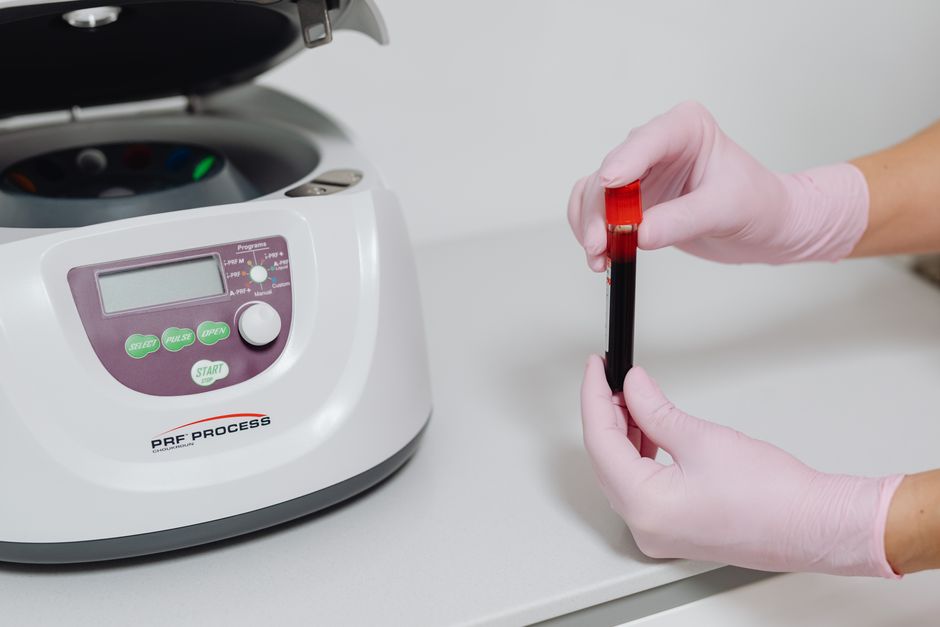
A proteomic age clock is a regression model with good marketing. An assay measures hundreds to thousands of proteins in plasma, and the model learns the protein pattern that best predicts some target. Sometimes the target is chronological age, in which case the model answers the question of what the blood of a 60-year-old tends to look like. Sometimes it is mortality or disease risk, in which case it learns the signature of people who die sooner. Either way, the output is a single number of years.
The proteins that dominate these models are not a random sample of biology:
- Inflammatory cytokines and chemokines, the IL-6 family and friends, which climb with both age and active disease
- Growth and differentiation factors, with GDF-15 as the poster child among plasma markers of aging
- Extracellular matrix and tissue-remodeling proteins, the scaffolding and wreckage of organs repairing themselves
- Vascular and adhesion molecules, which track endothelial wear
That composition runs through the plasma proteome lifespan study, which mapped proteome-wide shifts in waves across the lifespan and found organ-specific signatures in blood, and through large-biobank work building mortality-trained proteomic clocks.
The epistemic point matters more than the biochemistry. A proteomic aging clock does not know what aging is. It knows what the blood of older people, or of people near death, statistically looks like. Anything that produces that pattern moves the dial, whether the cause is aging, inflammation, infection, or a scarring lung disease responding to treatment.
Why Treating Fibrosis Can Move the Clock on Its Own
Now run the two frameworks into each other. IPF is defined by fibroblast activation, extracellular matrix deposition, and chronic inflammatory signaling. Those processes release the exact protein families that carry the heaviest weights in a proteomic clock. A patient with active IPF walks into the trial carrying an inflammatory and remodeling signature that reads, to the clock, like extra years.
Rentosertib's declared job is to suppress fibrotic signaling upstream. If it works, the lungs stop broadcasting so much of that signal, plasma concentrations fall, and the clock's age estimate falls with them. No rejuvenation of any organ is required to produce this arithmetic. The measurement is real; the interpretation is the battlefield.
The authors are upfront about it. They wrote that "proteomic clocks alone cannot deconvolute aging- and disease-specific effects," and reached for indirect evidence instead, pathway analyses showing senescence and metabolic shifts. But senescence is one of the engines driving fibrosis, and senescence-associated secretory proteins are themselves clock inputs, so those shifts fit the disease-control reading just as comfortably as the rejuvenation one.
The same serum, read two ways:
| What the serum showed | If it is rejuvenation | If it is treated disease |
|---|---|---|
| All six clocks read younger | Aging slowed system-wide | Inflammatory and remodeling inputs dropped, and clocks read those directly |
| Senescence pathway shifts | Senescent cells were cleared | Fibrosis is driven by senescence, so treating it shrinks the same signal |
| Fibrotic markers improve | Aging biology sits upstream of fibrosis | The drug hit the target it was designed to hit |
Why Biological Age Clocks Disagree With Each Other
If one clock were decisive, none of this would matter. It is not, and the reason is structural: clocks are trained against different outcomes and they routinely disagree at the individual level.
The clearest demonstration is organ-specific proteomic clocks, built from the same kind of plasma data but trained on organ decline rather than calendar age. From a single blood draw, a person can carry a heart age a decade above their chronological age and a kidney age below it. The study behind that work estimated that roughly one in five people over 50 shows strongly accelerated aging in at least one organ while the rest of the body reads close to normal. Epigenetic clocks add another axis entirely, reading DNA methylation patterns inside specific cell populations rather than protein output in plasma.
Which raises the obvious defense of the rentosertib result: six clocks agreed, all pointing younger. That is more impressive than one clock moving, and less impressive than it sounds. All six instruments are proteomic, run on overlapping plasma panels, and lean on the same inflammatory and remodeling proteins. The panel even included a model built around IPF biology, which improves by construction when IPF improves. Agreement among correlated instruments is not independent replication; it is the same confound measured six times. A genuinely independent test would need a different modality, epigenetic clocks plus functional measures in the same people, moving in the same direction. That evidence does not exist yet.
How Longevity Drugs Enter Humans Only Through a Named Disease

The second framework explains why this confound keeps recurring. No regulator accepts aging itself as an indication, and no sponsor can fund a large trial on an off-patent compound with no exclusive return. So molecules aimed at aging biology reach humans through the one door available, a named disease with a billable endpoint.
Rapamycin entered clinical medicine as sirolimus, an immunosuppressant for transplant patients, and only later became longevity research's favorite molecule. The first human senolytic data came from senolytics tested in IPF, with separate small trials in diabetic kidney disease and knee osteoarthritis. Rentosertib walked the same corridor, arriving as an idiopathic pulmonary fibrosis drug candidate that happens to carry aging ambitions.
Every step of that pipeline is rational, and the pipeline produces a structural bias: human data on longevity molecules comes from patients, patients have active pathology, and active pathology is precisely what moves the biomarkers longevity science wants to read. The only approved route into human testing runs through the very condition that contaminates the aging readout. Price that into every trial of this species you ever read.
What Rentosertib Can Settle and What It Structurally Cannot
Bound the inference honestly. The trial design can answer some questions definitively and others not at all:
| Question | Can this design answer it? |
|---|---|
| Does rentosertib improve IPF-related markers? | Yes, that is what it was built for |
| Do proteomic readouts drop in treated fibrosis patients? | Yes, all six clocks agree |
| Is the drop rejuvenation rather than disease control? | No, both explanations produce the same serum |
| Does any of it transfer to people without fibrosis? | No, the cohort had fibrosis by design |
Did rentosertib reverse aging in humans? This design cannot answer that question, and it was never built to.
Can a drug lower biological age? In patients with active disease, this trial shows a drug can lower a clock's output. What it cannot show is why the number fell.
Decisive evidence is easy to specify and hard to fund: rentosertib measured in non-fibrotic or healthy cohorts, across multiple clock modalities at once, with a control arm and functional endpoints such as grip strength, gait speed, and lung function in people whose lungs were never the problem. Regulators already apply this logic elsewhere, insisting that a biomarker be validated before it can stand in for a clinical outcome under surrogate endpoint standards. Biological age, in any modality, is nowhere near that validation bar, and no such trial results have been announced.
A Six Point Checklist for the Next Aging Reversal Headline
Six checks, each one tied to a failure mode you just watched this story survive. This is how to evaluate aging reversal claims in about sixty seconds.
- Read the cohort, not the headline. Healthy volunteers and diagnosed patients are different experiments. If the trial treated a disease, every aging readout inherits that disease as a confound.
- Name the clock and its training target. Chronological-age-trained, mortality-trained, and organ-trained clocks answer different questions. "Biological age" with no qualifier is a red flag, not a result.
- Trace the inputs. Ask which molecules steer the readout and whether the treated disease moves those exact molecules. Overlap means ambiguity, not discovery.
- Count modalities, not instruments. Six correlated proteomic clocks constitute one modality. Proteomic plus epigenetic plus functional change in the same people is the minimum pattern that starts to mean something.
- Find the control arm. Single-arm, before-and-after designs cannot separate drug effect from regression to the mean, seasonal variation, or placebo.
- Follow the incentive. A company with an aging narrative, a stock price, or a preorder funnel benefits from the rejuvenation reading. The data still has to earn it.
Why No Supplement Buys This Signal and What Would Settle It
The uncomfortable close for anyone running a stack: as of this writing, no legal supplement has demonstrated a validated reduction in proteomic or epigenetic biological age in a controlled human trial. Suggestive studies exist. None clears the bar this article just held rentosertib against, and rentosertib itself has not cleared it yet.
Consumer tests do not close the gap. At-home biological age kits use different platforms, mostly methylation-based algorithms with proprietary tweaks, and none of them measures the research-grade plasma clocks used in this trial. A home kit score ticking downward is not this study's signal, cannot verify it, and is not comparable to it. If you track biomarkers, treat the consumer number as its own noisy instrument rather than a discount version of the science.
What would settle the question is already specified above: non-fibrotic cohorts, multiple clock modalities, control arms, functional endpoints. Until those results exist, the honest summary of the rentosertib IPF story is smaller than the headline and more interesting. A drug designed for one disease produced a blood signature that aging research cannot yet cleanly claim, in a trial design that cannot cleanly separate the two.
So keep your protocol. Nothing here adds a capsule. What it should subtract is the assumption that a moving age readout means the same thing in a patient as it would in you. Any decent disease therapy can move the right clock. The open question is whether anything can move several independent clocks, in the same direction, in people who have nothing to treat. That trial has not been run.
Stay in the loop.
Get the latest posts and exclusive content delivered to your inbox.
Join 49 readers. No spam. Unsubscribe in one click, anytime.
About the author
Marcus Bao
Strength and Conditioning Coach
Marcus has programmed training for everyone from desk-bound beginners to masters athletes, treating every workout as an experiment with a measurable result. He writes ready-to-run strength, hypertrophy, and Zone 2 programs built around progression you can track.
Related Posts
Growth Hormone and Aging Pull in Opposite Directions
Growth hormone and aging pull in opposite directions: blunted GH signaling extends mouse lifespan while secretagogues raise IGF-1. Audit your stack here.
Biological Age Testing, What Your Results Actually Predict
Biological age testing measures physiological wear, but pace of aging clocks often disagree. Learn what your results predict and how to change them.

Anticholinergic Burden Audit for Your Medicine Cabinet
Audit your anticholinergic burden with the ACB scale behind the new NHS falls tool. Score your sleep aids and allergy meds, then swap the worst offenders.