Peter Attia Longevity Stack, 6 Reversals Graded for 2026
The Peter Attia longevity stack, rebuilt for 2026. His AMA 90 reversals on fasting, keto, metformin, rapamycin, and MRI graded keep, drop, or upgrade.

Somewhere in your notes app sits a protocol you built from old episodes of The Drive: a compressed eating window, a ketone meter, maybe an off-label metformin prescription you chased down in 2019. Peter Attia has since walked back a large share of that regimen. His AMA #90, episode #411 of The Drive, is framed as "strong convictions, loosely held," but it works better as a changelog for the classic Peter Attia longevity stack, and the full AMA #90 show notes are worth keeping open while you read. Graded item by item, his six reversals split into three drops (multiday fasting, chronic keto, off-label metformin), two conditional keeps (rapamycin with monitoring, targeted instead of blanket MRI), and one upgrade (strength-anchored exercise). The uncomfortable part is what moved those verdicts: several track recalibrated personal risk appetite more than new human outcome data. So the real asset in this episode is the audit itself, which you can run on your own stack this week.
Stay in the loop.
Get the latest posts and exclusive content delivered to your inbox.
Join 37 readers. No spam. Unsubscribe in one click, anytime.
What Changed in AMA 90 and Why Your 2019 Stack Is Outdated
Search today for metformin for longevity, or for an Attia rapamycin protocol, and most of what ranks still argues positions frozen somewhere between 2018 and 2022. AMA #90 is the rare document where Attia revisits his own calls in one place, which makes it possible to grade them rather than quote them. The old stack under review, assembled from years of podcast fragments, looked like this:
- Fasting. Multiday fasts and aggressive time restriction as metabolic levers.
- Keto. Years of sustained nutritional ketosis, much of it during serious endurance training.
- Metformin. Daily off-label use on the geroprotection hypothesis.
- Rapamycin. Periodic low-dose use, treated as the most promising pharmacological bet.
- Whole-body MRI. Regular blanket scans for early detection.
- Exercise. Endorsed loudly, but in general terms.
Each section below takes one item, states what he believed, what changed, and which of two forces did the changing, then issues a verdict you can act on. If you remember one thing, make it this: a position change is only as transferable as the evidence behind it.
The Grading Method, New Data Versus Recalibrated Risk
Metformin and keto reversed for opposite reasons, and the difference between them is the entire method. Metformin reversed on new human data: randomized trials reported the drug can blunt exercise adaptations. Keto reversed on context: a training trade that stopped paying as he aged. One generalizes to your body; the other is a preference update. Every verdict below runs the same two questions, in order.
- Did new human outcome data arrive? Trials or large cohorts in humans generalize beyond his body.
- If not, did his context or risk tolerance shift? Then it is a preference update. Worth a hearing, not a copy.
| What drove the reversal | How transferable it is | Default verdict |
|---|---|---|
| New human data contradicts the tool | High, applies broadly | Drop |
| New human data strengthens the tool | High, applies broadly | Upgrade |
| No new data, context or risk appetite shifted | Low, personal | Keep with conditions, or drop by your own context |
The third row is where much of AMA #90 lives. When a reversal is a preference update, mirroring it imports someone else's utility function, including their age, training load, and tolerance for unknowns. Keep that distinction in view: three of the six verdicts below sit in that row.
Fasting, Multiday Fasts Downgraded to Muscle Defense

Run the rubric here first, because this is the rare reversal where both inputs agree: new human data arrived, and it points the same direction as his own lived experience. Convergence like that is why multiday fasting is the safest drop on the list to copy. The Attia fasting protocol of the late 2010s was aggressive by any standard: multiday fasts, tightly compressed eating windows, and the belief that deep ketosis and low insulin did repair work that ordinary calorie restriction could not. In AMA #90 he treats this as the practice he now weighs most carefully, reporting that aggressive fasting episodes cost him lean mass that took real work to regain.
The corroboration is external. A 12-month randomized trial published in JAMA Internal Medicine found that time-restricted eating produced no more weight loss and no better cardiometabolic markers than straightforward calorie counting in adults with overweight or obesity (time-restricted eating trial), and trials of alternate-day fasting have flagged disproportionate losses of fat-free mass. Does intermittent fasting cause muscle loss? It can, and the risk scales with fast length, deficit size, and skimped protein. That compressed answer is all the headline question deserves, because the takeaway for your stack is simpler: an eating window is adherence tooling, not a longevity drug.
Verdict, drop. Multiday fasts no longer earn their slot; the metabolic upside over a calorie-matched deficit appears close to nil, and the muscle cost is real. If an eating window helps you control intake, keep it, but treat it as adherence tooling, not as a longevity drug.
Keto, The Experiment He Retired
For years Attia sustained nutritional ketosis, glucose meter and ketone meter on the desk, much of it while building an endurance engine. AMA #90 retires the experiment: carbohydrate is back, largely to support training output and day-to-day sustainability.
Notice what did not change his mind. No human trial has shown that nutritional ketosis extends lifespan, because none has been run, and nothing new arrived to fill that gap. Evidence on ketogenic diets and high-intensity performance is genuinely mixed, with some athletes adapting well and others hitting a persistent ceiling. His reversal is a context update, a judgment that the trade between strict metabolic numbers and training quality no longer pays, made as he aged and re-prioritized muscle.
Verdict, drop, with a carve-out. Chronic keto fails as a general-purpose longevity tool; there is no human outcome case for it. The carve-out is therapeutic: ketogenic diets have legitimate medical uses, from epilepsy to diabetes management, when prescribed and monitored. If your version is self-administered and your training has plateaued, this is the least complicated edit in the whole audit.
Metformin, Why Peter Attia Stopped Taking It
This is the cleanest evidence-driven reversal of the six. For years Attia took metformin daily, off-label, betting on its geroprotection record in epidemiology and animal work. He stopped, and he has explained why in print: randomized trials in exercising older adults reported that metformin blunted the gains training is supposed to deliver, including improvements in mitochondrial function and cardiorespiratory fitness (his metformin explainer). If you train seriously, and most readers of this site do, the drug appeared to tax exactly the adaptation you were training for.
Two facts frame the decision. No completed human trial has tested metformin specifically against aging; the proposed TAME trial, which would try, has yet to produce results. And the exercise-interference findings, while short-term and modest in size, point against a stack that already includes hard training.
If you take metformin because a physician prescribed it for diabetes or prediabetes, this calculus does not apply to you. The glycemic case is settled medicine. Do not stop a prescribed drug over a podcast; take the question back to your prescriber.
Verdict, drop, conditionally. Off-label and training, drop it, with your prescriber's sign-off. Prescribed for glycemic control, keep it.
Rapamycin, Kept With Conditions
The Attia rapamycin protocol has settled into cautious periodic use rather than enthusiasm. That reads as a risk-appetite shift more than a pharmacology update, and it deserves the most careful reading of the six, because readers copy this one readily and understand it least.
The evidence base has not materially changed. Human longevity data for rapamycin remain absent; a rapamycin evidence review in The Lancet Healthy Longevity still describes a literature built on animal data, transplant-dose experience in sick populations, and small short trials in healthy adults. The PEARL trial, often cited in forums, tested low doses in healthy older adults but tracked safety markers and biomarkers, not disease or mortality endpoints. Is rapamycin safe for anti-aging? The honest answer is that chronic low-dose safety in healthy people is unproven in either direction, and the known risks, from lipids to glucose to immune effects, are why monitoring is non-negotiable.
Verdict, conditional keep. If you use it, use it periodically, under a physician, with lipid and glucose panels baked into the deal, and revisit annually. If you do not yet use it, "not yet" is a fully defensible position that the current evidence cannot embarrass.
Whole-Body MRI Screening, Blanket Scans Rerun
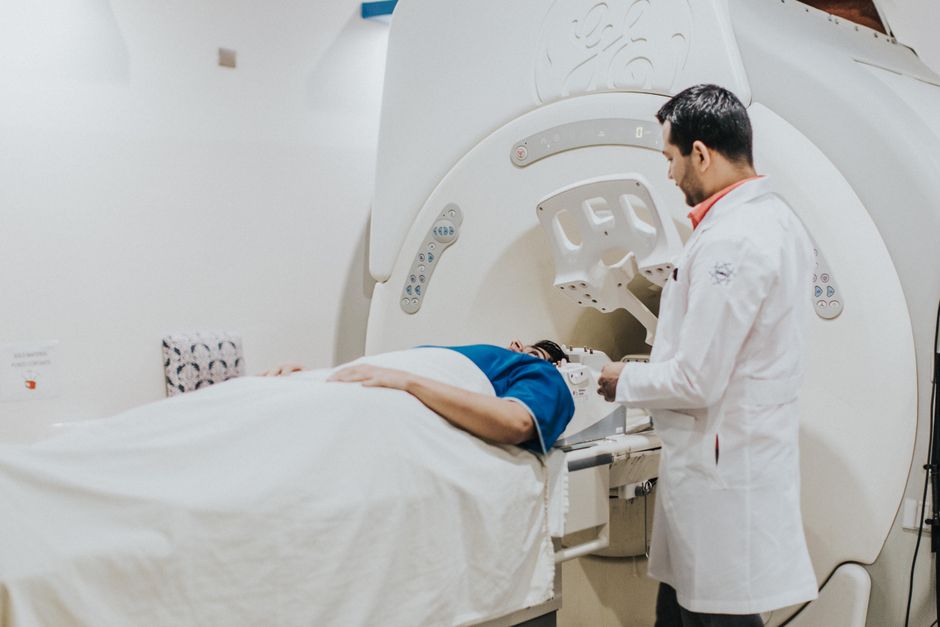
Attia has long used whole-body MRI as his detection hedge. In AMA #90 the enthusiasm cools toward selectivity, and the screening math explains why. Studies of asymptomatic adults who receive whole-body MRI consistently report incidental findings in a substantial fraction of scans, the large majority benign, and each finding buys follow-up imaging, possible biopsy, cost, and dread. The early catches that justify the tool are rare in a low-risk population, and formal screening evidence in asymptomatic adults remains limited.
Whether a whole-body MRI is worth it depends almost entirely on your prior risk. A strong family history of specific cancers, a smoking history, or syndromic risk can flip the math toward targeted imaging, where the yield on real pathology is higher and the false-positive burden easier to justify. A healthy 40-year-old with no risk factors is mostly buying noise.
Verdict, conditional keep, targeted. Keep the instinct to screen; drop the blank check. Replace the annual whole-body sweep with imaging aimed at your actual risk profile, chosen with your physician.
Exercise, Promoted to the Foundation
One item moved up rather than out. For generally healthy adults, exercise carries the strongest human mortality data of anything in this stack; large cohort analyses consistently show steep gradients in all-cause mortality across levels of cardiorespiratory fitness and strength, an association none of the off-label longevity drugs here approaches in that population. Metformin's outcome evidence is strong, but it was earned in diabetes care, a population this audit already carves out separately.
What changed in AMA #90 is the emphasis, not the evidence. The framing has shifted from generic volume toward preserving strength and functional capacity deep into old age, the training logic behind his centenarian decathlon piece: train now for the grip, balance, and aerobic capacity you will want at 90, because capacity lost after midlife is brutally expensive to buy back.
Verdict, upgrade. Make strength the anchor of the training week, add dedicated stability work, and keep at least one serious aerobic block. This is the line item where human outcome data actually justifies confidence.
Rebuilding the Peter Attia Longevity Stack for 2026
Six verdicts rebuild the Peter Attia longevity stack for 2026, and the whole audit compresses into one table.
| Item | Old version | Verdict | Your 2026 edit |
|---|---|---|---|
| Multiday fasting | Long fasts as a metabolic lever | Drop | Protein-sparing calorie deficit instead |
| Chronic keto | Years of nutritional ketosis | Drop | Carbohydrate timed around training |
| Off-label metformin | Daily geroprotection bet | Drop | Stop, with prescriber sign-off, if training |
| Rapamycin | Periodic low-dose use | Keep with conditions | Physician plus lipid and glucose monitoring |
| Whole-body MRI | Regular blanket scans | Keep targeted | Imaging matched to personal risk |
| Exercise | General endorsement | Upgrade | Strength first, stability, one aerobic block |
Five edits for a longevity stack in 2026, each tied to its grade:
- Stop off-label metformin if you train seriously. This is the evidence-driven drop; the exercise-interference trials are the strongest new human data in the whole changelog. Prescribed users stay the course.
- Replace multiday fasts with a protein-sparing deficit. Keep protein at the top of your range, trim fat and carbohydrate modestly, and accept a slower scale. You keep the fat loss and skip the lean-mass invoice.
- Exit chronic keto if your training matters. Add carbohydrate around sessions first, judge your output for a month, then decide. There is no human lifespan case for ketosis to fall back on.
- Gate any rapamycin use on labs. Periodic courses only, physician involved, lipid and glucose panels on a fixed schedule, annual reconsideration. If any leg of that is missing, the default is not yet.
- Redirect the MRI budget into strength. Swap the blanket scan for risk-targeted imaging and put the savings toward coaching or a gym, the one line item where the human data is strong.
Who Should Not Copy This Stack
Some readers should not run parts of this at all. Do not fast, in any form, with an active or historical eating disorder, and treat aggressive deficits with the same caution. Do not stop prescribed metformin or any diabetes medication without the prescriber who started it. Pregnancy or planning changes nearly every line above, from fasting to pharmacology. And rapamycin suppresses immune function at transplant doses and interacts with other drugs, so mixing self-directed dosing with any existing medication is a physician conversation, not a forum thread.
The transferable skill is the audit, not the answers. When the next reversal lands, from Attia or anyone else, ask the two questions in order. Did new human outcome data arrive, and does it apply to you? If it did not, then what changed was appetite, and your job is to price the position against your own age, training, and risk. Three of these six reversals were exactly that, preference updates from a physician training hard in his 50s. Copy the rubric, edit your own longevity stack, and let him run his.
Stay in the loop.
Get the latest posts and exclusive content delivered to your inbox.
Join 37 readers. No spam. Unsubscribe in one click, anytime.
About the author
Jordan Reyes
Registered Dietitian
Jordan ditched diet dogma for metabolic health, running continuous glucose monitors and food journals to see what actually moves the needle. He writes nutrition and supplement protocols grounded in evidence, not influencer trends.
Related Posts

Thymus Rejuvenation, What Actually Works in Humans
Thymus rejuvenation graded by evidence, from TRIIM and IL-7 to zinc and thymosin alpha-1, with labs you can order to measure your immune age today.
Growth Hormone and Aging Pull in Opposite Directions
Growth hormone and aging pull in opposite directions: blunted GH signaling extends mouse lifespan while secretagogues raise IGF-1. Audit your stack here.

How to Increase Bone Density With Impact and Heavy Loading
How to increase bone density with impact and heavy loading, when to retest with DXA or REMS, and what the new GPR133 bone study actually means for you.