Mechanical Drop Sets Build Muscle With Less Fatigue
Mechanical drop sets build muscle by shifting joint angles to maintain tension, not by stripping weight. Learn how to program them for hypertrophy.

Most lifters treat drop sets as a punishment. Strip the weight, grind out reps, embrace the burn, repeat until you question your life choices. Mechanical drop sets flip that logic. Instead of reducing load when a muscle fatigues, you shift the exercise to a biomechanically stronger position so the same weight continues producing tension on the target tissue. The result is extended time under tension without the systemic cost of piling on extra sets, and when programmed correctly, this technique can push a stagnant muscle group past a plateau that conventional straight sets have stopped addressing.
Stay in the loop.
Get the latest posts and exclusive content delivered to your inbox.
Join 22 readers. No spam. Unsubscribe in one click, anytime.
This is a programmable intensity technique rooted in how leverage changes affect motor unit recruitment. It belongs in any serious hypertrophy toolkit, and the mechanics behind it are more interesting than the suffering it produces.
Brandon Curry's Mechanical Drop Set on the Hack Squat
Brandon Curry, the 2019 Mr. Olympia winner, uses a mechanical drop set sequence during his Olympia prep that crystallizes the entire concept. Brandon Curry's hack squat routine runs through three movements back to back, sequenced hardest to easiest. He begins with full-stretch sissy squats, pausing at the bottom of each rep, then transitions to partial sissy squats, and finishes with standard hack squats. The setup matters: a wedge under the toes creates a toes-up starting position, and a foam roller positioned behind the shoulders encourages forward lean that loads the quadriceps aggressively. The entire sequence runs for roughly three minutes of continuous work with no load changes between positions.
Each transition shifts the leverage profile rather than the weight. Curry starts in the most disadvantageous position for the quads, where the knees travel far forward and the hips contribute minimally. As local fatigue builds, he moves into positions where the glutes and hips can assist, letting the quadriceps keep firing even though they could no longer sustain the initial movement alone.
Biomechanics of foot placement suggests that stance width, foot angle, and depth on squat-pattern movements can shift which portions of the quadriceps experience the most tension at different points in the range of motion. A low, narrow foot placement with elevated toes may bias demand toward the rectus femoris and vastus medialis. A higher, wider placement tends to distribute more work toward the vastus lateralis while recruiting greater gluteal assistance. These effects are not absolute, and individual anatomy plays a significant role in how each lifter experiences them.
The takeaway is that repositioning the joint lets fresh motor units and synergistic muscles pick up the work, keeping the target tissue under continuous tension with the same external load rather than letting the muscle slack off.
The Biomechanics Behind Mechanical Drop Sets
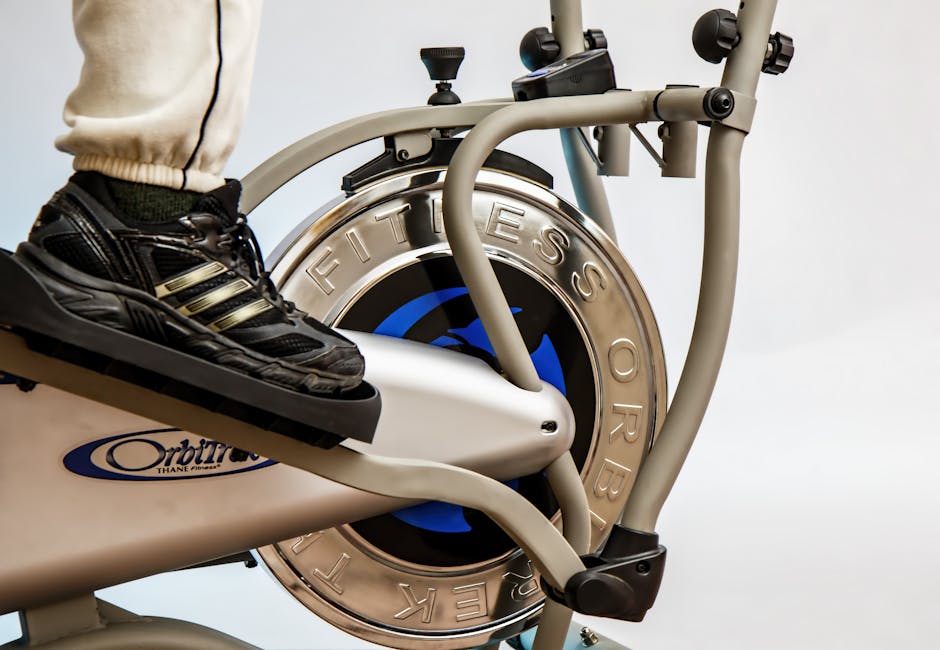
Think about loosening a stubborn bolt with a wrench. A long handle gives you leverage, so the bolt turns with modest effort. Shorten the handle mid-task and the same bolt resistance suddenly demands far more force from your arm.
Mechanical drop sets apply this principle in reverse. You start with the equivalent of the long handle, meaning the position where leverage is worst for the target muscle, and progressively shorten it. The weight never changes, but the demand on the muscle shifts because the geometry does.
The mechanism behind this is the moment arm: the distance between the joint axis and the line of resistance. Mechanical tension in exercise science is not simply how heavy the weight feels but the force generated within muscle fibers at a specific joint angle and muscle length. Shift to a stronger leverage position without dropping the load, and the moment arm shortens just enough to let the fatigued muscle keep contracting.
Sequence direction is what makes the technique work for hypertrophy. Start in the weakest leverage position, where the muscle is stretched and the moment arm is longest. Findings on stretch-mediated hypertrophy indicate that training at long muscle lengths produces greater growth than training at shortened positions, likely because tension at stretch activates more fibers. The early positions in a mechanical drop set capture this window before the muscle shortens.
Traditional drop sets miss this entirely. Stripping a portion of the load off the bar typically reduces both load and tension simultaneously. The remaining fibers produce less force per contraction in a shortened, metabolically swollen state that has already passed peak mechanical tension. The final reps burn and the growth signal is weak.
By the time you reach mechanically easier positions, local fatigue has recruited the highest-threshold motor units. Training at long muscle lengths shows that partial work in stretched positions can match or exceed full-range hypertrophy. Evidence on motor unit behavior confirms that as fatigue accumulates, progressively larger units activate to maintain force output.
In a traditional drop set, those fresh units lift a lighter load. In a mechanical drop set, they lift the same load with better leverage, delivering more tension per fiber and more productive stimulus per rep.
When the Technique Builds Muscle or Adds Junk Volume
The trap unique to mechanical drop sets is that the leverage shift can silently transfer work from the target muscle to synergists. A traditional drop set signals failure clearly: the weight stops moving. But when you shift to an easier position, the weight keeps moving, which feels productive even though the target tissue may have stopped being the primary mover. The easier leverage masks the exact moment the muscle you are trying to grow drops off.
This is why mechanical drop sets cross into junk volume more easily than straight sets. With a straight set, the bar slows and the set ends. With a mechanical drop set, each transition buys more reps but also lets glutes, shoulders, or momentum take over. Hypertrophy programming data suggests that beyond a volume threshold, additional work produces diminishing returns while compounding recovery costs. Mechanical drop sets compress that threshold into a single continuous effort.
Research on drop set comparisons shows that these techniques can match the growth of additional straight sets while saving time, but the fatigue can impair subsequent sessions if not managed deliberately.
Four warning signs tell you the set has turned:
- The target muscle stops burning or shaking and the movement feels powered entirely by other muscles
- Rep quality degrades so severely that you are no longer controlling the eccentric phase
- You cannot complete the transitions between positions without extended rest of more than 10 seconds
- You feel systemically wrecked for 48 to 72 hours in ways that interfere with your next training sessions
Hit any one of these and the set has stopped being a targeted stimulus. Cut it. There is no badge of honor for grinding through reps that no longer challenge the muscle you are trying to grow.
The Lower Body Mechanical Drop Set Template
The hack squat machine is the ideal platform for lower body mechanical drop sets because foot placement, torso angle, and depth are all easily modifiable without changing plates. The sequence below follows the weaker-to-stronger progression on a single machine.
Position 1: Deep Narrow Stance Hack Squat
- Feet low and close together on the platform
- Full depth, knees traveling well past the toes
- 8 to 10 reps to near failure, targeting the rectus femoris and vastus medialis through maximum knee flexion
Position 2: Shoulder-Width Mid-Platform Hack Squat
- Feet at shoulder width, mid-height on the platform
- Moderate depth, thighs reaching parallel
- Immediately continue for 8 to 10 reps, shifting emphasis toward the vastus lateralis with more balanced glute involvement
Position 3: High Wide Stance Hack Squat
- Feet high and wide on the platform, toes pointed slightly outward
- Controlled depth, focusing on pushing through the heels
- Continue for as many quality reps as possible, recruiting maximum glute and hamstring assistance to keep the quads firing
Each transition should take 5 to 10 seconds. The weight does not change. The set ends when you cannot complete a controlled rep in the final position.
This mirrors the Curry principle but on a single machine, which makes it practical for most gymgoers. The key is that each position is genuinely easier for the fatigued muscle, not just easier in a general sense. The quadriceps remain the primary movers throughout, but the leverage shift distributes demand across different heads and recruits synergists progressively.
Other lower body options include leg press (same foot placement logic), leg extension (shifting from full range to partial reps at the stretched bottom position), and Romanian deadlift to stiff-leg deadlift to glute bridge sequences for posterior chain work.
The Upper Body Mechanical Drop Set Template

Upper body mechanical drop sets require more creativity because machines offer fewer leverage adjustments than plate-loaded leg equipment. Cables are your best tool here because pulley height changes dramatically alter the resistance profile through the range of motion.
Low-to-High Cable Fly
Cables set at the bottom position, driving upward across the body (8 to 10 reps). This places the chest in a disadvantageous position at the bottom of the movement where the pectorals are stretched, maximizing tension at long muscle lengths.
Mid-Level Cable Fly
Cables at shoulder height, standard fly motion (8 to 10 reps). The resistance profile shifts so that tension distributes more evenly through the midrange of the movement.
High-to-Low Cable Fly
Cables set at the top, driving downward (as many reps as possible). This position is mechanically easier for the fatigued pectorals because the line of resistance aligns more favorably with the strongest portion of the muscle's force curve.
Incline Dumbbell Curl
Arms hanging behind the torso, full stretch at the bottom (8 to 10 reps). Maximum tension on the long head of the biceps at a lengthened position.
Standing Dumbbell Curl
Arms at the sides, standard standing position (8 to 10 reps). The biceps transition to a more favorable length-tension relationship, allowing continued contraction as fatigue accumulates.
Preacher or Spider Curl
Arms stabilized on a pad in front of the body (as many reps as possible). The shortened position is mechanically easier and the stabilization removes shoulder and core engagement, letting the biceps squeeze out final reps against diminishing resistance.
The principle holds across both examples. Start where the target muscle is weakest, usually the stretched position, progress through positions of increasing mechanical advantage, and end where synergistic stabilization and favorable leverage allow the fatigued muscle to keep working against the same load.
Integrating Intensity Into Your Hypertrophy Block
Mechanical drop sets carry a fatigue signature unlike rest-pause or supersets. They may produce less central fatigue than traditional load-reduction drop sets, not because the load stays constant, but because they avoid the prolonged metabolite buildup of high-rep, reduced-weight extensions. But the local fatigue they deposit in the target tissue runs deep, which demands a different recovery calculus than other intensity techniques.
That selective local fatigue is why you can program mechanical drop sets more frequently than traditional drop sets for the same muscle group. The systemic cost stays low while the targeted stimulus stays high. Advanced hypertrophy training variables support periodized variation in intensity techniques for better long-term outcomes than consistent use of any single method. Programming intensity techniques across mesocycles similarly recommends introducing them when straight-set progress stalls and a fresh stimulus is needed.
A practical tracking protocol keeps the dose honest. On your next session for that muscle group, check top-set performance against the previous week. If reps drop meaningfully, roughly 15 percent or more, the mechanical drop set volume was too high. Pull back to two positions or skip the technique that session. In practice, allowing 48 to 72 hours between sessions for the same muscle is a reasonable starting point, and capping each sequence at three positions, roughly 24 to 30 total reps, prevents the set from drifting into junk volume.
Cycle the technique out based on a measurable stall signal, not an arbitrary week number. When top-set reps plateau for two consecutive sessions despite adequate recovery, the novelty has worn off. That is your exit cue.
Deployment rules:
- Use on the final working set of an isolation or machine exercise, never on compound barbell lifts where form breakdown under cumulative fatigue creates injury risk
- Limit to one exercise per muscle group per session
- Apply to one or two muscle groups per training block, rotating every 4 to 6 weeks
- Schedule at the end of the workout for the target muscle, when the tissue is already prefatigued and the technique amplifies existing stimulus without spreading fatigue across fresh muscle
Bottom Line
The sequences in this article are same-machine leverage progressions, where foot placement or pulley height shifts while the movement itself stays fixed. That distinguishes them from cross-exercise mechanical drop sets like Curry's bodyweight sissy squat flowing into machine hack squat, where the movement changes between positions. Cross-exercise sequencing delivers a broader stretch-position stimulus because each exercise can target a different point on the force curve, but the dose is harder to control. Same-machine progressions are more reproducible session to session, which makes them the better entry point for most lifters.
One counterintuitive recommendation for your first attempt: pick the exercise where you fail in the stretched position, not the contracted one. That is where a leverage shift will buy you the most additional productive tension. When fresh motor units get recruited by the easier leverage, they will still be working at the muscle length where hypertrophic signaling peaks. The muscle that gives out at the bottom of the movement is the one that stands to gain the most from staying under load past that failure point.
Stay in the loop.
Get the latest posts and exclusive content delivered to your inbox.
Join 22 readers. No spam. Unsubscribe in one click, anytime.
About the author
Jordan Reyes
Registered Dietitian
Jordan ditched diet dogma for metabolic health, running continuous glucose monitors and food journals to see what actually moves the needle. He writes nutrition and supplement protocols grounded in evidence, not influencer trends.
Related Posts
Lengthened Partials vs Full ROM, 5 Lifts Re-Dosed
Range of motion is a dose you program. Learn when full ROM wins, when lengthened partials build more muscle, and how to audit your reps on camera.

Creatine Without Training Is Cheap Lean-Mass Insurance
Creatine without training does build lean mass, and part of it is water. Here is what the new study found, plus dosing for injuries, layoffs, and aging.
Chest and Back Superset Workout Audit for Lifters Over 60
Can a 30-minute chest and back superset workout keep muscle over 60? We audit Dolph Lundgren's routine as a weekly dose of volume, effort, and pairing.