Strength Training for Longevity Tests Your Muscle Age
Strength training for longevity goes beyond muscle size. Test your grip, gait speed, and lower body power with a protocol built for healthspan.
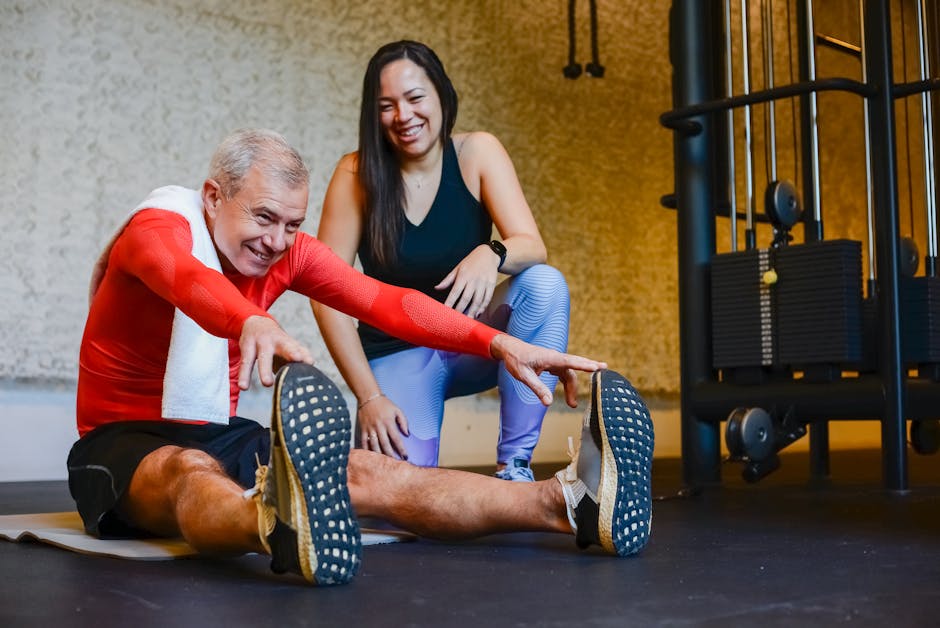
Most fitness routines are designed for the mirror, not survival. They build aesthetic muscle mass in the sagittal plane while ignoring the exact physical qualities that keep you alive and independent. If your goal is to extend your healthspan, standard hypertrophy training is a flawed blueprint. True strength training for longevity requires shifting your focus from muscle size to explosive power, unilateral stability, and eccentric control.
Stay in the loop.
Get the latest posts and exclusive content delivered to your inbox.
Join 38 readers. No spam. Unsubscribe in one click, anytime.
Skeletal muscle is your primary armor against metabolic disease and physical decline. To improve your lifespan, you must actively train and test the specific functional metrics that researchers use to predict mortality.
Why Muscle Mass and Lifespan Are Inseparable
Muscle mass has real longevity value, but size alone is an incomplete target. Conventional hypertrophy training builds tissue that looks impressive yet leaves critical gaps in the qualities that keep you upright and independent in your eighth and ninth decades: rate of force development, eccentric control, and frontal-plane stability. The problem is not that bodybuilding harms you. The problem is that it fails to develop the specific capacities your nervous system calls on when a curb catches your foot.
Consider the muscle quality versus muscle quantity problem. Bigger muscles can still be functionally slow. A bodybuilder with massive quads may struggle to generate the rapid force needed to catch a stumble, because their training conditioned slow, controlled movement rather than explosive recruitment. Large but slow muscle is exactly the kind that underperforms in real-world emergencies.
Muscle tissue also functions as a metabolic sink. When you contract it, it regulates glucose metabolism and longevity by pulling blood sugar out of your bloodstream. All resistance training improves glucose disposal to some degree. The distinction is that high-velocity, high-force recruitment activates type II muscle fibers more aggressively, and those are the fibers that atrophy fastest with age. Powerful contraction patterns may optimize the metabolic health of the tissue you have built, but mass alone does not guarantee metabolically active muscle.
This is why clinicians diagnose sarcopenia through performance, not size. The established sarcopenia diagnostic criteria focus on the loss of strength, walking speed, and physical function. A person can carry adequate body weight and visible muscle yet still meet the diagnostic threshold, because what matters is whether the muscle can produce force quickly and move the body through space. When researchers examine survival data, they zero in on appendicular skeletal muscle mass, the metabolically active muscle concentrated in your limbs, because that tissue correlates most directly with functional outcomes and survival.
The Muscle Metrics That Predict Lifespan
Not all longevity metrics are equally trainable, and not all are equally predictive. If you have limited training time, the order in which you target these biomarkers matters. The three strongest predictors rank by return on training investment, from broadest signal to highest leverage.
Grip strength: the broadest systemic biomarker, but limited trainability. Your grip reflects overall neuromuscular function and systemic health. Research on all-cause mortality risk confirms that weaker grip strength in older adults correlates with higher mortality rates. The catch is that grip is a biomarker of everything, not just forearm strength. It reflects total neurological vitality, hormone status, and nutritional health, which means direct grip work alone moves the needle only modestly. Train it, but treat it as a dashboard reading rather than the primary target.
Gait speed: the composite outcome. Walking briskly requires coordination, balance, lower body strength, and cardiovascular capacity all firing together. Data on gait speed and life expectancy show that slower walking speed indicates diminished physiological reserve. Because gait speed integrates so many systems, improving it requires training the components rather than just walking more. You raise gait speed by building lower body strength, power, and balance separately.
Lower body power: the highest-leverage target. This is where you should focus first. Lower body power degrades faster than any other metric with age, and it ranks among the most responsive metrics to targeted training, because velocity-specific work drives rapid neural adaptation before any visible muscle change. Normative chair stand benchmarks show that the ability to stand quickly from a seated position captures explosive leg power, which dictates whether you can catch yourself during a stumble. If you only train one metric, make it lower body power.
The decision framework is straightforward. Test all three, then prioritize in reverse order: build lower body power first, use that strength to improve gait speed, and monitor grip strength as your systemic progress marker.
Five Self-Tests to Benchmark Your Muscle Age
You do not need a clinical laboratory to measure your physical resilience. You can perform a basic longevity assessment in your living room to establish a baseline for your muscle age. Run yourself through these five evaluations, but treat them as screening tools that flag areas to work on, not medical verdicts. Each test below includes a prescription pointer so you know exactly where to direct your training if you fall short.
1. The 10-Second Single-Leg Balance Test
Stand on one leg with your eyes open. If you cannot hold this position for at least 10 seconds, your neuromuscular coordination and lower body stability need attention. This test appears in several geriatric assessment batteries, and while 10 seconds is a commonly used benchmark, the real signal is how much harder balance has become compared to a decade ago.
If you fail: Prioritize unilateral stability work. Single-leg step-downs on Day 1 and reverse lunges on Day 3 train the stabilizer strength that keeps you upright on uneven ground.
2. The Dead Hang Grip Test
If you lack a dynamometer, hang from a pull-up bar. General fitness community benchmarks suggest a healthy adult male should maintain a dead hang for at least 60 seconds and a healthy adult female should aim for 30 seconds. These are rough community targets rather than validated clinical thresholds, but they give you a practical way to track grip endurance at home.
If you fail: Build grip work into Day 2. Start each upper body session with dead hangs, and add pull-ups with a slow five-second lowering phase to bias the forearms and build eccentric control at the same time.
3. The 30-Second Chair Stand
Sit in a standard chair, cross your arms over your chest, and stand up as many times as possible in 30 seconds. Common screening benchmarks from standardized geriatric assessment tools suggest that scoring below 15 reps for adults in their 60s and beyond flags elevated risk of physical decline. Use this as a directional signal, not a diagnosis.
If you fail: This flags a lower body power deficit. Day 1 jump squats and barbell squats, driven upward as fast as you can, directly train the explosive leg drive this test measures.
4. The 4-Meter Walk Test
Walk at your normal, comfortable pace over four meters and time it. A speed slower than 0.8 meters per second is a well-established geriatric screening cutoff used in clinical settings to flag elevated frailty risk. It is not a hard deadline, but it is one of the most consistently validated warning signs in aging research.
If you fail: Gait speed is a composite metric, so you train the components. Day 3 targets posterior chain strength and deceleration with hex bar deadlifts and reverse lunges, which translate directly into a faster, more confident stride.
5. The Sit-and-Rise Test
Sit cross-legged on the floor and stand up without using your hands or knees for support. Every time you use a hand or knee for leverage, subtract one point from a starting score of ten. Scoring below eight is associated with higher mortality risk in observational research, though the test captures a blend of mobility, strength, and body composition rather than predicting mortality on its own.
If you fail: Direct your attention to dedicated eccentric control training. Taking three to five full seconds on the lowering phase of every exercise builds the deceleration strength you need to get off the floor without assistance.
If you score poorly on these self-tests, do not panic. You can actively improve these metrics with a targeted training protocol.
Training Explosive Power to Preserve Function

When designing strength training to prevent sarcopenia, most people default to lifting heavy weights slowly. That builds absolute strength, but it misses the capacity that disappears first. Muscle power, which requires moving weight quickly, degrades faster with age than absolute muscle strength. The mechanism is selective: aging preferentially atrophies type II fast-twitch fibers and slows motor unit recruitment and rate coding. The type II fiber loss is the primary driver behind why older adults lose the ability to generate force rapidly, even when their maximal strength holds steady.
The loading difference between strength and power is where most people go wrong. Strength work targets 80 percent or more of your one-rep max. Power work lives in a different zone entirely: 30 to 60 percent of your one-rep max, moved as fast as you consciously can. Exercise science coursework on explosive power decline suggests that velocity-specific training appears critical for preserving the fast-twitch capacity that standard slow lifting cannot maintain.
Safety cues for explosive training. If you are deconditioned or new to power work, control the eccentric phase of every rep. Lower the weight smoothly, then drive it up fast. Warm up thoroughly before any explosive set, because cold tendons and joints do not tolerate sudden acceleration well. Start with bodyweight movements before adding external load. A simple progression: begin with bodyweight jump squats and explosive push-ups, then add medicine ball slams, and only progress to loaded movements once your joints handle the landing cleanly. Keep rep counts low (sets of three to five) and rest generously between sets, because power is a quality of the nervous system, not the cardiorespiratory system.
Eccentric Training for Fall Prevention

When you trip on a curb, your body does not need to push. It needs to brake. Eccentric contractions, where muscle fibers lengthen under load, are the braking system that absorbs the kinetic energy of a stumble before your knee buckles or your hip hits the ground. Concentric strength, the kind you build by pressing a weight overhead, is nearly useless in that half-second window. What saves you is the capacity to decelerate your own body mass on one leg, and that quality degrades faster than most people realize.
Standard lifting never trains it with intent. Every rep in conventional bodybuilding emphasizes the concentric phase: lift the weight, squeeze at the top, lower with control. But "control" is vague coaching language, not a loading parameter. Meanwhile, eccentric capacity erodes with age because older muscle handles damage from lengthening contractions less efficiently, and almost no one programs eccentrics deliberately. Research on eccentric control training supports its role in fall prevention for older populations, where supervised eccentric protocols improve the deceleration strength that standard training overlooks entirely.
A practical progression moves from tempo to accentuated loading. Start on bilateral movements like the squat or Romanian deadlift. Load 100 to 120 percent of your normal working weight, lower it over six to eight seconds, and have a spotter help you lift it back up. Run three to four reps per set for two sets, once or twice weekly. If you train alone, use the tempo method instead: load your normal weight, take a full six-second descent on every rep, and explode upward. Add two seconds to the descent every two weeks until you reach ten seconds, then add weight and reset to six. Pair this with unilateral landings. Step off a 12-inch box onto one leg and stick the landing for three full seconds with your knee tracking over your foot, not collapsing inward. That single drill teaches your nervous system to absorb force on one limb, which is exactly the demand a stumble places on your body.
Programming Strength Training for Longevity
A proper protocol must balance hypertrophy, power, and eccentric stability. You can structure your week around the Centenarian Decathlon framework, which trains for the specific physical tasks you must perform in the last decade of your life.
The following three-day split balances power, strength, and unilateral stability work to improve your explosive output and overall durability.
Day 1: Lower Body Power and Stability
- Warm-up: Five minutes of dynamic stretching.
- Power: Three sets of five jump squats, resting two minutes between sets. Focus entirely on speed.
- Strength: Three sets of five barbell squats, moving the bar explosively on the way up.
- Stability: Three sets of eight single-leg step-downs per leg. Lower yourself slowly for four seconds.
Day 2: Upper Body and Grip
- Warm-up: Dead hangs from a pull-up bar to assess grip strength.
- Power: Three sets of five explosive push-ups, pushing your hands off the floor at the top.
- Strength: Three sets of five pull-ups, emphasizing a slow five-second lowering phase to build eccentric control.
- Strength: Three sets of eight overhead dumbbell presses to build total body coordination.
Day 3: Gait Speed and Deceleration
- Warm-up: Four 20-meter sprints at 70 percent effort to prime the nervous system.
- Power: Three sets of five medicine ball slams.
- Strength: Three sets of five hex bar deadlifts for absolute posterior chain strength.
- Stability: Three sets of eight reverse lunges per leg. Hold light dumbbells and lower your back knee slowly.
Strength training for longevity requires a complete shift in how you view the gym. Stop training purely for size and start training for speed, stability, and grip. Start by running the five self-tests this weekend. Whatever metric you score worst on, whether that is chair stands, dead hang time, or gait speed, becomes the focus of your next training block. Re-test every eight weeks and watch the numbers move. The goal is not to add another inch to your arms. It is to arrive at eighty with the explosive power to catch a stumble and the eccentric strength to lower yourself to the floor and stand back up without help.
Stay in the loop.
Get the latest posts and exclusive content delivered to your inbox.
Join 38 readers. No spam. Unsubscribe in one click, anytime.
About the author
Elena Park
Sleep and Recovery Specialist
Elena has spent a decade helping people fix their sleep and recover faster, pairing wearable and HRV data with the cold, heat, and breathwork protocols she tests on herself first. She writes recovery routines that hold up under real, busy lives.
Related Posts

Progressive Overload Without Adding Weight
Progressive overload is a programmable dose, not just added weight. Learn seven progression vectors, decision rules, and a stall audit for stalled lifts.

Creatine Without Training Is Cheap Lean-Mass Insurance
Creatine without training does build lean mass, and part of it is water. Here is what the new study found, plus dosing for injuries, layoffs, and aging.
Chest and Back Superset Workout Audit for Lifters Over 60
Can a 30-minute chest and back superset workout keep muscle over 60? We audit Dolph Lundgren's routine as a weekly dose of volume, effort, and pairing.